The Cost of Washington’s War on Iran
By Naseer Ahmad Virk
The Trump administration owes Americans and the wider world an honest account of its war against Iran. It must explain the legal basis for military action, the civilian lives lost, the economic damage, and the conditions under which hostilities will end. A government exercising such destructive power should face scrutiny proportional to the suffering its decisions create.
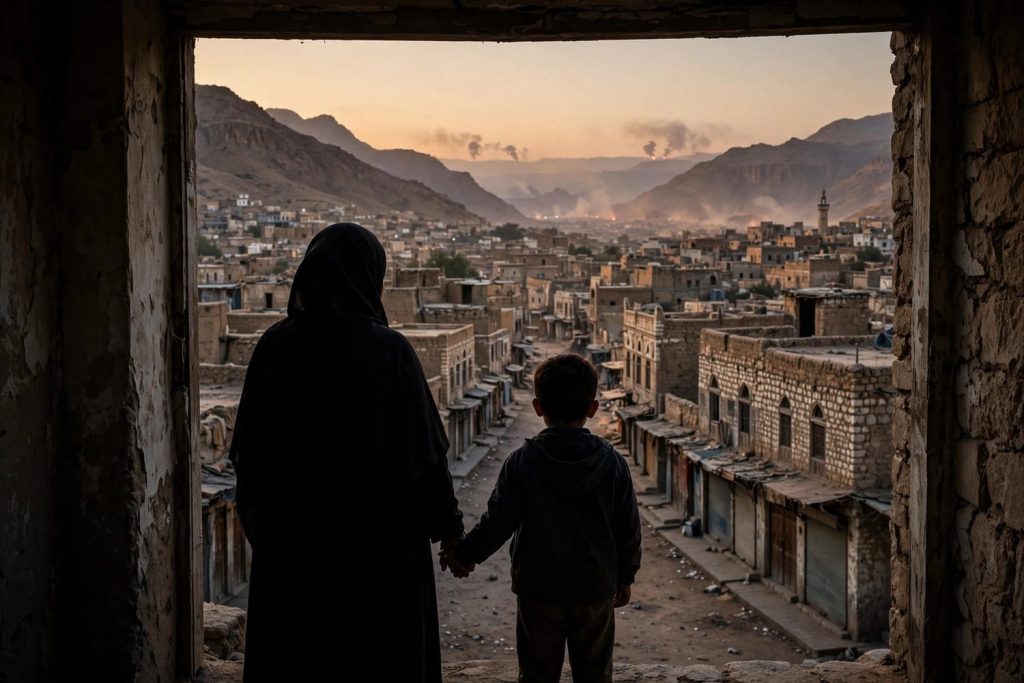
Iranian civilians belong at the centre of that scrutiny. United Nations human rights experts have raised concerns about reported civilian deaths, displacement, and damage to schools, healthcare facilities, and other civilian infrastructure during the U.S.-Israeli military campaign. Their communication also questions the campaign’s compatibility with the UN Charter’s prohibition on unlawful force. These concerns demand independent investigation, public disclosure, and accountability.
Washington routinely invokes human rights when condemning its opponents. Its credibility depends on applying those principles to its own actions and those of its allies. Iranian families possess the same right to safety as American families. A child’s death demands moral seriousness regardless of nationality or the government ruling that child’s country.
Congress must require the administration to explain how its objectives justify the foreseeable risks to civilians. It should examine intelligence claims, investigate credible allegations of unlawful attacks, and insist on a realistic diplomatic strategy. Presidential assurances provide an inadequate foundation for decisions that can destroy communities and destabilise entire economies.
The financial consequences reach far beyond the battlefield. The International Energy Agency’s November report documents major disruption to oil supplies, shipping, inventories, and refined fuels. Supplies have begun recovering, but crude prices remained above their prewar level and European diesel prices remained sharply elevated. Continued threats to shipping make that recovery vulnerable.
Energy disruption affects the price of transporting food, operating businesses, flying passengers, and heating homes. Workers and small companies have limited room to absorb these costs. A foreign policy that repeatedly exposes them to economic shocks deserves to be judged against the administration’s promises of prosperity.
American households already carry substantial financial obligations. The New York Federal Reserve reported approximately $19.1 trillion in household debt in the third quarter of 2026, with 5 percent of outstanding debt in some stage of delinquency. These pressures have multiple causes, but a government choosing military escalation must explain how it will protect families already struggling with repayments and essential expenses.
Criticism of the economy must remain accurate. The FDIC reported strong aggregate banking earnings, capital, and liquidity in the second quarter. Predictions that American banks are about to collapse require specific evidence. Public scrutiny should examine identifiable weaknesses, the consequences of prolonged instability, and whether households receive adequate protection when economic conditions deteriorate.
The strategic questions are equally urgent. Reporting has documented senior military leadership departures and concerns about the demands the Iran conflict places on American forces. Congress
should examine readiness, personnel pressures, weapons supplies, and the consequences for commitments elsewhere. It must also ask what achievable political outcome further fighting would produce.
Fear of appearing defeated is a dangerous reason to continue a war. A president’s reputation cannot justify additional deaths. Choosing negotiations when military escalation offers diminishing returns is an essential responsibility of leadership.
Arab leaders must answer for the distance between their public declarations of Muslim solidarity and their security relationships with Washington. Governments that invoke Islamic responsibility while hosting American military facilities owe their citizens a full explanation of what those facilities are permitted to support. Their people deserve to know whether these partnerships protect civilian life or expose the region to another cycle of attack and retaliation.
The moral criticism is severe. Any leader who enables unlawful attacks on Iranian civilians betrays the principles of justice, mercy, and the sanctity of life that the leader publicly claims to uphold.
Such conduct deserves scrutiny regardless of the perpetrator’s nationality, sect, wealth, or relationship with the United States. Iranian lives cannot carry less moral weight because Tehran is a political rival.
Public attitudes also expose the weakness of governments that assume their citizens share their strategic priorities. Arab Barometer has documented growing sympathy for Iran among some Arab publics, particularly in connection with its stance toward Palestine, alongside continuing reservations about Iranian policy. These findings reveal a gap that rulers should address openly.
Sympathy for Iranian civilians and opposition to American intervention can coexist with criticism of Tehran.
Gulf leaders have also sought to prevent renewed war, according to recent reporting. They should turn those diplomatic efforts into transparent commitments about the use of their territory, protection of civilians, humanitarian access, and opposition to unlawful force. Citizens deserve evidence that their governments will defend those commitments when Washington applies pressure.
Leadership must be judged by its actions. A government’s claim to religious authority becomes hollow when it demands compassion from others while excusing suffering produced by its own alliances. Arab rulers should face that standard publicly, and their citizens must be free to question them without intimidation.
Afghanistan should have made the limits of military power impossible to ignore. After nearly twenty years of American involvement, the U.S.-supported government collapsed. Washington’s own inspector general documented that failure. Policymakers contemplating another prolonged conflict should explain which lessons they learned and how those lessons shape their present decisions.
The capture of Venezuelan President Nicolás Maduro in January also raised serious questions about sovereignty and the use of force. Reuters reported substantial legal controversy surrounding the operation. Washington must accept the same scrutiny of its interventions that it demands of other governments.
Universities, journalists, legal scholars, and professional associations have an important role. They should investigate civilian harm, examine government claims, scrutinise military spending, and protect peaceful dissent. Universities that teach ethics, public service, and responsible leadership
should create space for rigorous public debate when those principles are tested by their own government.
Opposition to the war exists within the United States itself. Reuters reported that 55 percent of Americans surveyed shortly before the November elections believed the war was not worth its cost. Those citizens deserve substantive answers about the sacrifices being made in their name.
The immediate demands should be concrete. Congress must insist on transparent military expenditure, independent investigation of civilian harm, a credible diplomatic strategy, and measurable conditions for ending hostilities. Regional governments must explain their participation and protect their populations. Every government involved must place civilian life above political prestige.
Washington’s power brings responsibility for the consequences of its choices. Iranian families deserve safety and a future. American families deserve economic security and honest government. Both are being asked to bear costs that leaders must account for publicly.