Prime Minister Shehbaz Sharif has ordered a fresh round of reforms aimed at modernising Pakistan’s agriculture sector, directing officials to overhaul crop estimation systems, expand farmer access to modern training, and strengthen key research institutions. The directive comes at a moment when Pakistan is simultaneously pushing to unlock its mineral wealth, with billions of dollars in fresh international financing flowing into projects like Reko Diq, signalling a broader effort to diversify an economy long dependent on agriculture and remittances.
Background
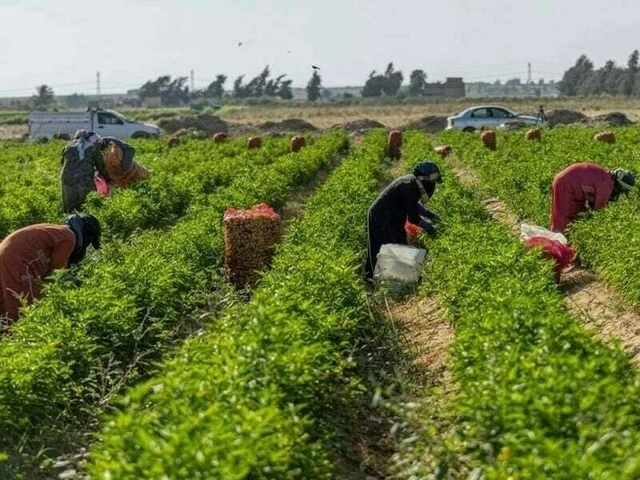
Agriculture has always been the backbone of Pakistan’s economy, contributing a significant share of national GDP and employing a large portion of the rural workforce. The sector’s history of reform stretches back decades, beginning with General Ayub Khan’s land redistribution programme in the 1960s, followed by Prime Minister Zulfikar Ali Bhutto’s land reforms in 1972. Both efforts were substantially weakened by political pressure from landlords and administrative gaps, and a coherent, sustained policy framework for smallholder farmers never fully materialised. Pakistan today has 11.7 million farms, a number that has grown 41 percent since 2010, yet the average farm size has shrunk to just five acres, with six out of every ten farms now under 2.5 acres. This fragmentation continues to limit farmers’ ability to adopt modern technology, access quality seed and fertiliser, or manage irrigation efficiently.
Details
What the latest agriculture reform directive includes
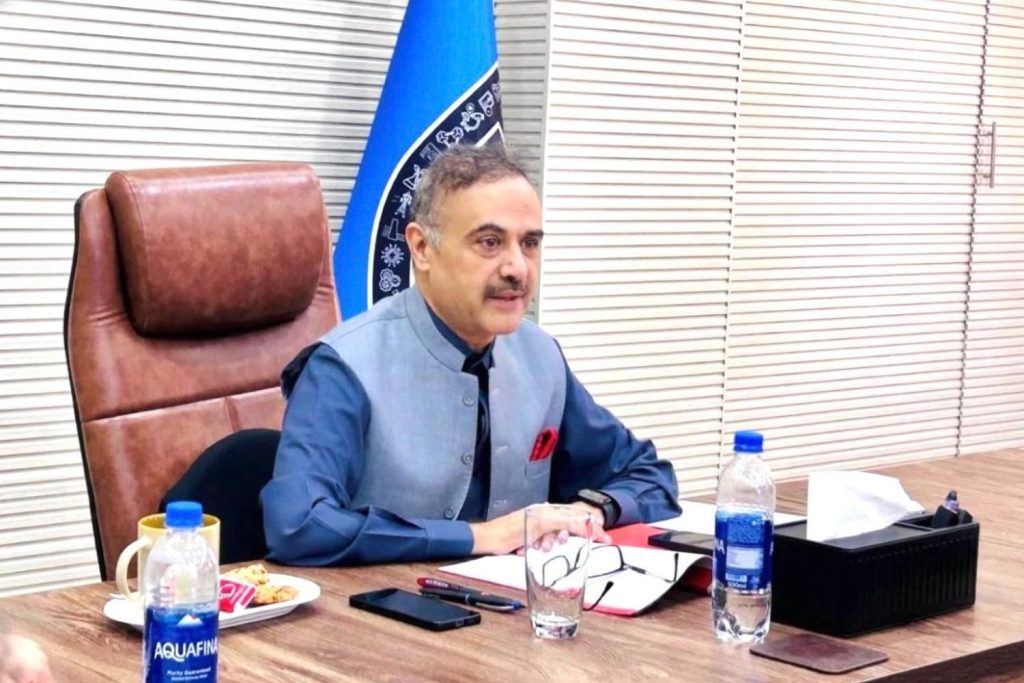
At a recent meeting on agricultural sector reforms, the prime minister approved a series of measures targeting both productivity and institutional capacity. He ordered the preparation of a comprehensive national system for estimating crop production, developed in consultation with all relevant stakeholders, aimed at giving policymakers more accurate, real-time data on farm output. He also directed that small and medium-scale farmers be prioritised as direct beneficiaries of the government’s modernisation push, rather than allowing gains to concentrate among larger landholders as has often happened with past reform efforts. Institutional reform featured heavily in the directive as well. The prime minister approved reforms at the National Agricultural Research Centre and instructed that both the centre and the Pakistan Agricultural Research Council be brought in line with international standards. He further directed authorities to make full use of students who returned from agricultural training programmes in China, and ordered that merit and transparency be prioritised in selecting the next cohort for similar training.
The wider push toward deregulation and modern markets
This latest directive builds on a broader deregulation drive that has been underway for much of the past year. The government’s decision to deregulate the wheat and sugar sectors marked one of the most consequential market reforms in Pakistan’s agriculture in recent years, ending decades of tight state control over farm prices through regulation and fiscal incentives. That control had originally been intended to protect smallholder farmers and urban consumers from price volatility and reduce food imports, but critics argue the policies instead ended up serving a politically connected rural elite, powerful millers, commission agents, and the agribusiness input industry rather than the small farmers they were meant to help. Efforts to modernise storage and market infrastructure have moved more slowly. As of August 2025, accredited storage capacity for all crops across Pakistan stood at roughly 340,000 tonnes, with active capacity barely a quarter of that figure. Most of this storage remains in the hands of rice and feed mills, and warehouse receipt systems intended to let farmers avoid distress sales during peak harvest periods have seen very limited uptake so far, with only a few hundred tonnes of wheat stored under the scheme during the last season. Officials have attributed the slow rollout to a late launch, unclear operational rules, and delays in linking the system to the Pakistan Mercantile Exchange for wheat trading.
Punjab’s wheat policy and the province’s outsized role
Because Punjab alone contributes nearly 77 percent of Pakistan’s total wheat output, any reform to national agricultural policy inevitably runs through the province. Punjab has been reviewing its wheat policy heading into the 2026 season, facing a threefold challenge: reversing a decline in wheat acreage, stabilising the market to ensure fair returns for farmers, and encouraging larger-scale storage and trading infrastructure. Livestock has also emerged as an increasingly dominant force within the sector nationally, now contributing nearly two-thirds of total agricultural GDP, a shift that reflects farmers’ growing reliance on dairy, meat, and animal by-products amid stronger market demand compared to traditional row crops.
Pakistan’s mineral resources enter the reform conversation
Alongside agriculture, Pakistan’s mineral wealth has become a second major pillar of the government’s broader economic diversification strategy. Pakistan’s mineral resources are concentrated mainly in Balochistan, Khyber Pakhtunkhwa, and Gilgit-Baltistan, regions that have historically remained underexplored due to security concerns and limited infrastructure. The centrepiece of this push is the Reko Diq project in Balochistan, one of the largest undeveloped copper-gold deposits in the world, jointly owned by mining company Barrick Gold, the federal government, and the government of Balochistan. International financing for Reko Diq has accelerated sharply over the past year. The US Export-Import Bank approved roughly 1.3 billion dollars in financing for the project, a commitment highlighted during the 2026 Critical Minerals Ministerial in Washington, while the Asian Development Bank had already approved a financing package worth several hundred million dollars in August 2025, alongside a loan commitment from the Japan Bank for International Cooperation later that year. Upon reaching full capacity, the mine is projected to produce roughly 200,000 tonnes of copper annually in its first phase, eventually rising toward 400,000 tonnes in a later phase, which would place it among the world’s ten largest copper mines by production volume. First production from the project is expected around 2028.
Quotes
Officials overseeing both the agriculture and minerals reform tracks have framed the government’s approach as a deliberate shift toward modernisation and self-reliance. Prime Minister Shehbaz Sharif has stated that the agriculture sector is being developed on modern lines to achieve national self-reliance, directing officials to build a comprehensive regulatory framework for the sector going forward. On the minerals side, Federal Minister for Petroleum Ali Pervaiz Malik described Pakistan’s upcoming minerals investment forum as a platform meant for “promoting mining awareness, stimulating economic activity, and attracting sustainable investment” into the country’s mineral sector. Independent analysts have echoed the strategic weight of these efforts; one senior energy advisor described Reko Diq as the country’s “natural anchor” for a new chapter in mineral-driven growth, reflecting how central the project has become to Pakistan’s broader economic messaging to international investors.
Impact
The dual push on agriculture and mining carries significant weight for Pakistan’s broader economic trajectory. Agriculture’s growth rate slowed sharply in the second quarter of the last fiscal year, falling to just over one percent compared to nearly six percent the year before, a deceleration driven mainly by negative growth in key crops such as cotton, rice, and maize. Reversing that trend matters enormously given how directly agricultural output affects food security, rural incomes, and foreign exchange spent on food imports. At the same time, global demand for copper is expected to grow substantially over the next decade as electrification, digitalisation, and artificial intelligence-driven data centre expansion drive up mineral consumption worldwide, positioning Pakistan’s mineral wealth as a potential new source of export revenue and foreign investment at a moment when the country badly needs both. Regionally, the security situation in Balochistan remains a genuine complicating factor for the minerals push, with past attacks on energy infrastructure in the province underscoring the risks that come with developing large-scale mining projects in a historically unstable region.
Conclusion
Whether either reform track delivers lasting structural change will depend heavily on implementation, an area where Pakistan’s past agricultural reform efforts have repeatedly fallen short. The government’s current wheat and sugar deregulation, its push for a national crop-estimation system, and its modernisation plans for key research institutions will all take time to show measurable results, particularly for the millions of smallholder farmers the reforms are officially designed to benefit. History offers a note of caution here: both the Ayub-era and Bhutto-era land reforms were announced with similarly ambitious language about empowering small farmers, yet both were substantially diluted by political resistance from landholding elites and weak follow-through at the implementation stage. Analysts tracking the current reform cycle argue that its success will likely hinge less on the scale of the announcements themselves and more on whether institutions like the National Agricultural Research Centre are genuinely modernised, whether the warehouse receipt and crop-estimation systems are built out with clear operating rules, and whether smallholders — who now make up the overwhelming majority of the country’s roughly 11.7 million farms — actually gain better access to financing, quality inputs, and fair market prices as a result. On the minerals side, Reko Diq’s continued progress toward first production in 2028, backed by growing international financing commitments from the United States, Japan, and multilateral lenders, suggests Pakistan’s mineral sector could become an increasingly important part of the country’s economic story over the next several years. The project’s trajectory will offer an early test case for whether Pakistan can successfully translate large-scale foreign investment into durable local benefit, a question that carries particular weight given Balochistan’s history of underdevelopment despite its resource wealth. Provided security and governance challenges in the province can be managed effectively, and provided the government follows through on the regulatory and institutional reforms it has promised for agriculture, the coming two to three years are likely to be a genuine inflection point for both sectors — one where Pakistan either begins closing the long-standing gap between policy announcements and on-the-ground results, or repeats a familiar pattern of reform efforts that lose momentum before reaching the farmers and communities they were meant to serve. Continued coverage of both the agriculture ministry’s regulatory rollout and Reko Diq’s construction milestones will be the clearest signal of which path the country is on.
Frequently Asked Questions
What is the current agricultural policy in Pakistan?
Pakistan’s current agricultural policy centres on a mix of deregulation and modernisation. The government has moved to deregulate the wheat and sugar sectors, ending decades of tight state control over farm prices, while simultaneously directing the development of a comprehensive regulatory framework meant to bring more structure and transparency to the sector going forward. Recent directives from Prime Minister Shehbaz Sharif have also prioritised building a national system for estimating crop production, reforming key institutions like the National Agricultural Research Centre and the Pakistan Agricultural Research Council, and ensuring small and medium-scale farmers benefit directly from modernisation efforts rather than seeing gains concentrated among larger landholders. Provincial policy, particularly in Punjab, which produces the vast majority of the country’s wheat, continues to play an outsized role in shaping how national policy plays out on the ground.
What were the agricultural reforms?
Pakistan has attempted several major waves of agricultural reform since independence. The first significant attempt came in the 1960s under General Ayub Khan, who introduced a land reform programme intended to redistribute land from large landlords to small farmers, though the effort was substantially undermined as landlords used political influence to divide land within their own families rather than transfer it to actual cultivators. A second major attempt followed in 1972 under Prime Minister Zulfikar Ali Bhutto, but political pressure and administrative weaknesses again limited its effectiveness. Later governments experimented with subsidies, price controls on wheat and cotton, and investment in irrigation infrastructure, but a coherent, sustained policy framework for supporting small farmers never fully took hold. The most recent reform wave, beginning in 2025, has shifted toward deregulating major crop markets and pushing structural modernisation of research and data systems rather than land redistribution.
What is the rank of Pakistan in agriculture in the world?
Pakistan ranks among the world’s larger agricultural economies by output, owing largely to its status as a major global producer of crops including wheat, cotton, sugarcane, and rice, along with a substantial livestock and dairy sector. The country is consistently listed among the top ten to fifteen global producers for several of these commodities, and its dairy sector in particular ranks among the largest in the world by milk production volume. That said, Pakistan’s agricultural productivity per acre lags well behind many other major agricultural producers, a gap attributed to fragmented landholding, limited mechanisation, water scarcity, and inconsistent access to modern seed and fertiliser technology among smallholder farmers, who now make up the overwhelming majority of the country’s roughly 11.7 million farms.