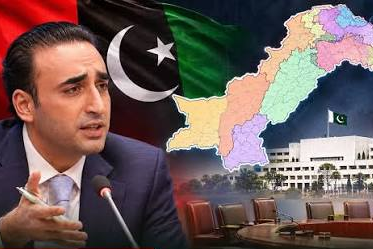
Pakistan’s debate over creating new provinces has entered another important phase, with political disagreements raising questions about the country’s administrative future. The Pakistan Peoples Party (PPP), Pakistan Muslim League-Nawaz (PML-N) and other political stakeholders are facing growing pressure to clarify their positions on proposals to reorganise provincial boundaries.
Recent statements by Bilawal Bhutto-Zardari have brought the issue into the national spotlight. His criticism of proposals to divide existing provinces, particularly Sindh, has highlighted tensions within the ruling coalition. Meanwhile, discussions about a possible referendum have introduced another dimension to the debate over constitutional reforms and provincial autonomy.
Political Tensions Grow Over the Creation of New Provinces
The discussion about creating additional provinces has become increasingly prominent in Pakistan’s political circles. Several government figures have supported the idea of smaller administrative units, arguing that the existing provincial structure needs to respond more effectively to population growth and regional development challenges.
Pakistan currently has four provinces: Punjab, Sindh, Khyber Pakhtunkhwa and Balochistan. Supporters of administrative restructuring believe that smaller provinces could improve access to government services and allow neglected regions to receive greater attention.
However, the proposal has created disagreements among political parties. The PPP has strongly opposed dividing Sindh, while other political groups have supported changes to the country’s administrative structure.
These differences have made it difficult for coalition partners to develop a common position on the proposal.
Bilawal Bhutto-Zardari Raises Concerns Over Political Developments
PPP Chairman Bilawal Bhutto-Zardari recently addressed several sensitive national issues during a speech at the Karachi Press Club.
Apart from rejecting proposals to divide Sindh, he questioned the distribution of reserved seats previously associated with Pakistan Tehreek-e-Insaf (PTI). He also expressed concerns about the judiciary and alleged that the 27th Constitutional Amendment had been passed through pressure.
Bilawal further described former prime minister Imran Khan as a political prisoner and suggested that political leaders, including Maulana Fazlur Rehman, should be approached through dialogue rather than confrontation.
His remarks attracted criticism from government representatives. Federal Information Minister Atta Tarar publicly responded to his statements, while other political figures also joined the discussion.
In subsequent interviews, Bilawal offered explanations of some of his earlier comments, particularly regarding the passage of the 27th Amendment. The exchanges demonstrated the continuing differences between coalition partners over political and constitutional matters.
PPP and PML-N Face Difficult Political Choices
The relationship between the PPP and PML-N has become an important part of the new provinces debate.
Although both parties participate in the federal political arrangement, their positions on provincial restructuring are not entirely clear. The PPP has publicly defended Sindh’s existing boundaries, while PML-N leaders have generally maintained that discussions about creating new provinces require proper consultation and constitutional procedures.
A meeting involving Prime Minister Shehbaz Sharif, Interior Minister Mohsin Naqvi and President Asif Ali Zardari added another development to the situation.
According to the presidential statement following the meeting, future constitutional amendments would be pursued through consensus, as had happened in the past.
This statement was significant because it highlighted the importance of cooperation among political stakeholders when considering major constitutional changes.
However, the broader disagreement over new provinces has not disappeared. Political leaders continue to face questions about whether they support administrative restructuring and what constitutional process should be followed.
Referendum Proposal Adds a New Dimension
One of the most discussed aspects of the debate is the possibility of holding a referendum to determine public opinion about new provinces.
Federal Information Minister Atta Tarar has defended the referendum idea, while senior PML-N leader Rana Sanaullah has also discussed it as a possible way to gauge public support.
Supporters of this approach believe that citizens should have an opportunity to express their views on a major administrative decision.
A referendum could provide information about regional preferences and help political leaders understand public concerns. However, important questions remain about its legal framework, voting arrangements and constitutional significance.
Article 48 of Pakistan’s Constitution provides a framework for holding a referendum, with parliament able to determine the relevant procedure.
Nevertheless, a referendum cannot automatically replace the constitutional requirements for changing provincial boundaries.
Constitutional Challenges Could Delay the Process
Creating new provinces is not simply an administrative decision. It involves important constitutional requirements and political agreements.
Article 239 of the Constitution establishes the procedure for constitutional amendments. If a proposed amendment changes the boundaries of an existing province, it must receive approval from the relevant provincial assembly by a two-thirds majority of its total membership.
The amendment must also secure the required two-thirds majorities in both the National Assembly and the Senate.
This requirement makes provincial consent particularly important. Even if a referendum demonstrates public support for creating a new province, the constitutionally prescribed approval process must still be followed.
The legal requirements are therefore likely to remain central to discussions about any future restructuring.
For further information, readers can explore our report on Pakistan’s new provinces referendum and constitutional requirements.
Why Pakistan’s Provincial Structure Is Under Discussion
The demand for additional provinces is connected to long-standing administrative and economic challenges.
Punjab has a large population, while Balochistan covers an extensive geographical area. Several regions across the country have also raised concerns about unequal development, limited access to public institutions and the concentration of administrative authority in provincial capitals.
Supporters of smaller provinces argue that regional governments could make decisions closer to local communities. They believe this could improve healthcare, education, infrastructure and employment opportunities.
South Punjab is one of the most prominent examples of this debate. For years, political representatives and local communities have demanded greater administrative authority and a separate provincial structure for the region.
In Sindh, discussions about dividing the province have generated strong opposition from the PPP and other political stakeholders who emphasise its geographical unity and historical identity.
These different regional perspectives demonstrate why the issue requires careful discussion rather than political announcements alone.
Local Government Reform Offers Another Option
While creating new provinces remains a major political discussion, strengthening existing local governments could provide another approach to improving administration.
Pakistan’s Constitution recognises the importance of local government institutions under Article 140-A. These institutions can play an important role in delivering basic services, managing municipal affairs and addressing problems at the community level.
Empowered local governments could improve access to clean water, sanitation, healthcare, education and local infrastructure without requiring changes to provincial boundaries.
However, meaningful decentralisation requires elected representatives to receive sufficient financial and administrative authority.
The question is therefore not only whether Pakistan needs additional provinces but also whether existing government institutions are delivering services effectively.
Pakistan Chronicle has also covered this issue in its report on administrative reforms and the future of provincial governance.
Political Consequences for the Federal Coalition
The new provinces debate could influence relationships among federal coalition partners.
The PPP’s opposition to dividing Sindh creates a major political challenge for any proposal involving changes to the province. At the same time, parties supporting administrative restructuring must consider the constitutional and political concerns raised by other stakeholders.
The debate has also generated discussion about the broader balance between federal authority and provincial autonomy.
For political leaders, reaching an agreement will require more than public statements. They will need to address questions about financial resources, administrative boundaries, representation and the distribution of government institutions.
Any proposal that lacks broad political support could face serious difficulties during the constitutional approval process.
What Happens Next?
The coming months could be important for Pakistan’s debate over new provinces. Political parties are expected to continue discussing the proposal, while questions about a possible referendum and constitutional procedures remain unresolved.
The government will need to clarify whether it intends to pursue formal legislation or continue consultations with coalition partners and provincial representatives.
Political consensus will be particularly important because changes to provincial boundaries affect the country’s federal structure.
Citizens will also expect any proposed reforms to address practical problems, including unequal development, administrative delays and limited access to public services.
Conclusion
Pakistan’s new provinces debate has developed into a wider discussion about political cooperation, constitutional responsibilities and the future of federal governance. Bilawal Bhutto-Zardari’s recent statements have highlighted disagreements within the political establishment, particularly over the possibility of dividing Sindh.
Although supporters of administrative restructuring argue that smaller provinces could improve governance, the process involves significant constitutional and financial challenges.
A referendum may help measure public opinion, but it cannot replace the approval procedures established by the Constitution. Ultimately, any decision about creating new provinces will require political dialogue, provincial consent and a clear understanding of its long-term consequences for Pakistan.
Frequently Asked Questions
1. Why is Pakistan discussing the creation of new provinces?
Pakistan is discussing new provinces because of population growth, regional inequalities and concerns about the effectiveness of existing administrative arrangements. Supporters believe smaller provinces could bring government institutions closer to citizens, improve public services and provide neglected regions with greater control over development decisions. However, critics argue that administrative reforms and stronger local governments should be considered before creating additional provincial structures.
2. What is Bilawal Bhutto-Zardari’s position on dividing Sindh?
PPP Chairman Bilawal Bhutto-Zardari has strongly opposed proposals to divide Sindh into additional provinces. His position reflects the PPP’s longstanding emphasis on protecting Sindh’s geographical unity and provincial identity. His recent remarks at the Karachi Press Club renewed political discussion about the proposal and highlighted disagreements between the PPP and other political stakeholders.
3. Can Pakistan create new provinces through a referendum?
A referendum could provide an opportunity for citizens to express their opinions about creating new provinces. Article 48 of the Constitution provides for a referendum, but the process cannot independently change provincial boundaries. Under Article 239, a constitutional amendment affecting provincial boundaries requires a two-thirds majority in the relevant provincial assembly, along with the required two-thirds majorities in the National Assembly and Senate.
4. Why is the PPP’s position important in the new provinces debate?
The PPP is an important coalition partner in the federal government and has strongly opposed dividing Sindh. Its support or opposition could therefore influence efforts to build political consensus around constitutional changes. Since the Constitution requires approval from the assembly of the province whose boundaries would be affected, the PPP’s position carries particular significance in discussions involving Sindh.