Natalie Baker Nominated as Next U.S. Ambassador to Pakistan
November 11, 2026
President Donald Trump has nominated Natalie A. Baker, a career diplomat from San Antonio, Texas, to be the next U.S. ambassador to Pakistan. The White House announced the nomination this week. If the Senate confirms her, Baker will fill a post that has had no confirmed ambassador for nearly two years, since Donald Blome left Islamabad in early 2025.
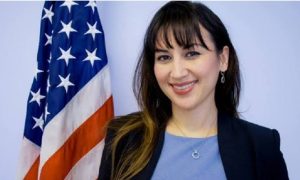
Natalie A. Baker, the U.S. chargé d’affaires in Islamabad, has been nominated as ambassador to Pakistan.
A Familiar Face in Islamabad
Baker is not new to the job. She arrived in Islamabad in August 2024 as deputy chief of mission and became chargé d’affaires in January 2025, which put her in charge of the embassy while the ambassador’s chair stayed empty. She holds the rank of Minister-Counselor in the Senior Foreign Service.
Because she already runs the mission, the nomination looks less like a new appointment and more like a formal title for work she is already doing. Washington and Islamabad are trying to widen cooperation on trade, investment, regional security and counterterrorism, and an ambassador confirmed by the Senate carries more weight in those talks than an acting one.
A Career Spent in Difficult Places
Most of Baker’s career has been in the Near East, North Africa and South Asia, often under tight security. Before Islamabad, she was deputy chief of mission in Doha, Qatar, from 2021 to 2024. She has also served as deputy chief of mission and chargé d’affaires for the U.S. Mission to Libya.
Her time in Tripoli stands out. She worked there as political and economic counselor from 2009 to 2011, helping to normalize relations between Washington and Tripoli, and stayed until the Libyan revolution forced the embassy to evacuate in February 2011. In Kuwait City, as economic counselor, she worked with the Defense Department on the logistics of withdrawing American forces from Iraq. She was also deputy director of the Iran Regional Presence Office at the U.S. Consulate in Dubai.
Her earlier assignments include consular officer in Islamabad, cultural affairs officer in Ashgabat, Turkmenistan, and special assistant in the State Department’s Bureau of Near Eastern Affairs.
Education and Background
Baker grew up in San Antonio. She earned a bachelor’s degree from Princeton University and a Master of Public Policy from the Harvard Kennedy School. In 2017, she graduated from the U.S. National War College at the National Defense University as a distinguished graduate. She speaks Arabic, Spanish, Farsi and Russian.
Diplomacy Beyond the Embassy
In Pakistan, Baker has made herself visible outside the embassy walls. She has attended national cricket matches, played cricket with local female athletes in Lahore, and spoken openly about Pakistani food and wedding traditions. When she talks about American culture, she tends to bring up San Antonio breakfast tacos and Texas barbecue.
None of this settles a policy dispute. Still, an envoy who is willing to show up and listen usually gets a better hearing, and Baker appears to understand that.
Why Continuity Matters
An embassy can function for a long time under a chargé d’affaires, and Baker’s mission has done so. But an acting head of mission has limits. An ambassador speaks with the authority of the president, and foreign governments tend to treat that voice differently. Pakistani officials have had two years of dealing with a deputy-level lead, however capable.
Choosing someone already in the building also avoids a handover. A newcomer would need months to learn the people and the files. Baker has been through that stretch already, and her nomination suggests the administration wants the work to continue without a pause.
That does not guarantee an easy relationship. Trade terms, security cooperation and counterterrorism all involve hard bargaining. But an ambassador with existing contacts starts those conversations ahead of where a stranger would.
What Happens Next
The nomination now goes to the Senate Foreign Relations Committee. The committee will review her record and hold a confirmation hearing, then vote on whether to send the nomination to the full Senate with a favorable recommendation.
If the committee approves, Baker needs a simple majority in the full Senate. Only after that vote can she be sworn in as Ambassador Extraordinary and Plenipotentiary to the Islamic Republic of Pakistan. The Senate has not announced a hearing date, so the timeline is unclear.
Texas Publishers Extend Their Congratulations
The Pakistan Publications Group of Companies, a Texas-based media group, has sent its greetings and congratulations to Baker on her nomination. The group publishes Pakistan Chronicle, South Asian Chronicle and Pakistan Journal, and said the message comes from all of its companies and newspapers.
The group pointed to a shared Texas connection. Baker is from San Antonio, and the publishing group is also based in Texas. It described its work as promoting awareness, education, honesty, ownership and character building, and said its main aim is to build bridges between communities and countries.
For the group, that mission carries a personal meaning. Its adopted land is the United States and its motherland is Pakistan, and it says it has played a significant part in strengthening ties between the two communities.
The group also offered its cooperation. It said it would welcome the chance to work with the U.S. State Department and the American diplomatic mission on any initiative that could be promoted through its newspapers. Baker’s nomination still needs Senate confirmation, so the message is a goodwill gesture and not a formal partnership.
The Road Ahead
If confirmed, Baker will not need a long introduction. She knows the embassy, the officials she will deal with and the country itself, having served there as a consular officer early in her career.
Her priorities will most likely follow the issues already on the table: trade, investment, regional security and counterterrorism. The open question is not whether she knows the job. It is how quickly the Senate acts.