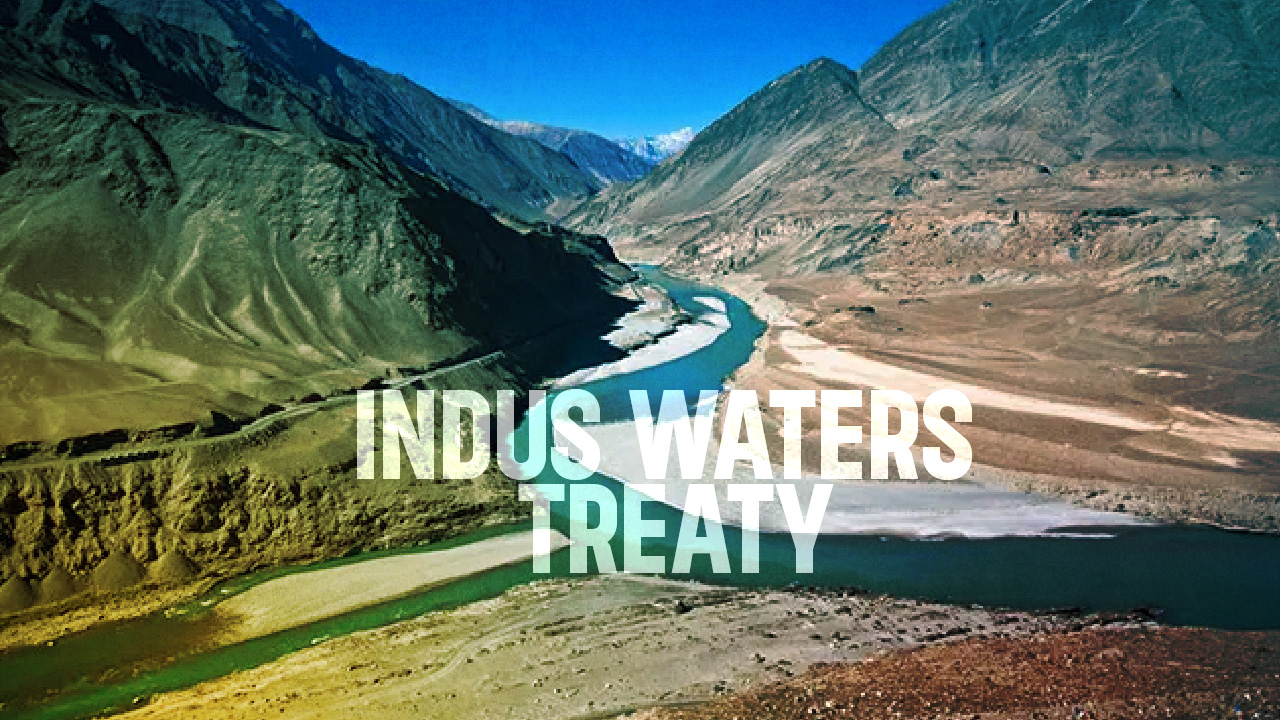
Pakistan’s Deputy Prime Minister and Foreign Minister Ishaq Dar said on Wednesday that India cannot walk away from its international obligations simply because they’ve become inconvenient. Speaking at a UN General Assembly side event, he pointed to a recent court ruling that reaffirmed the Indus Waters Treaty is still very much alive, whatever New Delhi has been saying since last year.
His comment lands at a tense moment. India put the 62-year-old water-sharing agreement “in abeyance” in April 2025, and the fallout from that decision is still playing out in courtrooms, foreign ministries, and now on the sidelines of the UN.
Background: Why the Treaty Was Suspended
India moved to suspend the Indus Waters Treaty after a militant attack in Kashmir, which it blamed on Pakistan. Islamabad denied any involvement. The decision was followed by a brief but serious military confrontation between the two countries in May 2025, the kind of escalation the treaty had managed to survive for six decades, through wars, standoffs, and long stretches of diplomatic silence.
Pakistan has consistently argued that a bilateral treaty of this kind has no built-in exit clause for one side to invoke unilaterally, and that framing water access as a response to a security dispute breaks the entire logic the treaty was built on.
What Dar Said
Addressing the ministerial meeting of the OIC Contact Group on Jammu and Kashmir, held on the margins of the UN General Assembly’s 81st session in New York, Dar didn’t mince words. He said the treaty is a binding international agreement and, in his words, “contains no provision permitting its unilateral suspension.”
He tied the issue to something bigger than the treaty itself: the credibility of international agreements in general. He has made a version of this argument before, telling a Washington seminar in August that “neither country can, through a unilateral political declaration, extinguish obligations solemnly undertaken under international law.” If treaties can be discarded whenever politics sour, he argued, the entire point of signing them collapses.
The Court of Arbitration Ruling
Dar’s confidence isn’t coming out of nowhere. In August, the Permanent Court of Arbitration in The Hague handed down a ruling that was, by most readings, a clear setback for India’s position. The five-member panel found unanimously that the treaty “remains fully in force” and that India “must observe its obligations” under it, including how it designs and operates hydropower projects on the western rivers that flow into Pakistan.
The court went through every justification India has offered publicly, including sovereignty, Pakistan’s supposed reluctance to renegotiate, cross-border terrorism, and shifts like population growth and climate change. It rejected all of them, concluding that no rule of international law lets a state suspend a treaty just because it decides, unilaterally, that it’s entitled to.
The panel also ordered India to hold off on certain construction work at the Ratle Hydroelectric Plant in Kashmir, specifically limits on the dam wall and power intake structure, until 90 days after a World Bank-appointed neutral expert issues a final decision, expected sometime before July 2027.
India’s response was immediate and blunt. Its Ministry of External Affairs said the court has “no jurisdiction whatsoever to pronounce on India’s sovereign decisions” and that its rulings, now or later, won’t change what India does with its projects.
Impact
This isn’t just a legal dispute buried in a treaty annex. The Indus system feeds agriculture, drinking water, and hydropower across a huge stretch of Pakistan, and any real disruption to water flows carries consequences that go well past diplomacy. For India, the standoff has turned into a test of how far it can distance itself from an international ruling without paying a real cost, at the World Bank, at the UN, or in how other countries read its commitment to agreements it has signed.
There’s also a regional security angle that’s hard to ignore. Dar himself has warned that denying Pakistan water it’s entitled to under the treaty would carry what he called “profound consequences” for regional stability, language that reflects just how much this dispute now overlaps with the broader India-Pakistan security relationship, not just water management.
Conclusion
For now, the treaty sits in a strange limbo: legally reaffirmed by an international court, but practically unrecognized by one of its two signatories. Pakistan is leaning on the ruling to press its case diplomatically, at the OIC, at the UN, and wherever else it can get a hearing. India, for its part, shows no sign of budging.
The next real marker to watch is the World Bank-appointed neutral expert’s decision on the Ratle project, expected before July 2027. Until then, expect more statements like Dar’s, more rejections from New Delhi, and very little movement on the ground.
FAQs
Did India release water to Pakistan?
As of now, India has not reversed its April 2025 decision to hold the Indus Waters Treaty in abeyance, and it has rejected the Permanent Court of Arbitration’s August ruling that ordered it to keep observing treaty obligations. Pakistan maintains that India has not restored normal data-sharing and flow arrangements under the treaty, and the dispute over actual water releases remains unresolved even after the court’s decision.
Which rivers flow from India to Pakistan?
The Indus Waters Treaty covers six rivers of the Indus basin. The three eastern rivers, Ravi, Beas, and Sutlej, were allocated to India for largely unrestricted use. The three western rivers, Indus, Jhelum, and Chenab, were allocated to Pakistan, though India retained limited rights to use their waters for non-consumptive purposes such as hydropower generation, which is the basis for projects like Ratle and Kishenganga.
Which treaty was signed between India and Pakistan?
The agreement at the center of this dispute is the Indus Waters Treaty, signed in 1960 between India and Pakistan with the World Bank acting as a broker and guarantor of the process. It divided control of the Indus river system’s six rivers between the two countries and set out detailed rules for water use, data sharing, and dispute resolution, mechanisms that are now being tested by India’s 2025 decision to suspend its participation.