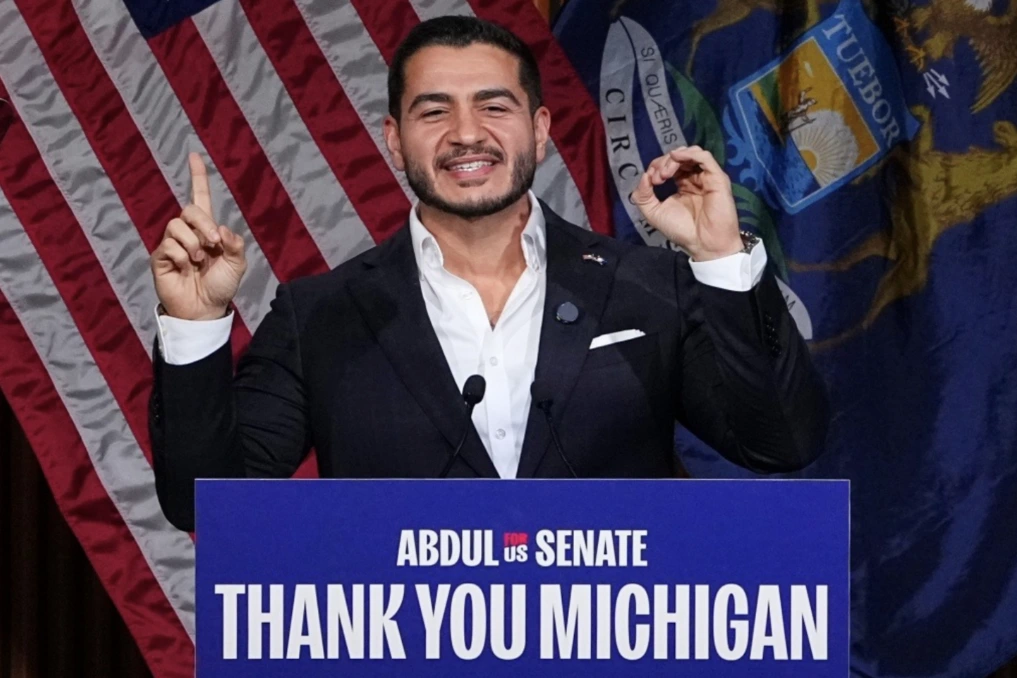
The Democrat beat Republican Mike Rogers in a bitter campaign for an open seat, and will take office in January 2027
(Reported by: Tariq Nehal Khan | November 7, 2026 | Pakistan Chronicle | South Asian Chronicle | The Pakistan Journal)
DETROIT. Democrat Abdul El-Sayed has won Michigan’s open U.S. Senate seat, beating Republican Mike Rogers and becoming the first Muslim elected to the Senate. The Associated Press called the race in the early hours of Wednesday, November 4, after weeks of polls that had shown the contest close.
El-Sayed is 42, a physician and former public health official, and the son of Egyptian immigrants. He thanked a cheering crowd of supporters in Detroit as he declared victory.
In unofficial returns he led Rogers by roughly 52 percent to 46 percent. Those numbers can still shift, and Michigan must finish its canvass before the result is certified. The seat was held by Democrats, and Republicans had hoped to take it as they defended their own Senate majority.
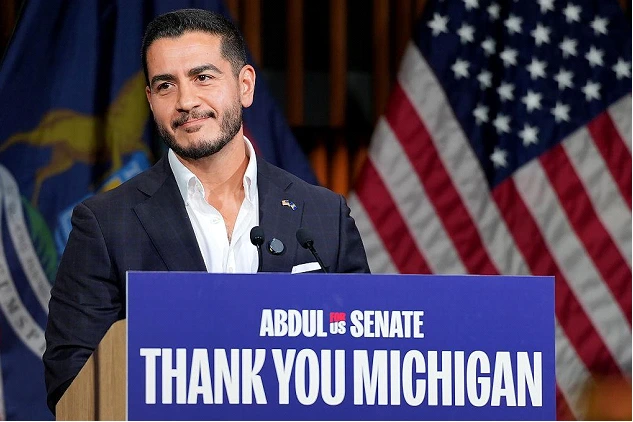
From a 2018 Loss to the Senate
This win comes eight years after a loss. El-Sayed ran for governor in 2018 and lost the Democratic primary to Gretchen Whitmer. He then went back to public health work. He ran Detroit’s health department, later led health services in Wayne County, and hosted a podcast about health care and policy. He studied at the University of Michigan, earned a doctorate at Oxford as a Rhodes Scholar, and finished medical school at Columbia.
Rogers is a former Republican congressman who lost a narrow Senate race in 2024 to Elissa Slotkin. He ran unopposed in his party’s primary this year.
A Hard Primary and a Bitter Fall
Nothing about the path was smooth. In August, El-Sayed beat Representative Haley Stevens in the Democratic primary by only about one point, a contest that split the party between its progressive and establishment wings. Then, shortly before the general election, Stevens endorsed Rogers. That defection, which several news outlets called a last-minute move, gave Republicans a line of attack and left some Democrats uneasy.
The primary itself was close enough that it was called only on the morning after election day, following a long night of counting.
The AP described the fall campaign as bitter. Al Jazeera reported that El-Sayed also faced Islamophobic and racially charged rhetoric from top Republicans in the closing weeks. His criticism of U.S. support for Israel drew sharp attacks from opponents and divided some Democratic voters as well.
What He Ran On
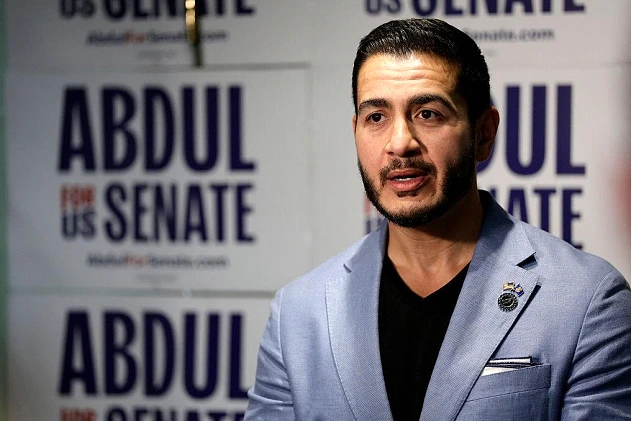
El-Sayed campaigned for Medicare for All, limits on corporate money in politics, and policies to lower costs and tackle medical debt. He also called for stronger protections for workers and unions and tougher enforcement of antitrust laws. Those are campaign promises. One senator in a chamber of 100 cannot deliver any of them alone.
The message landed in a state where many voters are tired of high prices.
NPR and the AP both reported that the cost of living and worries about corruption shaped this year’s midterms across the country. NPR also described the Michigan race as a test of how an antiestablishment candidate on the left would fare in a perennial Midwest battleground. On Tuesday, voters answered that question in his favor.
Where the Votes Came From
Bridge Michigan reported that El-Sayed ran well ahead of Kamala Harris’s 2024 numbers. In Detroit he won about 92 percent of the vote in unofficial results.
In Dearborn, a city with a large Arab American community that Donald Trump carried by six points in 2024, El-Sayed won by about 65 points. By early Wednesday, about 93 percent of ballots in Wayne County, which includes Detroit and Dearborn, had been counted, and El-Sayed and Benson each held more than 70 percent there.
Still, one community did not decide this race. Higher turnout and Democratic gains across the state helped him, and Democrat Jocelyn Benson, the secretary of state, won the governor’s race by more than ten points over Republican John James. She will succeed Whitmer.
What Comes Next
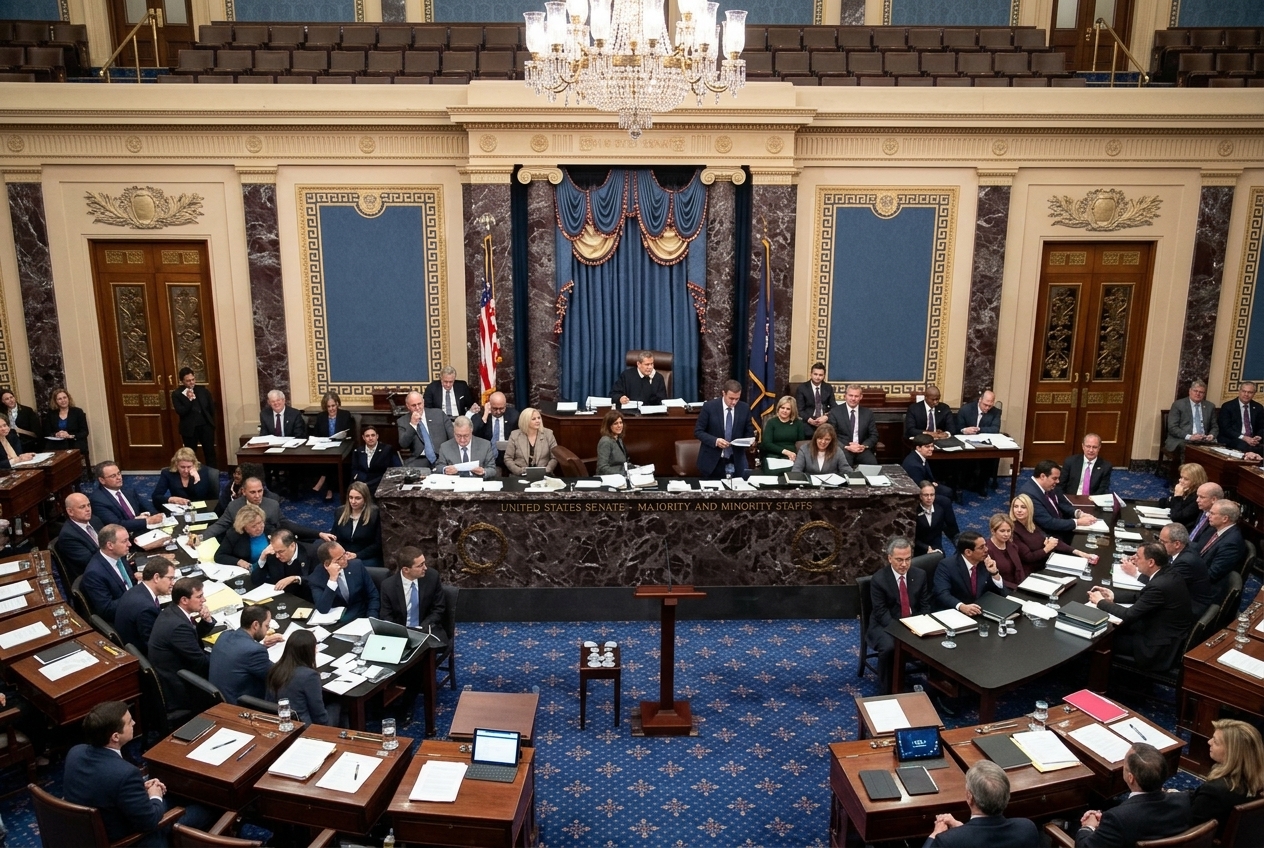
El-Sayed takes office when the new Congress opens in January 2027, succeeding retiring Democratic Senator Gary Peters. Michigan was one of several Senate battlegrounds this year.
Democrats flipped seven Republican-held seats elsewhere and now hold at least 54 Senate seats, so his vote will not decide control of the chamber. Democrats also won the House, which means he will arrive in a Congress where his party holds both chambers.
Nationally, President Donald Trump has said he will accept the midterm results and is prepared to work with Democrats. Senate Majority Leader John Thune, who is losing his majority, said Republicans will not stand idly by while the Democratic left tries to undo their work.
What he does bring is a progressive voice that Democratic primary voters chose over a sitting member of Congress. How much he can get done as a freshman, and how he works with colleagues who backed other candidates in the primary, will become clear after he is sworn in.
For now, the count is not final. Official certification is still to come, and the totals may move slightly as the last ballots are tallied.