Summary
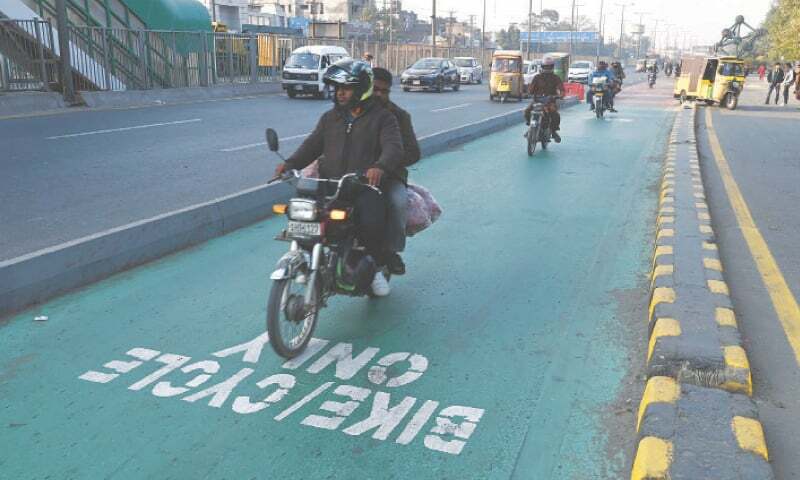
LAHORE: Punjab Chief Minister Maryam Nawaz has ordered the designation of dedicated bike lanes on major roads of Lahore. She also directed authorities to enforce strict compliance with traffic rules on vehicles operating under the Suthra Punjab Programme.
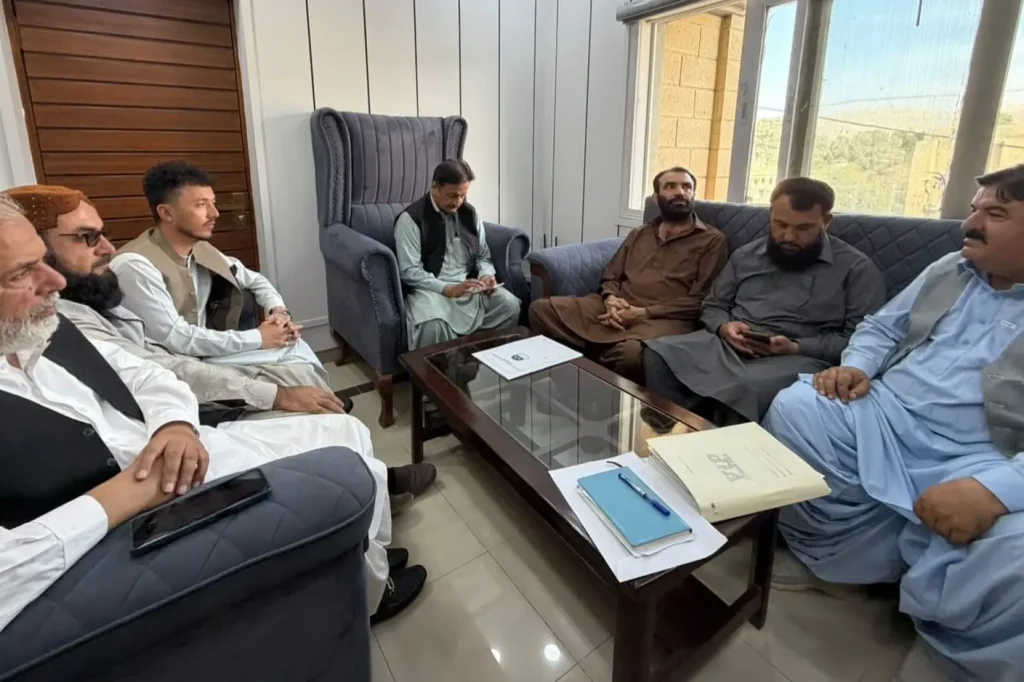
The order came during a special meeting on traffic management held on Monday. It covers designated motorcycle lanes Lahore-wide, pedestrian safety, and stricter monitoring of sanitation vehicles that have been involved in recent road accidents.
Background
Lahore has struggled with mixed traffic for years, with motorcycles, cars, rickshaws and heavy vehicles sharing the same lanes on most arteries. This mix is one of the leading causes of road accidents in the city.
The Punjab government first floated the idea of separate motorcycle lane rules on Lahore roads in late 2024. A pilot phase later began construction of bike lanes along Ferozepur Road and Canal Road, extending toward Lahore Bridge.
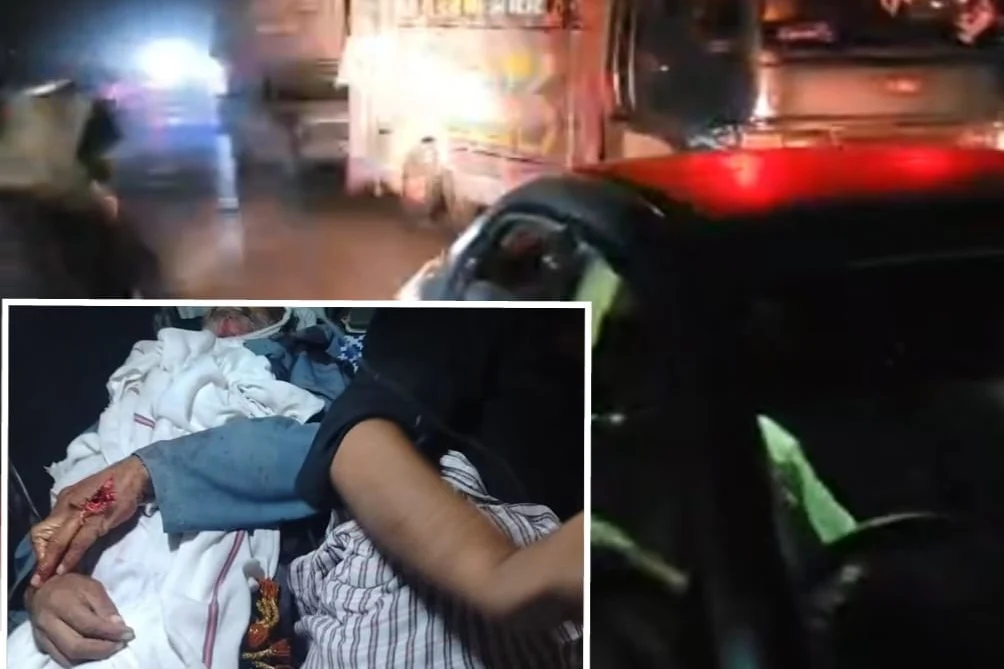
Monday’s meeting builds on that earlier plan. It comes days after a minor girl was killed after being run over by a Suthra Punjab vehicle, an incident that appears to have pushed traffic discipline back onto the CM’s agenda.
Details
Chairing the meeting in Lahore, Maryam Nawaz directed that dedicated motorcycle lanes be marked out on all major roads across the city. Officials were told to treat this as a city-wide standard rather than a one-off pilot.
The chief minister expressed serious concern over repeated traffic violations by Suthra Punjab vehicles and ordered that these vehicles follow the same motorcycle lane rules and general traffic regulations as everyone else, without exception.
She also ordered strict enforcement of zebra crossings for pedestrians and approved a plan for camera-based digital monitoring at major crossings. A related proposal to install pedestrian alert buttons at busy intersections was reviewed during the same meeting.
A pilot enforcement project for zebra crossings will now begin on The Mall Road. Ferozepur Road has been earmarked as a model road for the rest of the city, combining lane discipline, signage and monitoring in one stretch.
The CM further ordered that cargo-carrying tractor-trolleys, including those used by Suthra Punjab, must be properly covered before entering city roads. She also directed a province-wide crackdown on overloaded tractor-trolleys ahead of the coming sugarcane season.
On congestion, she asked officials to take immediate steps to ease traffic at Shahdara and Thokar Niaz Baig, two of the busiest entry and exit points for Lahore. She also ordered new traffic signals at Pine Avenue and Jati Umra Chowk.
Quotes
Officials briefing the meeting said Lahore’s ranking on the Numbeo Global Traffic Index has improved sharply, moving from 149th to 29th position. Lahore’s Chief Traffic Officer, Syed Abdul Rahim Shirazi, told the meeting that congestion had fallen by up to 70 percent at key points including Jati Umra Chowk, Pine Avenue, Defence More, Karim Block, Akbar Flyover, Kahna and Main Boulevard.
The meeting was also informed that over 4,000 traffic permits have been issued to riders under 18, and that around 65,000 Pink Buttons have been installed at various points across the city to assist women crossing the road.
Impact
For daily commuters, the biggest change will be seeing motorcycles physically separated from cars and heavy traffic on major roads, rather than sharing a single lane. Riders who currently weave between lanes to find space should eventually have a marked lane of their own.
The order also puts direct pressure on the Suthra Punjab Programme, whose vehicles have faced criticism for ignoring signals, crossings and general motorcycle lane rules on city roads. Stricter enforcement there is meant to reduce accidents involving sanitation and cargo vehicles.
Camera-based monitoring at zebra crossings, if rolled out as planned, would extend Lahore’s existing traffic camera network into pedestrian safety enforcement, an area that has so far relied mostly on manual policing.
Conclusion
The immediate test now shifts to implementation. Marking a lane on paper is different from maintaining physical separation, signage and enforcement on the ground once construction crews and traffic police move in.
Attention will likely turn next to how quickly the Mall Road zebra-crossing pilot rolls out, how fast new signals appear at Pine Avenue and Jati Umra Chowk, and whether Ferozepur Road actually functions as the model road the CM has described.
FAQs
How many lanes are there for a motorcycle?
Under the current Lahore plan, the government is designating one dedicated lane for motorcycles on each major road, usually running alongside the regular traffic lanes rather than replacing them. This mirrors the earlier pilot on Ferozepur Road and Canal Road, where a single marked lane was built for two-wheelers along a roughly 10-kilometre stretch. The exact number of motorcycle lanes on any given road depends on that road’s width and traffic volume, so busier arteries may eventually get wider or additional dedicated space, while narrower roads may only support one lane in each direction.
Is a motorcycle allowed on a motorway in Pakistan?
Generally, no. Under Section 45 of the National Highway Safety Ordinance 2000, motorcycles have been restricted from Pakistan’s motorways since the network was built, and the Supreme Court upheld this restriction in a 2022 ruling. There has been a narrow exception for heavy bikes above 600cc, which were allowed limited, one-time entry on the M-2 motorway under strict conditions such as valid club membership, ABS, safety gear and a minimum rider age. Ordinary motorcycles, including the small and mid-sized bikes most commonly used in cities like Lahore, remain barred from motorways and are instead expected to use city roads, where the new designated motorcycle lanes are meant to apply.
How does a motorcyclist divide a lane to determine positioning?
Traffic safety guidance generally divides a single lane into three imaginary positions: left, center and right. Riders are advised to choose a position based on visibility, road surface condition and the behaviour of nearby vehicles, rather than always riding in the same spot. Positioning matters even more once dedicated motorcycle lanes are introduced, since riders will need to judge their placement within a narrower, motorcycle-only space while sharing it with other bikes, rather than adjusting around cars and trucks.