

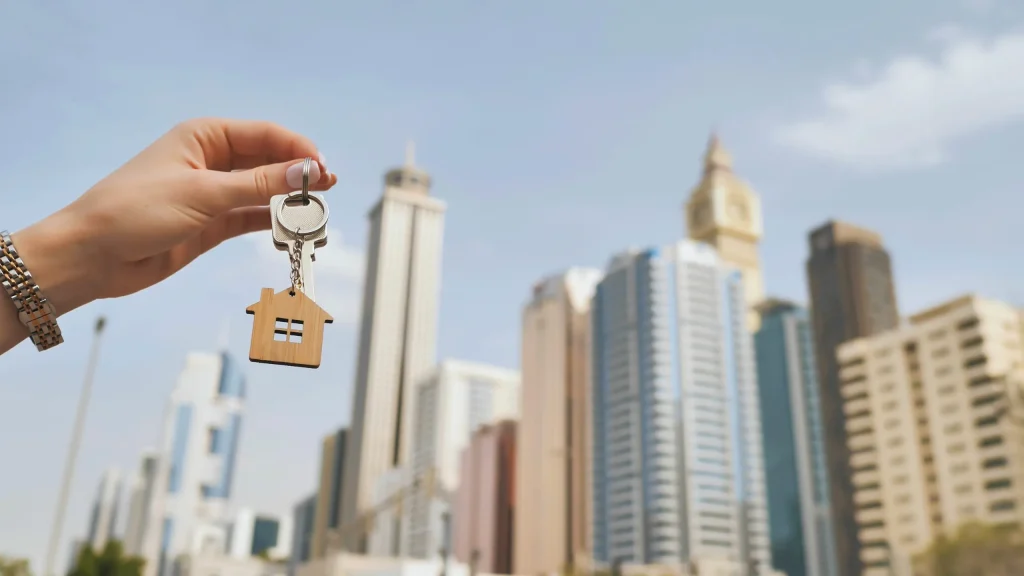

KARACHI: The regional Gulf war has cut off the flow of black money from Pakistan into Dubai property, and money already parked there is now being pulled back and redirected into real estate inside Pakistan, according to sources in the property and currency markets. The shift marks a rare reversal for a route that has funneled undocumented wealth out of the country for years.
Background
Dubai has long served as the preferred destination for undocumented wealth generated in Pakistan. Thousands of Pakistanis have poured hundreds of millions of dollars into Dubai property over the years, and the country was twice ranked as the second-largest foreign source of investment in the emirate’s real estate sector. Industry figures widely believed that black money created inside Pakistan helped fuel Dubai’s property price surges.
That flow has now stalled. All Pakistan Builders Association Chairman Hassan Bakhshi said roughly $60 million in illegal money used to be generated in Pakistan every month and funneled into Dubai property, a channel that has now effectively shut down because of the war.
Details
Currency dealers describe a situation that has essentially flipped. Money that Pakistanis had already parked in Dubai is now stuck there, and recovering it has become difficult as the conflict drags on. At the same time, remittances flowing from Dubai back into Pakistan have picked up, which dealers say reflects Pakistanis moving their liquid assets home rather than leaving them exposed abroad.
The redirected money appears to be landing squarely in Karachi’s property market. Bakhshi said prices in Defence Housing Authority, one of Karachi’s most sought-after neighborhoods, have jumped 50 to 60 percent since the Gulf war began. He attributed the surge partly to the area’s clean property titles, which avoid the double-filing and fraudulent dealing issues that plague some other parts of the city, making it an attractive parking spot for money looking for a quick, safe home.
The disruption is not limited to property. A related Dawn report found that Pakistan’s unofficial hundi and hawala channels through Dubai, long used by small exporters and manufacturers to move money outside formal banking routes, have also dried up sharply during the war. Businesses that once shipped goods informally through Dubai say buyers across the Gulf have simply disappeared, forcing some factories to fall back on a fraction of their usual production for the domestic market alone.
Dubai’s broader appeal as a base for Pakistani business has taken a hit too. Tech companies that relocated there in large numbers before the war are now facing operational difficulties, and people connected to Dubai-based businesses say tourism has slowed sharply while the property market has lost some of its shine as a destination for both work and investment.
Quotes
Bakhshi’s account, drawn from his position at the head of Pakistan’s builders’ body, points to a channel that had operated for years with little disruption suddenly grinding to a halt. Currency dealers interviewed separately describe rising remittances from Dubai as clear evidence that Pakistanis are choosing to bring their money home rather than risk it staying exposed to a market shaken by war.
Separately, a Dubai-based property dealer quoted in earlier reporting on the conflict said that while regional tensions were a real concern, they had not yet produced any immediate hit to prices or market confidence, a more cautious read than the one now coming out of Karachi’s property circles.
Impact
For Pakistan, the reversal cuts both ways. On one hand, redirected funds are pouring into Karachi’s real estate sector, pushing up prices in premium areas like Defence and giving local developers a fresh source of demand at a time when the broader economy has struggled for investment. On the other hand, the same undocumented money that once left the country quietly is now landing back inside it, adding to concerns about how much of Pakistan’s property boom is being driven by funds that were never taxed or declared in the first place.
The slowdown in hundi and hawala flows through Dubai is squeezing smaller businesses that depended on that informal channel to get paid for exports never listed on the official books. Some manufacturers report producing at a tenth of last year’s output, with no clear timeline for when Gulf buyers might return.
Dubai, meanwhile, loses a piece of the foreign capital that helped inflate its property market over the past three years. Pakistan had already slipped from second to fourth place among foreign investors in Dubai real estate even before this latest disruption, and a sustained pullback would add to the pressure already facing the emirate’s off-plan and resale segments.
Conclusion
How long this reversal lasts depends largely on how the regional conflict develops. A prolonged war would likely keep pushing undocumented Pakistani wealth back toward Karachi and other domestic property markets, sustaining the price gains already visible in areas like Defence. A ceasefire or de-escalation, on the other hand, could revive Dubai’s pull as a destination for that same money once conditions there stabilize.
Regulators in both countries are likely to watch the shift closely. Pakistan’s State Bank has already taken steps to curb informal dollar outflows while developing a regulatory framework for crypto trading, a sign that authorities are aware of how easily undocumented money can find new routes once an old one closes.
FAQs
Are property prices crashing in Dubai?
Dubai’s property market has slowed sharply in 2026, with sales volumes and values both down significantly from the year before, though most analysts describe this as a correction rather than a crash. The Pakistan-specific angle adds another layer: with black money outflows from Pakistan to Dubai property now curbed by the war, one source of foreign demand that had supported Dubai prices in recent years has weakened, even as the domestic Pakistani property market absorbs some of that redirected capital.
Is Dubai struggling right now?
Dubai’s appeal as a safe haven for foreign capital and business has taken a genuine hit during the war, according to people connected to Dubai-based businesses, who describe slower tourism and a less attractive property market. For Pakistani investors specifically, dealers say Dubai has lost some of its shine as money that once flowed there is now flowing back into Pakistan instead, though it remains unclear whether this is a lasting shift or a temporary pause tied to the conflict.
Is it risky to buy property in Dubai?
For Pakistani investors moving undocumented money, the risk calculation has clearly changed, with currency dealers describing funds already parked in Dubai as difficult to recover while the war continues. For buyers generally, risk now depends heavily on exposure to leveraged off-plan units, which have seen the sharpest price corrections, versus cash-backed purchases of ready homes, which have held up far better through the slowdown.