Summary
Pakistan cotton quality has become almost as pressing a concern as the falling volume of the crop itself. Contamination during manual picking, pest damage, and the use of uncertified seed are dragging fibre grades down across the country’s main cotton growing areas in Pakistan. Buyers and mills say the gap with international quality benchmarks is widening.
Background
For decades, Pakistan built a textile industry on the back of locally grown cotton, prized for length and strength that suited both domestic spinning and export orders. That reputation has slipped in recent years.
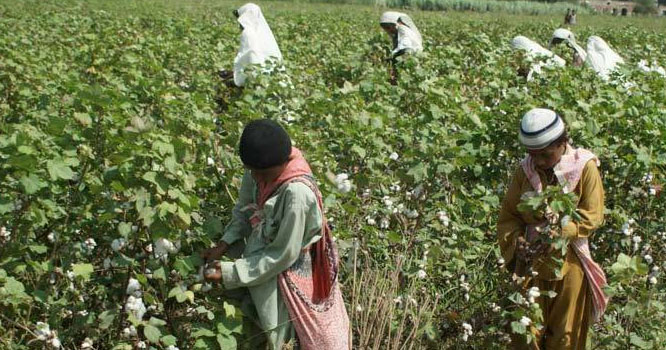
More than 90 percent of the cotton picked in Pakistan is still gathered by hand, a practice that leaves the crop exposed to leaf debris, plastic contamination, and moisture damage before it ever reaches a ginning factory. Combined with pest pressure and inconsistent seed quality, this has chipped away at the grade of lint the country is able to supply.
Details
The cotton growing areas in Pakistan fall into two broad belts. Punjab’s southern districts, including Multan, Vehari, Rahim Yar Khan, Bahawalpur, and Dera Ghazi Khan, form the country’s traditional core, supported by canal irrigation from the Indus system.
Sindh’s cotton belt runs through districts such as Sanghar, Ghotki, Mirpurkhas, and parts of the lower province, where output has occasionally overtaken Punjab in a given season despite covering less land overall.
Within these belts, fibre quality varies sharply from district to district. Sanghar in Sindh has repeatedly posted the country’s highest raw output figures, while some southern Punjab districts have seen production collapse to a small fraction of historic levels as sugarcane mills expand into what used to be dedicated cotton land.
Pest pressure remains one of the biggest threats to quality rather than just yield. Pink bollworm larvae feed inside the boll itself, staining and weakening the fibre from within, while whitefly infestations coincide with periods of high humidity during the picking season. Both problems tend to worsen in years with heavy late-season rain.
Seed quality compounds the issue. Industry estimates suggest a large share of the cotton seed used across Pakistan is not properly certified, which means growers often cannot be certain what fibre characteristics they are actually planting for. The recent approval of hybrid cotton seed imports, after a long-standing restriction, is aimed partly at closing this gap.
Quotes
Researchers at the Central Cotton Research Institute in Multan have warned that prolonged humidity and late rainfall during the picking window tend to raise whitefly and pink bollworm incidence, which directly affects both lint quality and final yield.
Textile industry representatives have argued that Pakistan’s reliance on manual picking, at a time when major competitors have moved toward mechanised harvesting, is one of the main reasons local cotton struggles to match international contamination standards.
Farmer groups counter that without a price premium for cleaner, better-graded cotton, growers have little financial incentive to invest in the extra labour and care that higher quality picking requires.
Impact
Weaker fibre quality does not just affect farmers. Spinning mills that need higher-grade lint for premium yarn are increasingly forced to import cotton from countries such as the United States, Brazil, and parts of Central Asia, even in seasons when Pakistan’s own volumes look reasonable on paper.
That import dependence adds cost pressure through freight, duties, and currency exposure, on top of the volume shortfall the sector already faces. For exporters competing on finished textile products, inconsistent local fibre quality also makes it harder to guarantee the specifications international buyers ask for.
Regionally, the shrinking of dedicated cotton growing areas in Pakistan in favour of sugarcane and rice is reshaping entire farming districts, with knock-on effects for ginning factories, seed suppliers, and rural labour that depended on the cotton picking season for income.
Conclusion
Improving Pakistan cotton quality will likely take more than a single good season. Wider adoption of certified seed, better pest management timed around the picking window, and eventually some shift toward mechanised or more careful hand-picking practices are the changes most often cited by researchers and industry groups.
Provincial governments are also looking beyond the traditional belt, exploring cotton cultivation in Balochistan and Khyber Pakhtunkhwa, where lower pest pressure has produced encouraging early results, including some organic cotton farming. Whether that expansion can offset losses in the traditional Punjab and Sindh districts remains an open question for now.
FAQs
Where is most cotton grown in Pakistan?
The bulk of Pakistan’s cotton comes from two provinces: Punjab and Sindh. Within Punjab, the southern districts of Multan, Vehari, Bahawalpur, Rahim Yar Khan, and Dera Ghazi Khan make up the traditional cotton growing areas in Pakistan. In Sindh, Sanghar, Ghotki, and Mirpurkhas are among the leading producing districts, with Sanghar frequently reporting the country’s single highest district-level output in recent seasons.
Which country is No. 1 in cotton?
China is the world’s leading cotton producer, with India, Brazil, and the United States rounding out the top four in most seasons. Pakistan typically ranks lower down the global list, and its share of world production has shrunk further as domestic output has declined from its historic peak of around 14 million bales to roughly a third of that level in recent years.
Which city is famous for cotton in Pakistan?
Multan holds the strongest claim to being Pakistan’s cotton city, given its concentration of ginning factories, cotton research institutions, and trade linked directly to the raw crop. Faisalabad is better known as the country’s textile manufacturing hub, processing cotton into yarn and cloth even though the fibre itself is grown mainly in the surrounding agricultural districts rather than within the city limits.