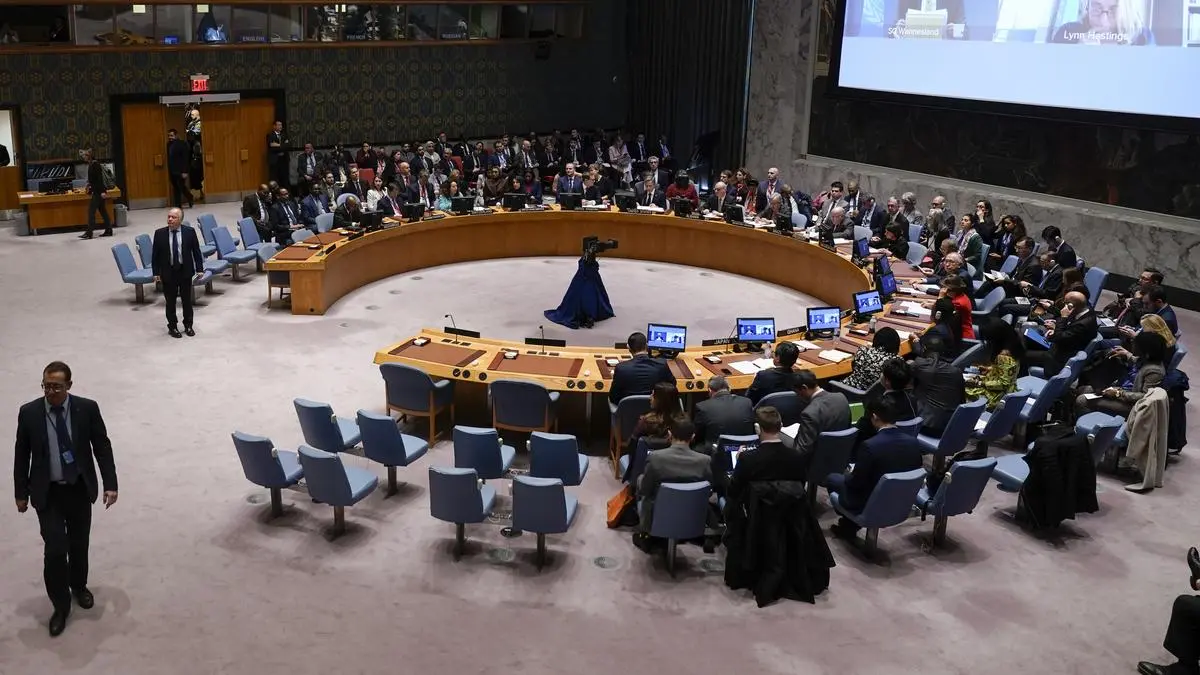
Talks on reforming the United Nations Security Council remain deadlocked after more than 16 years of formal negotiations, with the G4 group of Brazil, Germany, India and Japan pushing a compromise proposal for expanded permanent membership while Pakistan, as a leading voice in the rival Uniting for Consensus group, continues to reject any expansion of the Council’s permanent category. The latest round of Intergovernmental Negotiations, held through 2026, has again exposed the same fundamental divide that has stalled reform since talks formally began in 2009.
Background
The UN Security Council was designed in 1945 with five permanent, veto-wielding members — China, France, Russia, the United Kingdom and the United States — plus ten non-permanent members elected for two-year terms by the wider General Assembly. That structure has remained essentially unchanged even as UN membership has grown from just over 50 countries at the organization’s founding to 193 today, a gap that has fueled decades of calls for reform. Formal, structured talks on restructuring the Council began in the General Assembly in February 2009 and have continued each year since under a process known as the Intergovernmental Negotiations, or IGN, which examines five interlinked areas: the size of the Council, categories of membership, regional representation, the question of veto power, and the Council’s working methods.
Details
What the G4 is proposing in 2026
The G4 bloc — Brazil, Germany, India and Japan, four countries that have long campaigned for permanent seats and mutually back one another’s bids — has presented what it describes as a compromise model this year. Rather than demanding immediate veto power for new permanent members, the G4 proposal calls for a time-bound review clause roughly 15 years after any new permanent seats are created, deferring the question of extending veto rights to new members until that review takes place. Germany, delivering a national statement in February 2026 in support of the joint G4 position, described the approach as one built on balanced enlargement and what it called veto pragmatism, arguing the model addresses long-standing underrepresentation without forcing an immediate decision on extending veto power. India’s ambassador to the UN separately confirmed New Delhi’s support for the 15-year deferral, while still insisting that any credible reform must eventually expand the permanent category itself rather than create a lesser, non-veto tier of membership.
Why Pakistan and the Uniting for Consensus group are opposed
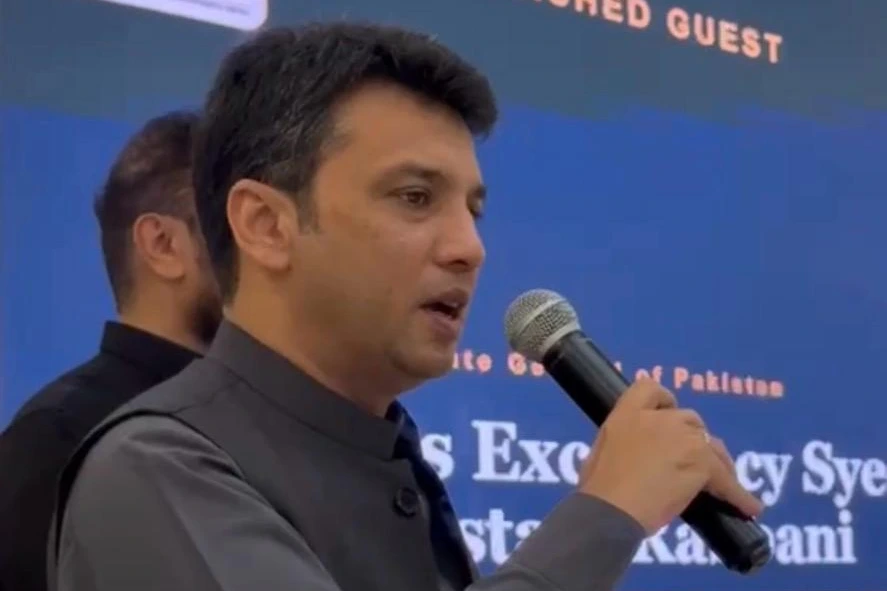
Pakistan, alongside Italy, leads the Uniting for Consensus group, a coalition that has consistently opposed adding any new permanent members to the Council, with or without veto power. Pakistan’s Permanent Representative to the UN, Ambassador Asim Iftikhar Ahmad, has repeatedly told the IGN that Islamabad’s position remains that the veto itself should be abolished or severely restricted, rather than extended to additional states. Instead of new permanent seats, the Uniting for Consensus group has proposed expanding the Council’s non-permanent, elected category with longer terms and the possibility of immediate re-election, arguing that this approach keeps every member accountable to the wider General Assembly through regular elections rather than locking in a new, permanent tier of privileged states.
The stalemate inside the Intergovernmental Negotiations
The core disagreement has repeated itself across nearly two decades of talks: a large bloc of countries, including the G4, most African states, and the L.69 group of developing nations, supports expanding both the permanent and non-permanent categories of Council membership, while the Uniting for Consensus group insists that only elected, non-permanent seats should be added. The United States has noted that this broader coalition represents the clear majority position among UN member states, though the IGN process traditionally requires the broadest possible consensus rather than a simple majority vote, meaning numerical support alone has not been enough to break the deadlock. In August 2025, the General Assembly postponed substantive reform talks for the 17th time, prompting the G4 to publicly criticize the delay as a blow to trust in the UN’s ability to maintain international order, even as procedural progress continued through updated background documents summarizing where member states converge and diverge.
Pakistan’s recent role at the Security Council itself
Beyond the reform debate, Pakistan has also held a direct seat at the table in recent years. Islamabad is serving its eighth term as a non-permanent member of the Security Council, covering the 2025 to 2026 period, and assumed the Council’s rotating monthly presidency in July 2025 for the first time since 2013. The presidency rotates alphabetically among all 15 Council members each month and does not carry additional voting power, but it does allow the presiding country to help set the Council’s agenda and tone for that period, a platform Pakistan used to press many of the same reform arguments it has raised inside the IGN.
Quotes
Officials from both camps have used increasingly direct language to describe why the deadlock persists. Germany’s representative told the IGN in February that the G4 model bridges differences between rival reform proposals “through flexibility on the veto,” framing the 15-year review clause as a realistic response to existing political resistance. On the opposing side, Pakistan’s Ambassador Ahmad told the same forum that Islamabad’s position remains “clear and consistent,” warning that adding new veto-wielding members “would further complicate an already gridlocked decision-making structure.” Describing the underlying philosophy behind Pakistan’s stance, Ahmad has also argued that expanding privilege without addressing existing inequities would ultimately undermine the Council’s credibility rather than strengthen it. Japan’s ambassador, delivering the joint G4 statement, separately called it “deeply regrettable” that the IGN has failed to yield substantive outcomes in the sixteen years since the process began, pointing to what the G4 sees as a structural flaw in treating every member state’s position as equally weighted regardless of how much support it commands.
Impact
The consequences of this prolonged deadlock extend well beyond diplomatic procedure. Critics of the current Council structure, including many G4 supporters, argue that a body designed around the geopolitical realities of 1945 increasingly struggles to reflect the world of 2026, undermining its legitimacy at a moment when the Council’s paralysis on issues like the Gaza conflict has already drawn sharp public criticism over the use, and at times what critics call the misuse, of the veto by permanent members. For regions like Africa, which holds no permanent Council seat despite comprising 54 UN member states, the reform debate carries particular weight, since most reform models under discussion, including the G4’s, envision new permanent or long-term seats for underrepresented regions. For Pakistan specifically, blocking an expansion that would hand India, its regional rival, a permanent Council seat carries direct strategic stakes, a dynamic that regional commentators have noted shapes Islamabad’s approach to the broader reform debate even as Pakistan frames its position in universal terms of fairness and accountability. More broadly, continued failure to reform the Council risks reinforcing perceptions among the wider UN membership that the institution’s most powerful body remains unaccountable to the organization’s now near-universal membership.
Conclusion
With the IGN process having already been extended through the General Assembly’s 80th session and reform talks postponed on numerous prior occasions, there is little indication that either side is close to the “broadest possible consensus” the process formally requires. The G4’s proposed 15-year review clause represents one of the more concrete compromise offers put forward in recent years, but Pakistan and the Uniting for Consensus group have shown no sign of softening their opposition to any expansion of the permanent category, meaning the fundamental disagreement over what reform should even look like remains unresolved. Barring a significant shift in position from one of the two blocs, or intervention from the P5 states whose support is ultimately required to ratify any Charter amendment, the Security Council reform debate appears likely to continue into further sessions of the General Assembly without a resolution in sight.
Frequently Asked Questions
Which 5 countries have veto power?
The five countries with permanent Security Council seats and veto power are China, France, Russia, the United Kingdom, and the United States, commonly referred to collectively as the P5. This structure was established in 1945 under the UN Charter and has remained unchanged since the organization’s founding, even as calls to reform or restrict the veto have grown louder in recent years, particularly after its repeated use blocked Council action on major crises such as the war in Gaza. Any one of these five countries can single-handedly block a substantive Security Council resolution simply by casting a veto, regardless of how much support the resolution has among the Council’s other members, which is precisely the mechanism that Pakistan and other reform advocates argue should be abolished or significantly restricted.
Who are the 15 countries on the UN Security Council?
The Security Council consists of five permanent members, China, France, Russia, the United Kingdom, and the United States, along with ten non-permanent members elected by the General Assembly for two-year terms, with five seats typically replaced each year. For the 2025 to 2026 period, the ten non-permanent members include Pakistan, Denmark, Greece, Panama and Somalia, alongside Bahrain, Colombia, the Democratic Republic of the Congo, Latvia and Liberia, who began their own two-year terms at the start of 2026. Non-permanent members do not hold veto power, but they do have full voting rights on Council resolutions and, notably, each takes a turn holding the Council’s rotating monthly presidency, which cycles alphabetically among all 15 members regardless of permanent or non-permanent status.
What are the key points of the G4 Security Council reform proposal?
The G4 proposal, put forward jointly by Brazil, Germany, India and Japan, centers on expanding both the permanent and non-permanent categories of Security Council membership to better reflect today’s geopolitical and demographic realities. Rather than demanding that new permanent members receive full veto power immediately, the 2026 version of the proposal includes a compromise time-bound review clause, under which new permanent members would not exercise veto power for roughly 15 years, after which UN member states would reassess the arrangement based on how the reformed Council had actually functioned. The G4 has framed this as a pragmatic middle ground designed to address what it calls a fundamental legitimacy gap in the Council’s current composition, while acknowledging that many member states remain politically opposed to extending veto power to any additional countries in the near term.