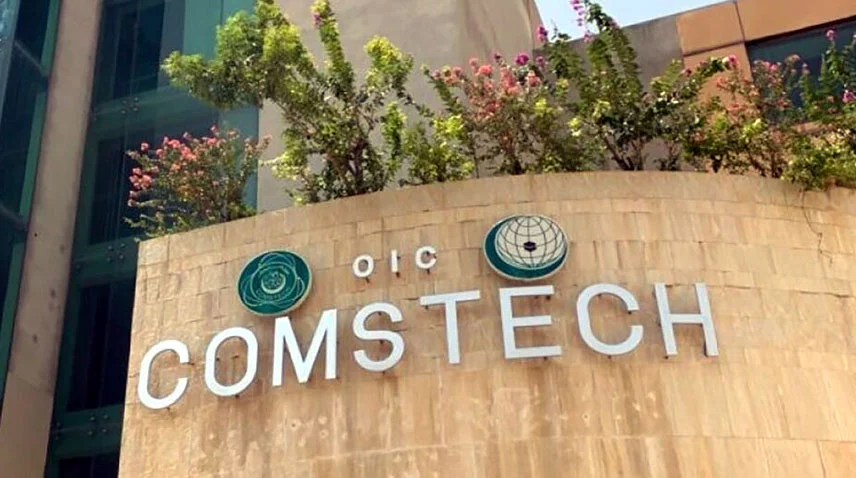
The Auditor General of Pakistan (AGP) is set to launch a formal external audit inquiry into the COMSTECH Islamabad Secretariat starting August 28, 2026. The review will examine the organisation’s financial accounts up to the 2025-26 fiscal year, following an official intimation issued in late July. The development has drawn attention to COMSTECH Islamabad’s internal financial governance at a time when the institution is expanding its international scientific programmes across the Muslim world.
Background
COMSTECH stands for the Standing Committee on Scientific and Technological Cooperation, a ministerial body of the Organisation of Islamic Cooperation (OIC) headquartered in Islamabad. Established after the OIC’s Islamic Summit in Mecca in 1981, COMSTECH Islamabad is the only OIC institution chaired by Pakistan, and it has spent more than four decades coordinating science and technology cooperation among the organisation’s 57 member states. Over the years, COMSTECH Islamabad has grown into a central platform for research fellowships, scholarship programmes, capacity-building workshops, and joint academic ventures involving universities and research institutions across the OIC bloc. The Secretariat, currently led by Coordinator General Prof. Dr. Muhammad Iqbal Choudhary, has in recent months hosted major initiatives including the Global South Innovation and Investment Summit, cooperation talks with foreign missions, and the Young Women Research Grants programme for female scientists from OIC member states. This latest audit inquiry now places a spotlight on how public and institutional funds within COMSTECH Islamabad have been managed and accounted for.
Details
According to official documents reviewed by local media, the Directorate General Audit (Federal Government), Islamabad, issued an audit intimation dated July 27, assigning a dedicated team headed by Audit Officer Shahid Imran to examine COMSTECH Islamabad’s accounts. The audit inquiry covers the organisation’s financial records up to the end of the 2025-26 fiscal year, and fieldwork is scheduled to formally begin on August 28, 2026. The audit authorities have directed the Ministry of Science and Technology to ensure that all accounts, books, papers, and other relevant financial documents are made available to the audit team whenever required during the course of the inquiry. This process is being carried out under the Auditor General’s Ordinance, 2001, in conjunction with Articles 169 to 171 of the Constitution of Pakistan, which grant the Auditor General authority to examine and report on the accounts of federal institutions.
Following the intimation, the Ministry of Science and Technology formally communicated with the Coordinator General of COMSTECH Islamabad on July 28, informing the Secretariat that the Directorate General Audit would begin its inquiry from August 28 onward. The ministry further directed COMSTECH Islamabad to comply fully with Sections 14(1) and 15 of the Auditor General’s Ordinance, 2001, which require government-linked bodies to cooperate with audit officers and provide unrestricted access to financial records upon request. Copies of this official communication were also shared with the Director General Federal Audit, the Secretary of the Ministry of Science and Technology, and the ministry’s Chief Finance and Accounts Officer, indicating that the audit inquiry is being closely monitored at multiple levels of federal oversight. This is not a routine internal review; rather, it is an external audit inquiry initiated by Pakistan’s supreme audit institution, which carries statutory weight and formal reporting obligations to the Public Accounts Committee.
Quotes
Neither COMSTECH Islamabad nor the Ministry of Science and Technology has issued a public statement responding directly to the scope or findings expected from the audit inquiry, and no official comment has been made available at the time of this report. The correspondence exchanged between the ministry and the Secretariat, as reflected in the official documentation, focuses strictly on procedural compliance, instructing COMSTECH Islamabad to make its financial records accessible to the audit team without delay. Observers within Pakistan’s science and policy circles note that external audits of federally linked institutions such as COMSTECH Islamabad are a standard accountability mechanism, though the scale and formality of this particular inquiry have made it a subject of public interest.
Impact
An audit inquiry of this nature carries implications that extend well beyond COMSTECH Islamabad’s internal bookkeeping. As the only OIC institution based in Pakistan and chaired by the country, COMSTECH’s financial credibility is closely tied to Pakistan’s broader standing within the 57-member Organisation of Islamic Cooperation. Any findings from the audit inquiry could shape how partner nations and international research bodies view their ongoing collaborations with COMSTECH Islamabad, particularly at a time when the Secretariat is actively courting new partnerships in artificial intelligence, climate research, and academic mobility across the Global South. The timing of the audit inquiry is also significant. COMSTECH Islamabad has recently expanded its footprint through the Global South Innovation and Investment Summit, new cooperation talks with foreign missions such as Tajikistan, and the launch of the Journal of Science Communication and Diplomacy in partnership with the Ministry of Foreign Affairs. A financial review running alongside this period of institutional growth means that any adverse observations could affect the momentum of these newer initiatives, or at minimum invite closer donor and partner-state questions about how expanding programme budgets are being tracked and reported.
Domestically, the audit inquiry also feeds into a wider pattern of increased scrutiny of federal and quasi-governmental institutions in Pakistan. Recent audit reports covering the Ministry of Science and Technology and other affiliated bodies, including the Higher Education Commission, the Pakistan Atomic Energy Commission, and the Pakistan Agricultural Research Council, have already flagged financial irregularities, unrecovered funds, and weak internal oversight across multiple government departments this year. Against that backdrop, the COMSTECH Islamabad inquiry adds to growing public and parliamentary interest in how federally supported scientific institutions manage grants, research funding, and administrative expenditure. For researchers, scholarship applicants, and university partners who rely on COMSTECH Islamabad’s programmes, the practical impact of the audit inquiry is likely to be limited in the near term, since the Secretariat has given no indication that its scholarship disbursements or ongoing projects will be paused during the review. Even so, the broader accountability climate surrounding federal institutions in Pakistan means that COMSTECH Islamabad’s handling of this audit inquiry, and the transparency of its response once findings are compiled, could set a precedent for how other OIC-linked and internationally facing Pakistani institutions manage similar scrutiny going forward.
Conclusion
The external audit inquiry into COMSTECH Islamabad is expected to unfold over the coming weeks as the Directorate General Audit team examines financial records dating back through the 2025-26 fiscal year. Whether the review surfaces significant findings or confirms routine compliance, the outcome will likely be presented to the Public Accounts Committee for further parliamentary scrutiny, as is standard practice for AGP audits of federal institutions. Given the scale of the fieldwork, which covers a full financial year of accounts, books, and supporting paperwork, the audit team’s report is unlikely to be finalised quickly, and stakeholders should expect the process to extend over several weeks or months before formal findings are made public.
COMSTECH Islamabad has not indicated any disruption to its ongoing programmes, and the Secretariat’s international engagements, including its OIC-wide scholarship and research initiatives, cooperation talks with member-state embassies, and its expanding science diplomacy publications, are expected to continue as the inquiry proceeds. The Ministry of Science and Technology’s instruction that all records be made available “as and when required” suggests a cooperative posture from the government side, rather than an adversarial one, which may help the process move forward without unnecessary delay. Looking ahead, several developments are worth watching closely. These include any official response or statement from the Coordinator General’s office, preliminary observations that may emerge once the audit team begins fieldwork on August 28, and how the Public Accounts Committee eventually handles the findings once they are formally submitted. For an institution that positions itself as a bridge for scientific cooperation across 57 OIC member states, how transparently COMSTECH Islamabad and its parent ministry manage this audit inquiry could carry weight well beyond Pakistan’s domestic accountability framework, shaping perceptions among international partners and donor institutions for months to come. This report will be updated as further details from the audit process become available.
Frequently Asked Questions
Where is COMSTECH located?
COMSTECH Islamabad is headquartered in Islamabad, Pakistan, and operates from its Secretariat building in the federal capital. As the only Organisation of Islamic Cooperation institution chaired by Pakistan, COMSTECH’s location in Islamabad places it close to key government ministries, including the Ministry of Science and Technology, which oversees its administrative and financial reporting obligations. The Secretariat coordinates its scientific and technological cooperation programmes across all 57 OIC member states from this central Islamabad base, hosting delegations, ambassadors, and researchers throughout the year.
What is the COMSTECH Consortium?
COMSTECH stands for the Standing Committee on Scientific and Technological Cooperation, and it functions as a ministerial-level consortium bringing together science and technology stakeholders from across the Organisation of Islamic Cooperation’s member states. Established following the 1981 Islamic Summit in Mecca, the COMSTECH consortium was designed to build indigenous scientific capacity among OIC nations, promote joint research and development, and create an institutional framework for planning and monitoring science-based initiatives at the Ummah level. Its membership spans researchers, universities, government science ministries, and affiliated institutions such as the Kuwait Institute for Scientific Research, working collectively under COMSTECH’s coordination.
Does COMSTECH offer scholarships?
Yes, COMSTECH Islamabad runs several scholarship and research grant programmes aimed at scientists, researchers, and students from OIC member states. These include the Young Women Research Grants, which recently awarded funding to nineteen successful researchers from countries including Pakistan, Malaysia, Bangladesh, Nigeria, and Egypt, as well as broader fellowship and academic mobility programmes developed in partnership with organisations such as TWAS and the Lindau Nobel Laureate meetings. Interested applicants can typically find current calls for scholarship and grant applications published directly through COMSTECH’s official communications and Secretariat announcements.