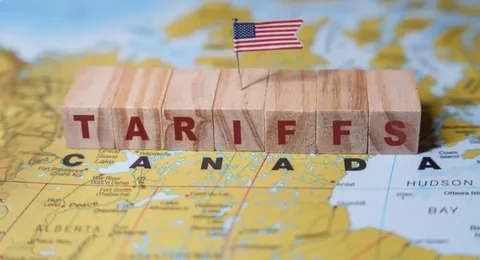
Trade talks between Washington and Ottawa collapsed late Friday night, triggering steep 50 percent US tariffs on roughly 20 billion dollars worth of Canadian goods, including hockey sticks, building materials, liquor and select clothing categories. The duties took effect at 12:01 a.m. Eastern Time on Saturday after negotiators failed to finalize an agreement despite three intensive days of talks in Washington. Canadian Prime Minister Mark Carney responded by suspending trade negotiations and pledging that Canada will retaliate dollar for dollar.
Background
The latest breakdown caps more than a year of escalating trade tension between the two historically close allies. The dispute traces back to February 2025, when the United States first imposed tariffs on Canadian and Mexican goods, prompting Ottawa to respond with its own retaliatory measures. By July 2025, Trump had raised the general tariff rate on Canadian goods to 35 percent, effective August 1, in a letter posted directly to his Truth Social platform, citing concerns over fentanyl trafficking despite data showing only a marginal share of the drug entering the US through Canada.
Tensions escalated further in October 2025 after the Ontario provincial government aired a television advertisement during World Series broadcasts that used archival footage of former President Ronald Reagan criticizing tariff policy. Trump called the ad a “fraud” and a misrepresentation of Reagan’s message, halted ongoing trade talks, and announced an additional 10 percent tariff increase on Canadian goods in direct retaliation for the ad continuing to air after Ontario had said it would be pulled down. Ontario’s government eventually removed the advertisement from circulation, though the episode left lasting damage to an already strained negotiating relationship. The most recent flashpoint began last month, when the Trump administration invoked Section 338 of the Tariff Act of 1930, a rarely used and, until now, never-invoked legal provision, to threaten an additional 50 percent tariff on a specific list of Canadian goods including alcohol, hockey equipment, cement and dairy products. The administration framed the move as a response to what it called discriminatory Canadian trade practices in the motor vehicle and dairy sectors. The tariffs were originally scheduled to take effect on August 19, 2026.
Details
In the days leading up to the deadline, both governments signaled cautious optimism. On August 18, Trump announced a three-day pause on the 50 percent tariffs, posting that the US and Canada had reached a deal “subject to the finalization of documents” following what he described as a good conversation with Carney. Carney’s own statement at the time was notably more measured, describing the development as a postponement to allow trade discussions to continue rather than confirming that an agreement had actually been reached, and he did not specify what, if any, concessions had been offered.
That ambiguity proved decisive. Trade representatives from both countries held three additional days of talks in Washington, with officials on both sides saying negotiators had come close to finalizing terms. But the effort collapsed late Friday night, just hours before the extended deadline expired. Carney said the two sides could not reach an agreement that would “meet our objectives” for Canadian workers and businesses, and confirmed he had directed Canada’s negotiating team to stand down. The 50 percent tariffs, covering an estimated 20 billion dollars in Canadian exports, took effect automatically at the stroke of midnight. The tariffs apply to a specific list of goods rather than the full range of Canadian exports to the US. Affected categories include hockey sticks and other sporting equipment, plywood and other building materials, wine and spirits, electrical equipment, cement and select clothing items. While this represents only a fraction of the roughly 382 billion dollars in total Canadian exports to the United States last year, industry groups have warned that a 50 percent duty is high enough to make many of the targeted products effectively unsellable in the US market.
Quotes
Prime Minister Carney’s official statement framed the breakdown as a matter of principle rather than a failure to negotiate in good faith. In a written statement from his office, Carney said Canada has “worked in that context” of a changed America, adding that the government’s goal throughout “has been to secure the best deal for Canadians, never a deal at any price or on any deadline.” He confirmed that “this evening, I have decided to suspend trade negotiations with the U.S.” and said Canada would match the new duties “dollar for dollar to protect our workers and businesses.” Industry voices have echoed concern over the practical impact of the new duties. Dan Kelly, president of the Canadian Federation of Independent Business, warned that a tariff at this level effectively makes a targeted product uneconomic to sell into the US market, and said member businesses represented in his 103,000-strong organization had already reported American buyers pausing future orders in anticipation of the increase.
Impact
The collapse of talks marks one of the most serious breakdowns in the modern US-Canada trading relationship, two countries whose economies have been deeply intertwined for decades under successive free trade agreements. Analysts described the failure as an unprecedented rupture given Canada’s status as the second-largest trading partner of the United States. For Canadian exporters in the affected sectors, particularly building materials, alcohol and sporting goods manufacturers, the immediate effect is a sharp increase in the cost of accessing their largest single export market, a shift that businesses say is already altering purchasing decisions on the American side of the border. Carney’s promise of dollar-for-dollar retaliation raises the prospect of a fresh round of Canadian counter-tariffs on US goods, which would mark a return to the kind of tit-for-tat measures that defined earlier phases of the dispute throughout 2025, even after Canada had rolled back a majority of its retaliatory tariffs in August of that year as a goodwill gesture during earlier negotiations.
Conclusion
With negotiations formally suspended and both governments now signaling a willingness to escalate rather than compromise, the coming weeks are likely to bring further clarity on the scope of Canada’s countermeasures and whether either side moves to reopen talks. Trade officials on both sides had described the failed round as close to a deal before it fell apart, suggesting the gap between the two positions may not be unbridgeable, but with Carney explicitly rejecting a deal struck against a deadline, a quick resumption of talks appears unlikely in the immediate term. The most immediate question is what form Canada’s dollar-for-dollar retaliation will actually take. Ottawa has taken this approach before, matching earlier US tariff rounds with counter-duties on American goods ranging from steel and aluminum to consumer products, before rolling back the majority of those retaliatory measures in August 2025 as a goodwill gesture meant to keep negotiations alive. Whether Carney’s government chooses a similarly broad retaliatory list this time, or a narrower set of targeted counter-tariffs aimed at politically sensitive US industries, will likely shape how quickly the two sides are willing to return to the table. Given that a comparable pause-and-collapse cycle has already played out twice this year, first with the Reagan-ad dispute in October 2025 and now with the Section 338 tariffs, there is a real possibility this pattern repeats again in the coming weeks, with a temporary truce followed by another last-minute breakdown, rather than resolving into either a lasting agreement or a permanent rupture.
Businesses and consumers on both sides of the border are expected to feel the effects of the new 50 percent duties well before any diplomatic resolution takes shape. Canadian manufacturers in the affected sectors, particularly smaller exporters without the scale to absorb a 50 percent cost increase, are likely to see the most immediate impact, with some already reporting paused orders from American buyers even before the tariffs formally took effect. On the US side, industries that rely on Canadian building materials, spirits, or electrical components may see input costs rise, a pressure that tends to eventually reach consumer prices even when tariffs are framed as targeting a foreign exporter rather than a domestic buyer. For now, the practical effects of this latest escalation will likely be watched closely by trade economists, industry associations and government officials on both sides of the border as the tariffs work their way through supply chains already strained by more than eighteen months of trade uncertainty, and as both Washington and Ottawa calculate how much further they are willing to let the dispute run before political and economic pressure forces a renewed attempt at negotiation.
Frequently Asked Questions
Does the U.S. still impose tariffs on Canada?
Yes. As of today, the United States is enforcing a new 50 percent tariff on approximately 20 billion dollars worth of Canadian goods, covering categories such as hockey sticks, building materials, liquor and select clothing items, after trade talks between Washington and Ottawa collapsed late Friday night. This is layered on top of earlier tariff measures introduced over the past year and a half, including a 35 percent general tariff rate that took effect in August 2025 and a separate 10 percent increase announced in October 2025 in response to an Ontario government advertisement. Canada, in turn, has said it will respond with retaliatory tariffs matching the new US duties dollar for dollar.
Why did Trump impose tariffs on Canada?
The Trump administration has cited several justifications for its tariffs on Canada over the past year and a half. The initial round, introduced in early 2025, was framed around concerns over fentanyl trafficking across the northern border, despite data showing only a small share of the drug entering the US through Canada. Later increases were tied to broader complaints about what the administration called discriminatory Canadian trade practices in sectors including motor vehicles and dairy, which led to the invocation of Section 338 of the Tariff Act of 1930 to threaten the most recent 50 percent tariffs. A separate, unrelated 10 percent tariff hike in October 2025 was explicitly tied to Trump’s anger over a Canadian television advertisement featuring former President Ronald Reagan’s criticism of tariff policy, which he characterized as a hostile and fraudulent act.
Did Trump increase tariffs on Canada?
Yes, on multiple separate occasions. Tariffs on Canadian goods rose from an initial rate introduced in February 2025 to 35 percent by August 2025, then increased again by an additional 10 percent in October 2025 following the Ontario advertisement dispute. Most recently, a new 50 percent tariff on a specific list of Canadian goods worth roughly 20 billion dollars took effect after trade talks broke down late Friday night, following a brief three-day pause the previous week when the two sides had appeared close to a deal. Each increase has been announced directly by Trump, most often through posts on his Truth Social platform, and has generally been followed by some form of retaliatory or counter-measure from the Canadian government.