The political situation in Pakistan today remains tense and unsettled, marked by a deepening standoff between the ruling coalition and opposition forces, unrest in Azad Jammu and Kashmir, and a fragile economy still under IMF supervision. Analysts studying government and politics in Pakistan describe the country as trapped in a prolonged cycle of confrontation that has raised fresh questions about whether Pakistan is a democracy or dictatorship in practice, even as it holds regular elections and maintains a civilian parliament.
Background
Pakistan’s political system is built around a federal parliamentary structure, with a prime minister as head of government and a largely ceremonial president as head of state. On paper, this places Pakistan firmly among the world’s democracies. In practice, however, the current political situation of Pakistan is shaped as much by the military establishment as by elected representatives, a dynamic that has repeated itself across the country’s 78-year history. The roots of today’s crisis trace back to 2022, when Imran Khan was removed from the prime minister’s office through a no-confidence vote. What followed was one of the most turbulent stretches in recent memory: mass protests, the arrest of senior Pakistan Tehreek-e-Insaf (PTI) leaders, disputed general elections, and an opposition that has refused to recognise the legitimacy of the government led by the Pakistan Muslim League-Nawaz (PML-N) and its coalition partners. These political issues in Pakistan have not eased with time; if anything, they have hardened into a semi-permanent standoff between the state and Khan’s supporters.
Details
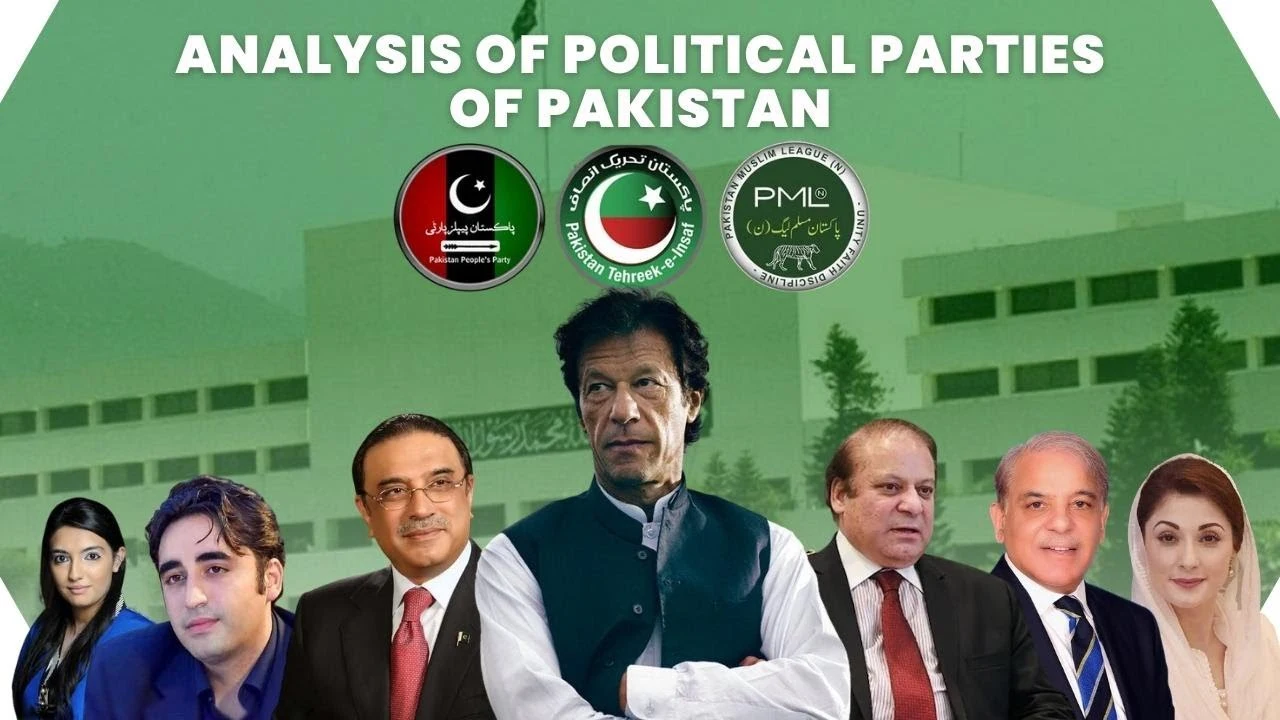
At the federal level, Prime Minister Shehbaz Sharif continues to lead a coalition government built around the PML-N, the Pakistan Peoples Party (PPP), and smaller allied parties. PTI, still Pakistan’s most organised opposition force despite years of legal pressure on its leadership, maintains that the 2024 general election results were manipulated in its disfavour. This unresolved dispute over electoral legitimacy sits at the centre of most discussions on the political system in Pakistan today. The most serious flashpoint this year has unfolded in Azad Jammu and Kashmir (AJK), where protests led by the Jammu Kashmir Joint Awami Action Committee (JAAC) escalated into deadly clashes with security forces. The unrest began in late July across Rawalakot, Muzaffarabad, Mirpur and Kotli, driven by demands for electoral reform, greater regional autonomy, and constitutional change. Reuters reported that dozens of people were killed according to JAAC’s own count, while authorities have confirmed a lower toll and say security personnel, including a Rangers official, also lost their lives during the confrontations.The unrest directly disrupted AJK’s legislative elections, with PTI boycotting parts of the vote over allegations of irregularities while PML-N secured wins in several constituencies. Human rights groups, including the Human Rights Commission of Pakistan and Amnesty International, have called for independent investigations into the killings, and have separately raised concerns over internet blackouts, arrests of activists, and the labelling of the protest movement as a proscribed organisation. Beyond Kashmir, Pakistan’s broader political issues remain tied closely to its economic condition. The country’s debt-to-GDP ratio has improved somewhat in recent years, yet external debt obligations remain enormous, with tens of billions of dollars in repayments due through 2026 and beyond. This economic pressure continues to limit the room for political compromise, since any government in Islamabad must balance IMF-mandated austerity with public frustration over inflation and unemployment. Militancy has also resurfaced as a serious governance challenge. Khyber Pakhtunkhwa and Balochistan have both seen a rise in attacks by militant and ethnonationalist groups, prompting fresh security operations reminiscent of earlier phases of Pakistan’s long war on terror. This has forced the civil-military leadership to divert attention and resources away from political reconciliation and toward internal security.
Quotes
Federal Information Minister Attaullah Tarar addressed the AJK unrest directly, stating that elements operating within the banned JAAC were pursuing what he described as a “foreign agenda” and were attempting to derail the electoral process through violence. Pakistani officials have repeatedly maintained that security forces acted only to restore public order once demonstrations turned violent. Security officials in AJK have expressed regret over the loss of civilian life while insisting that attacks on law enforcement personnel required a response. They have appealed to protest leaders to return to dialogue rather than continue with confrontation on the streets. Rights groups have taken a different view. The Human Rights Commission of Pakistan has called specifically for an impartial and independent probe into the Rawalakot deaths, arguing that accountability is essential if public confidence in the political system in Pakistan is to be restored.
Impact
The unresolved tension between Pakistan’s elected government and its opposition carries consequences well beyond domestic politics. Regionally, the unrest in Azad Jammu and Kashmir has drawn commentary from India, which Pakistan’s Foreign Office has firmly rejected as interference in its internal affairs. This exchange has added another layer of friction to an already strained bilateral relationship. Economically, prolonged political instability discourages foreign investment at a time when Pakistan can least afford it. International lenders and credit rating agencies typically view political uncertainty as a risk factor, which can complicate future negotiations over debt restructuring and new financing programmes. A government seen as unstable also finds it harder to push through unpopular but necessary reforms, from tax collection to energy pricing. Socially, the crackdown on dissent, including internet restrictions and the designation of protest movements under anti-terrorism law, has sparked debate over civil liberties. Analysts warn that treating political and economic grievances primarily as security threats risks deepening alienation in AJK and other restive regions rather than resolving the underlying political issues in Pakistan. For ordinary citizens, the impact is most visible in everyday uncertainty: disrupted businesses, restricted movement in affected districts, and a general sense that the country’s political system in Pakistan is functioning more as a contest between competing power centres than as a stable framework for governance.
Conclusion
Whether Pakistan is a democracy or dictatorship in the fullest sense remains a matter of ongoing debate among analysts, but what is clear is that the country’s political institutions are under considerable strain heading into the second half of 2026. The government has signalled that it intends to complete the AJK electoral process and maintain law and order across the affected districts, while opposition and protest leaders insist that demonstrations will continue until their constitutional and political demands are fully addressed. Neither side has shown much willingness to compromise so far, and this unwillingness to de-escalate has become one of the defining features of Pakistan’s political system in its current form. Restoring stability will likely require far more than continued security deployments and administrative reassurances. Sustained dialogue between the federal government, opposition parties, and regional stakeholders in Azad Jammu and Kashmir will be essential, as will credible and independent investigations into the recent violence, which human rights organisations argue is necessary to rebuild public trust in state institutions. Economic pressures add another layer of urgency to this equation, since Pakistan’s ability to negotiate future financing arrangements and attract foreign investment depends heavily on perceptions of political stability. A government seen as consumed by internal confrontation will find it considerably harder to implement the structural reforms that international lenders and domestic economists alike have long called for. At the same time, the resurgence of militancy in Khyber Pakhtunkhwa and Balochistan means that security concerns are likely to remain intertwined with political decision-making for the foreseeable future, further complicating any path toward reconciliation between the government and its opponents. Analysts caution that treating deep-rooted political and economic grievances primarily through a security lens risks deepening alienation rather than resolving it, particularly in regions like AJK where demands have expanded well beyond immediate economic relief to touch on constitutional status and political representation. Until a genuine and sustained political settlement is reached, the current political situation of Pakistan is expected to remain fluid and, at times, volatile. Developments over the coming weeks and months, including how the government responds to calls for independent investigations, whether PTI and the ruling coalition find any basis for dialogue, and how the AJK unrest is ultimately resolved, will be closely watched by domestic stakeholders, regional observers, and the international community as indicators of where Pakistan’s long and often turbulent democratic experiment is headed next.
Frequently Asked Questions (FAQs)
- What is the concept of political analysis?
Political analysis refers to the systematic study of political events, institutions, actors, and processes in order to understand how power is gained, exercised, and contested within a society. It draws on historical context, current events, economic indicators, and public sentiment to explain why political developments unfold the way they do and to anticipate their likely consequences. Political analysts typically look at formal structures such as constitutions, electoral laws, and party systems, but they also study informal power centres, including the military, judiciary, and bureaucracy, since these often shape outcomes just as much as elected institutions do. In Pakistan’s case, political analysis carries particular weight because the relationship between civilian leadership and the military establishment has repeatedly determined the direction of national policy, from economic decisions to foreign relations. Analysts also track electoral credibility, since disputes over the fairness of elections have been a recurring theme in Pakistan’s political history, along with the influence of regional dynamics, provincial politics, and international relationships with countries such as the United States, China, and Gulf states. A thorough political analysis of Pakistan today would need to weigh all of these factors together rather than focusing on any single institution or personality in isolation, because the country’s political outcomes tend to emerge from the interaction between multiple competing centres of power rather than from one dominant actor alone.
- Who is the most loved politician in Pakistan?
Public opinion in Pakistan is deeply polarised, and there is no single figure who commands universal popularity across the entire country. PTI founder Imran Khan continues to enjoy substantial grassroots support, particularly among younger and urban voters, and his popularity has, if anything, been reinforced rather than diminished by years of legal cases, disqualifications, and imprisonment, a pattern that has led many of his supporters to view him as a figure being unfairly targeted by the establishment. At the same time, the PML-N under the leadership of Nawaz Sharif and Prime Minister Shehbaz Sharif retains a strong and consistent traditional base in Punjab, Pakistan’s most populous province, built on decades of local political organisation and infrastructure-focused governance. The PPP, led by the Bhutto-Zardari family, remains the dominant political force in Sindh, drawing on a long history tied to the legacy of Zulfikar Ali Bhutto and Benazir Bhutto. Smaller regional and religious parties also command loyal followings in specific pockets of the country, particularly in Khyber Pakhtunkhwa and Balochistan. Because of this fragmented landscape, popularity in Pakistan tends to be regional, generational, and issue-based rather than nationwide and uniform, and any claim about a single “most loved” politician would need to be qualified by region, age group, and time period to be meaningful.
- What type of political system does Pakistan have?
Pakistan operates as a federal parliamentary republic, with a prime minister serving as the chief executive and head of government, and a president holding a largely ceremonial role as head of state, similar in structure to parliamentary systems found in the United Kingdom and India. The country has a bicameral legislature made up of the National Assembly, which is directly elected, and the Senate, whose members are indirectly elected by provincial assemblies, along with separate provincial assemblies in each of its four provinces: Punjab, Sindh, Khyber Pakhtunkhwa, and Balochistan. Power is constitutionally divided between the federal government and the provinces under the 18th Amendment, which devolved significant authority to provincial administrations in areas such as health, education, and agriculture. In practice, however, many analysts note that Pakistan’s political system functions as a hybrid arrangement rather than a purely civilian democracy, where the elected government shares significant influence with the military establishment on matters of national security, foreign policy, and, at times, broader economic and political direction. This hybrid character is one of the central reasons why observers continue to debate whether Pakistan should be classified as a full democracy, and it also explains why the country’s political system in Pakistan can appear, at different moments, both procedurally democratic and functionally constrained.