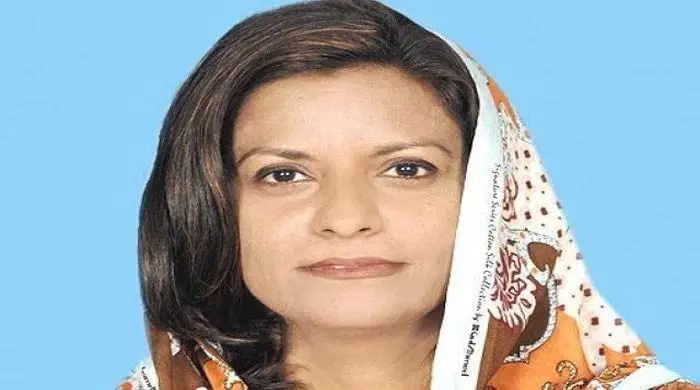
Nafisa Shah is a long-serving Pakistani lawmaker and the daughter of veteran politician Syed Qaim Ali Shah, a three-time former Chief Minister of Sindh. Known for her academic background and her long association with the Pakistan Peoples Party, Nafisa Shah has represented Khairpur in the National Assembly of Pakistan across several terms. Her career, along with that of her father and her sister Naheed Shah Durrani, reflects the deep imprint the Shah family has left on Sindh’s political and administrative landscape over the last six decades. This profile brings together verified details about Nafisa Shah, her father Qaim Ali Shah, her extended family including Naheed Shah Durrani, and the broader context of women’s representation in the National Assembly of Pakistan.
Background
Nafisa Shah was born on 20 January 1968 in Khairpur, Sindh, into a politically influential family. Her father, Syed Qaim Ali Shah, served three terms as Chief Minister of Sindh and remains one of the most senior leaders of the Pakistan Peoples Party. Growing up in Khairpur, Nafisa Shah was surrounded by an environment where public service and grassroots politics were part of daily life. She pursued higher education abroad, earning a doctorate in Social and Cultural Anthropology from the University of Oxford in 2011. Her academic research focused on honour-based violence in Sindh, a subject that later informed much of her legislative advocacy on women’s rights and gender-based protection laws. This academic grounding is one reason she is frequently described as both a scholar and a working politician.
Details
Nafisa Shah Husband Name
Public and official records, including Election Commission of Pakistan candidate disclosures and parliamentary biographical profiles, list Nafisa Shah primarily through her father’s name, Syed Qaim Ali Shah, rather than a spouse. There is no widely verified or officially reported husband name for Nafisa Shah in available public records at this time. Readers searching for this detail should treat any unverified claims circulating online with caution, since no credible news organisation has published confirmed information naming a husband.
Nafisa Shah Daughter
Similarly, there is no confirmed, publicly documented information identifying a daughter of Nafisa Shah in mainstream news archives, parliamentary records, or biographical databases. Nafisa Shah’s public profile centres almost entirely on her political and academic achievements rather than disclosed family details about children. Given her strong public presence, any verified update on this front would likely be reported by established Pakistani outlets such as Dawn or The Express Tribune.
Qaim Ali Shah Daughters and Children
Syed Qaim Ali Shah had a large family from his different marriages. According to biographical records, he had four sons and multiple daughters across his marriages. From his marriage to Husn Afroze Brohi, sister of the noted jurist A. K. Brohi, his children included Syed Asad Ali Shah, Dr Nusrat Shah, Naheed Shah Durrani, Nuzhat Shah, Dr Nighat Shah, Dr Nafisa Shah, and Syed Afzal Shah. From an earlier marriage, his children included Syed Muzaffar Ali Shah, Dr Syed Liaquat Ali Shah, Shamshad Shah, and Najma Shah. This means Nafisa Shah has several siblings who have pursued distinct professional paths, ranging from medicine to civil service and agriculture. The family’s diversity across professions reflects the broader trend among Sindh’s political families, where children often move into fields such as law, medicine, and public administration alongside politics.
Naheed Shah Durrani
Among Qaim Ali Shah’s daughters, Naheed Shah Durrani has built a distinguished career in the civil service. She qualified through the Central Superior Services examination and went on to serve in Pakistan’s foreign ministry, district management group, and finance ministry. Over more than a decade of service, she rose to hold senior provincial administrative positions, including work related to education in Sindh. Her career stands as one of the notable achievements among Qaim Ali Shah’s children, distinct from the overtly political paths chosen by some of her siblings.
Qaim Ali Shah Age
Syed Qaim Ali Shah was born on 13 September 1928 in Khairpur Mirs, making him one of the oldest active political figures in Pakistan’s recent history. He remained politically engaged well into his late eighties and nineties, continuing to hold party positions and, at times, elected office long after most contemporaries had retired from public life. His long career, spanning from the pre-Bhutto era of Pakistani politics through multiple decades of Pakistan Peoples Party leadership, has made him a symbol of political endurance in Sindh.
Qaim Ali Shah Daughter Doctor
Several of Qaim Ali Shah’s daughters pursued medical careers, a detail that often surfaces in searches about “Qaim Ali Shah daughter doctor.” Dr Nusrat Shah and Dr Nighat Shah are both recognised as medical professionals within the family, while Nafisa Shah herself holds a doctorate, though in anthropology rather than medicine. This mix of medical and academic doctorates within one family has occasionally caused public confusion, since multiple daughters carry the “Dr” title for different reasons.
Quotes
Officials and party colleagues have repeatedly described the Qaim Ali Shah family as one of the more stable political households in Sindh. Local Khairpur-based reporting has noted that Nafisa Shah has often credited her father’s political grounding for shaping her own approach to public service, while colleagues within the Pakistan Peoples Party have publicly acknowledged her contributions to legislation on gender-based violence and women’s parliamentary representation.
Impact
The continued political relevance of the Qaim Ali Shah family carries both regional and national significance. In Sindh, the family’s decades-long association with the Pakistan Peoples Party has helped shape voter loyalty in Khairpur and surrounding constituencies. Nationally, Nafisa Shah’s work on legislation addressing honour killings and women’s protection has had an impact beyond her home constituency, influencing broader parliamentary debate on gender-based violence in Pakistan. Her repeated electoral victories in NA-202 Khairpur-I, including her win in the 2024 general election, demonstrate the family’s enduring political capital. At the same time, public interest in personal details, such as marital status or children, reflects a broader pattern in Pakistani political reporting, where family background is often treated as closely tied to political credibility, particularly in feudal and semi-feudal constituencies like Khairpur.
Conclusion
As Nafisa Shah continues her tenure in the National Assembly of Pakistan, questions about her personal life, including her husband’s name and whether she has a daughter, remain largely unanswered in verified public records. What is clear, based on documented sources, is her academic background, her long parliamentary career, and her connection to one of Sindh’s most prominent political families through her father, Syed Qaim Ali Shah. Future developments, whether new legislative initiatives, further electoral contests, or any verified personal disclosures, are likely to keep both Nafisa Shah and the broader Qaim Ali Shah family in the public conversation. Readers seeking updates on family details should rely on confirmed reporting from established Pakistani news organisations rather than unverified online claims, since much of what circulates about her personal life beyond her political record has not been substantiated by credible sources at this time.
Frequently Asked Questions
Where did Nafisa Shah grow up?
Nafisa Shah grew up in Khairpur, Sindh, where she was born on 20 January 1968 into the politically prominent family of Syed Qaim Ali Shah. Her early years were shaped by her family’s deep involvement in Sindh’s political landscape, particularly through her father’s association with the Pakistan Peoples Party. She later moved abroad for higher education, eventually completing her doctorate at the University of Oxford, but her political roots and constituency work have remained firmly tied to Khairpur throughout her career, where she also served as District Nazim between 2001 and 2007 before entering national politics.
Who are the current female members of the National Assembly of Pakistan?
The National Assembly of Pakistan includes a mix of directly elected women and those holding reserved seats designated for female representation, a structure intended to boost gender diversity in parliament. Nafisa Shah is among the most recognised directly elected female members, representing NA-202 Khairpur-I since the 2024 general election after previously winning the seat in 2018. Alongside her, numerous other women sit in the Assembly through reserved seats allocated to political parties based on their overall representation, covering a wide range of provinces and party affiliations. The exact composition changes with each general election cycle, so readers seeking a complete, up-to-date list should consult the official National Assembly of Pakistan records for the current parliamentary term.
Who was the first female speaker of the National Assembly of Pakistan?
Dr Fehmida Mirza holds the distinction of being the first female Speaker of the National Assembly of Pakistan, elected to the position on 19 March 2008. A medical doctor by training and a long-serving Pakistan Peoples Party legislator from Badin in Sindh, she was elected to parliament three consecutive times before taking on the Speaker’s role. Her election was widely covered as a milestone not just for Pakistan but for the wider Muslim world, since she also became recognised as the first woman to lead a parliamentary chamber in a Muslim-majority country. She served as Speaker for over five years before later taking on ministerial responsibilities in subsequent governments.