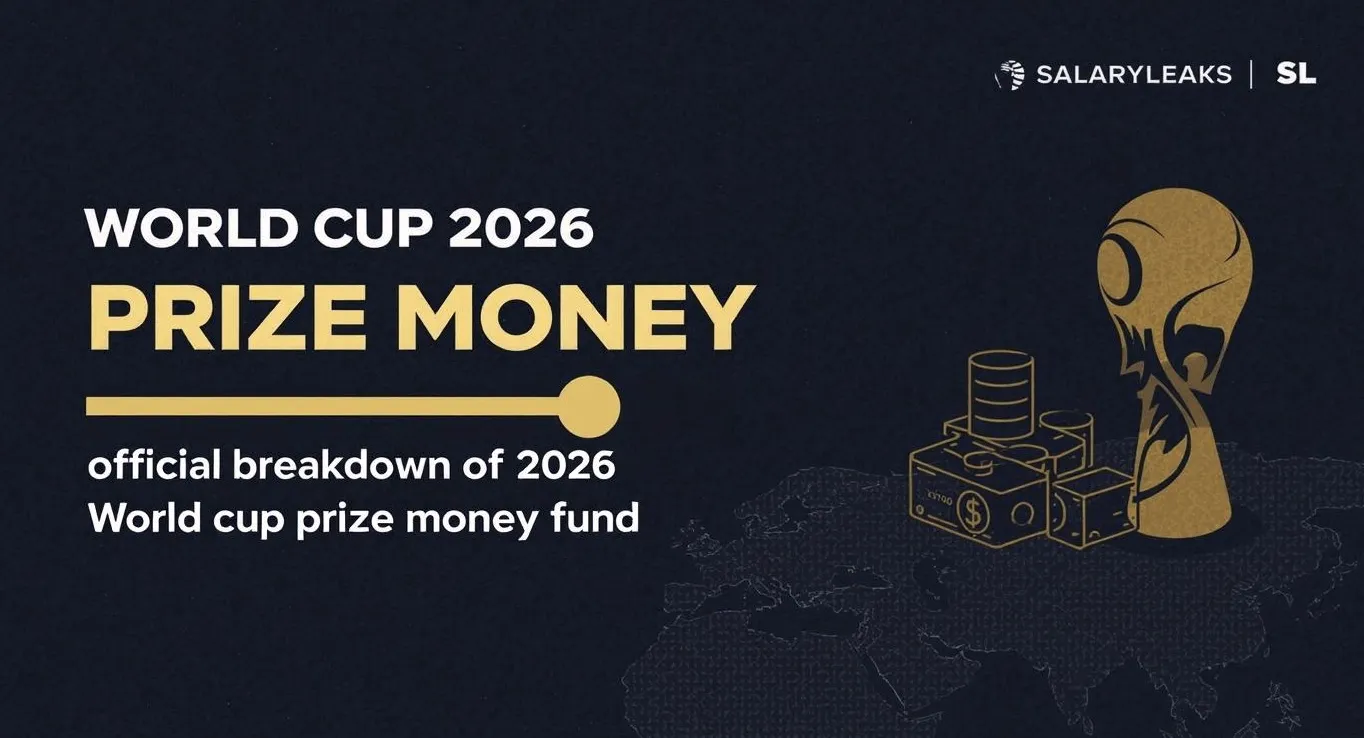
FIFA closed out its richest cycle in history this year, distributing a record 871 million US dollars to the 48 teams that competed at the 2026 World Cup in North America, while continuing to funnel billions more into member associations worldwide through its Forward 3.0 development programme. Between the 76th FIFA Congress held in Vancouver in April and the tournament’s conclusion in July, 2026 has become the clearest test yet of how football’s governing body says it reinvests revenue back into the sport.
Background
FIFA operates as a non-profit organisation, meaning it does not distribute profits to shareholders the way a private company would. Instead, revenue generated mainly through broadcasting rights, sponsorships, and ticketing for the men’s World Cup is meant to flow back into football through two broad channels: prize money paid directly to competing national federations, and development funding distributed to all 211 member associations regardless of whether they qualify for a tournament. This structure has existed for years, but the scale of money involved has grown sharply since FIFA launched its Forward development programme in 2016, and it grew again heading into the 2023-2026 cycle.
Details
FIFA Forward 3.0: the development funding backbone
The bulk of FIFA’s non-World Cup funding runs through a programme called FIFA Forward. For the 2023-2026 cycle, total investment for the benefit of FIFA’s member associations, the confederations, and zonal or regional associations reached 2,250 million US dollars under Forward 3.0, an increase of 29 percent over the previous Forward 2.0 cycle. FIFA has described this as almost a sevenfold increase in football development investment compared with the programmes that were in place before 2016, when the organisation’s funding model looked very different and distribution was handled with far less structure.
That funding breaks down further depending on who is receiving it. Each of FIFA’s six confederations receives 60 million US dollars over the four-year cycle, released in equal biannual instalments every January and July, to develop, promote and organise football within their respective regions. Zonal and regional associations receive up to 5 million US dollars over the same period, with a portion of that money tied specifically to organising a minimum number of men’s, women’s and youth competitions each year — a condition meant to push smaller federations toward consistent competitive activity rather than one-off events.
Beyond the core Forward allocation, FIFA has layered in several additional targeted funds for the current cycle. A dedicated Football Development Fund worth 660 million US dollars was built into the 2023-2026 budget, drawing on excess revenue expected from the World Cup itself and becoming accessible from 2026 onward. Separately, 102 million US dollars across the cycle is earmarked for technical development programmes tailored to individual member associations, 38 million US dollars funds the FIFA Foundation’s social and infrastructure work, and 71 million US dollars is set aside specifically for growing women’s football worldwide. Taken together, these targeted funds represent a meaningful shift toward funding streams that go beyond simple flat payments to federations.
FIFA also maintains that this spending is independently checked rather than self-reported. All 211 member associations and six confederations receiving Forward funds undergo an annual central audit review carried out by independent auditors, with payment details published in FIFA’s annual report each year. This audit requirement marks a clear departure from the organisation’s earlier practices, when funding distribution to member associations was handled with far less transparency and drew repeated criticism from governance watchdogs.
World Cup 2026: a record 871 million dollar payout
The men’s World Cup remains FIFA’s single largest source of both revenue and distributed funding, and the 2026 edition set new records on both fronts. The FIFA Council initially approved a financial contribution of 727 million US dollars to be distributed as a result of the 2026 tournament, with 655 million US dollars of that set aside as performance-based prize money split among the 48 participating teams. That initial figure was already larger than any previous World Cup cycle, reflecting the tournament’s expansion from 32 to 48 teams.
That number grew further in the months before kickoff. FIFA ultimately raised its total financial distribution for the tournament to a record 871 million US dollars, driven partly by the expanded 48-team, 104-match format that required additional logistics and travel support. More than 100 million US dollars of that increase was added in April 2026 after several European federations lobbied FIFA for extra support to cover higher travel and lodging costs tied to a tournament staged across three countries spanning a huge geographic footprint.
The payout structure combined guaranteed money with performance-based prizes rather than relying purely on results. Every qualified nation received a guaranteed 10 million US dollar qualification fee plus 2.5 million US dollars in preparation funding, regardless of how the team actually performed on the pitch. On top of that guaranteed floor, performance-based prize money increased at every stage of the tournament as teams advanced further, meaning a squad eliminated in the round of 16 earned notably less than one that reached the semifinals.
When the tournament concluded in July, Spain claimed the largest individual share of that pool. Spain won the 2026 World Cup by beating Argentina in the final, earning the champion’s prize of 50 million US dollars, while runner-up Argentina received 33 million US dollars. England secured 29 million US dollars for a third-place finish after beating France in the third-place match, and France received 27 million US dollars for finishing fourth. The champion’s prize of 50 million US dollars was itself a record high, up from the 42 million US dollars awarded to Argentina in 2022 and the 38 million US dollars awarded to France back in 2018 — a clear sign of how quickly the prize pool has grown across just two cycles.
The 76th FIFA Congress: Vancouver, April 2026
Ahead of the tournament, FIFA’s annual Congress — the organisation’s supreme legislative body, responsible for approving budgets and electing leadership — convened in Canada for the first time during this World Cup cycle. Vancouver hosted the 76th FIFA Congress on April 30, 2026, bringing together representatives of all 211 FIFA member associations just months before the tournament kicked off. The Vancouver Convention Centre’s West Building served as the venue, though the Congress itself was a closed-door session and not open to the public.
Quotes
Canadian football officials framed the Congress as a milestone moment for a region hosting its first World Cup since 1994. Canada Soccer president Peter Augruso welcomed FIFA to a city he described as known for its scenery and cultural diversity, framing it as a fitting setting for the sport’s spirit of unity and collaboration.
On the financial side, FIFA president Gianni Infantino tied the record prize pool to the tournament’s broader significance for the sport, describing the expanded World Cup as a landmark event and pointing to it as evidence of FIFA’s strongest-ever financial position.
Impact
The scale of FIFA’s 2026 distributions carries weight well beyond the teams that actually lifted trophies. Because Forward 3.0 funding reaches all 211 member associations regardless of World Cup qualification, federations in smaller or developing football markets receive guaranteed multi-year funding for grassroots programmes, coaching education, and infrastructure that has nothing to do with tournament performance. That guaranteed baseline matters enormously for federations that would otherwise struggle to fund youth academies or basic administrative operations.
At the same time, the redistribution model behind FIFA Forward means revenue generated largely by wealthier football markets in Europe and the Americas continues to subsidise development in regions with far smaller commercial footprints. This cross-subsidy has long been central to FIFA’s stated mission, even as critics occasionally question whether the distribution formula adequately reflects need versus political influence within regional confederations.
For competing nations at the World Cup itself, the jump to an 871 million dollar total distribution — nearly double the 440 million US dollars paid out in Qatar in 2022 — reflects both the tournament’s expansion to 48 teams and mounting pressure from federations over the real costs of fielding a squad across a three-country, cross-continental competition. Smaller federations in particular pushed hard for the additional travel and lodging support added in April 2026, arguing that a tournament spread across the United States, Canada, and Mexico created logistical costs that simply didn’t exist in more geographically compact past editions.
Conclusion
With the 2023-2026 funding cycle now closing out and the World Cup itself completed, attention turns to how FIFA structures its next cycle of Forward funding and whether prize money continues climbing for the 2030 tournament, which will span three continents across Spain, Portugal, Morocco, Argentina, Paraguay and Uruguay. FIFA has signalled it intends to keep reinvesting a larger share of revenue into both prize money and development funding as its commercial income grows, meaning both the scale and the scrutiny of its financial distributions are likely to keep increasing in the years ahead.
Frequently Asked Questions
How is World Cup prize money divided?
World Cup prize money is split between guaranteed payments and performance-based prizes. For the 2026 tournament, every one of the 48 qualified nations received a guaranteed 10 million US dollar qualification fee plus 2.5 million US dollars in preparation funding, for a combined minimum of 12.5 million US dollars regardless of how far the team advanced. Beyond that guaranteed amount, a separate performance-based pool of 655 million US dollars was distributed based on how far each team progressed through the tournament, with payouts increasing at every round — group stage exits earned the smallest share, while semifinalists and finalists earned substantially more. The champion, Spain, received the largest single share at 50 million US dollars, followed by runner-up Argentina at 33 million, third-place England at 29 million, and fourth-place France at 27 million. FIFA pays this money directly to each national football federation, which then decides internally how to divide it among players, coaching staff, and development programmes, meaning individual player payouts can vary significantly from country to country depending on domestic agreements.
How much does FIFA earn from the World Cup 2026?
FIFA does not publish a single final net-earnings figure immediately after a tournament, since revenue from broadcasting deals, sponsorships, ticketing, and hospitality packages is recognised and finalised over an extended accounting period that can stretch well past the tournament’s conclusion. However, FIFA’s overall four-year revenue cycle from 2023 to 2026 was expected to reach roughly 13 billion US dollars, with the 2026 World Cup serving as the primary driver of that income given its expanded 48-team, 104-match format spread across the United States, Canada and Mexico. FIFA reinvests a significant share of this revenue into football development and prize money rather than distributing it as profit, since it operates as a non-profit governing body rather than a commercial enterprise, with funding flowing back out through programmes like Forward 3.0 and the dedicated Football Development Fund.
Who is funding the World Cup?
The 2026 World Cup itself was funded primarily through FIFA’s own commercial revenue streams, including global broadcasting rights agreements, sponsorship deals with major international and regional brands, ticket sales, and hospitality packages, rather than through direct government funding for the tournament’s prize pool. Host countries — the United States, Canada, and Mexico — separately funded and coordinated stadium preparation, security, transportation infrastructure, and local organzing costs in partnership with FIFA and host city authorities, but the prize money and development funding distributed to national federations came from FIFA’s centralised commercial revenue rather than from host government budgets. This division of responsibility is fairly standard for modern World Cups, where FIFA controls the commercial and competition side while host nations manage physical infrastructure and public services around the tournament.