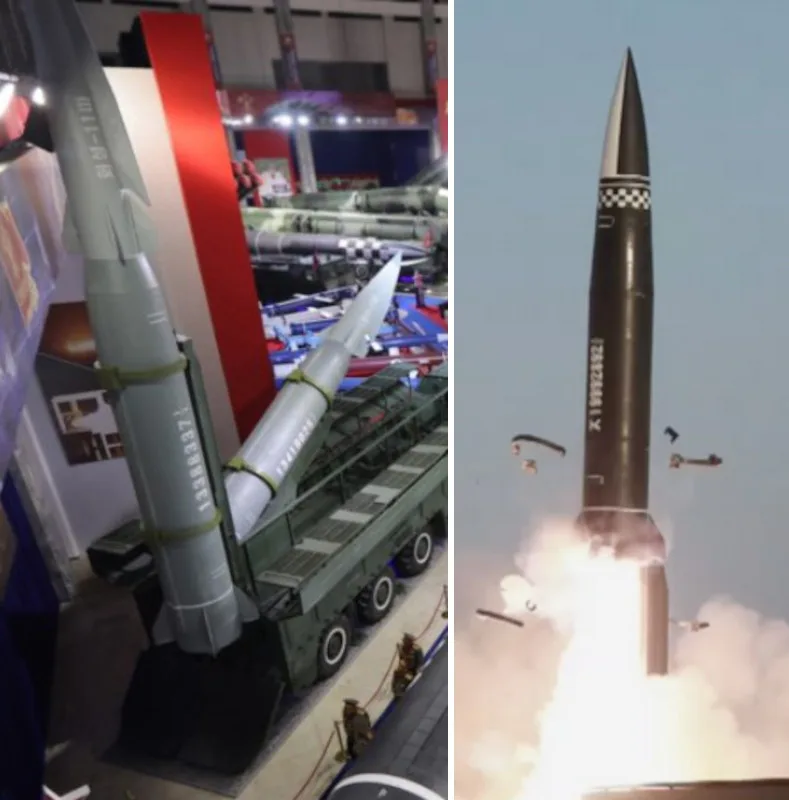
North Korea fired a ballistic missile toward the sea on Wednesday, August 12, 2026, marking its second weapons test in less than a week. The missile, launched from the Wonsan area on the country’s eastern coast, traveled roughly 700 kilometers before falling into the waters off Japan’s coastline. The launch adds fresh urgency to long-running questions about North Korea’s missile range and the size of its nuclear stockpile.
Background: Decades of Missile and Nuclear Development
North Korea’s weapons program did not appear overnight. The country began pursuing ballistic missile technology in the 1980s, initially reverse-engineering Soviet-era Scud missiles. Over the following decades, Pyongyang expanded its program with help from a mix of domestic engineering and technology acquired through international networks, most notably from Pakistani nuclear scientist A.Q. Khan, who is widely reported to have supplied centrifuge designs and related know-how during the 1990s and early 2000s.
North Korea conducted its first nuclear test in 2006, becoming the ninth country in history known to possess nuclear weapons capability. Since then, it has carried out a series of additional underground nuclear tests and steadily expanded the range and sophistication of its missile fleet, despite repeated United Nations Security Council sanctions aimed at halting the program.
Details: The Latest Launch and What It Signals
South Korea’s Joint Chiefs of Staff said the missile detected on Wednesday was fired from the Wonsan area around 6 a.m. local time and flew more than 700 kilometers before landing in the sea. Japan’s Defense Ministry separately confirmed a suspected ballistic missile launch, noting it reached a maximum altitude of around 90 kilometers and appeared to fall outside Japan’s exclusive economic zone.
This was Pyongyang’s second missile test in less than a week. On August 6, North Korea fired a short-range ballistic missile from the same coastal region, its first weapons test since April. According to South Korean assessments, Wednesday’s launch was North Korea’s 11th suspected ballistic missile test of 2026.
The timing is not coincidental. Both launches came just days before South Korea and the United States are set to begin their annual Ulchi Freedom Shield military exercise on August 17, running through August 27. North Korea has long viewed these joint drills as rehearsals for an invasion, even though Washington and Seoul consistently describe the exercises as defensive in nature.
Quotes: Officials React
Japan’s Defense Minister, Shinjiro Koizumi, called the latest launch “a threat to the peace and security of our nation, the region and the international community,” and said Tokyo had lodged a formal protest with Pyongyang through diplomatic channels.
South Korea’s National Security Council labeled the repeated launches “acts of provocation” and urged North Korea to halt them immediately, while reaffirming that Seoul’s military remains prepared to respond to any further escalation in cooperation with the United States.
North Korea itself has not officially confirmed either August launch, though the government typically releases details of its weapons tests roughly a day after they occur.
North Korea’s Missile Range: How Far Can Its Weapons Reach?
North Korea’s missile arsenal spans several categories, each with a different range profile:
- Short-range ballistic missiles (SRBMs): Typically capable of striking targets a few hundred kilometers away, largely aimed at South Korea and Japan.
- Medium- and intermediate-range missiles: Capable of reaching Japan and U.S. military installations in Guam.
- Intercontinental ballistic missiles (ICBMs): North Korea’s Hwasong-series ICBMs, including the Hwasong-17 and Hwasong-18, are believed capable of reaching targets across the continental United States, based on trajectory data from previous high-angle test launches.
Analysts caution that reported test distances often understate a missile’s true operational range, since North Korea frequently launches missiles on a steep, “lofted” trajectory to avoid flying over neighboring countries. When flown on a standard trajectory, the same missiles could travel significantly farther.
How Many Nuclear Weapons Does North Korea Have?
Independent estimates of North Korea’s nuclear stockpile vary because Pyongyang does not publicly disclose exact figures. Research institutions that track global nuclear arsenals, including the Federation of American Scientists and the Stockholm International Peace Research Institute, have estimated North Korea’s arsenal at somewhere between 40 and 50 assembled nuclear warheads, with enough fissile material stockpiled to potentially build several dozen more. These figures are assessments based on satellite imagery, defector testimony, and known plutonium and highly enriched uranium production capacity rather than confirmed counts.
Impact: Regional and Global Consequences
The renewed testing activity carries consequences well beyond the Korean Peninsula. For South Korea and Japan, each launch forces military forces onto heightened alert and strains already tense diplomatic relations. For the United States, North Korea’s expanding missile range keeps alive long-standing concerns about the security of American territory and allied bases in the Pacific.
The launches also complicate broader nonproliferation efforts. Every unsanctioned test is widely viewed as a violation of multiple United Nations Security Council resolutions, yet enforcement has grown more difficult as North Korea deepens military cooperation with Russia and maintains economic ties with China, both of which hold veto power at the UN. Financial markets and regional airlines also factor North Korean missile activity into short-term risk assessments, particularly when launches occur near shipping lanes or commercial flight paths over the Sea of Japan.
Conclusion: What Comes Next
With the Ulchi Freedom Shield exercise set to begin on August 17, analysts widely expect North Korea to continue, or even escalate, its testing activity in the coming weeks. Kim Jong Un has previously described joint U.S.–South Korea drills as evidence of a “will to ignite a war” and has used past exercises as justification for expanding the country’s “proactive and overwhelming” military countermeasures. Whether this round of tests remains limited to short- and medium-range missiles, or whether Pyongyang moves toward a longer-range or nuclear-capable demonstration, will likely shape the tone of U.S., South Korean, and Japanese responses through the rest of 2026.
Frequently Asked Questions
What is the maximum missile range of North Korea?
North Korea’s longest-range weapons are its Hwasong-series intercontinental ballistic missiles, such as the Hwasong-17 and Hwasong-18. Based on data gathered from past high-angle test launches, experts assess these missiles are theoretically capable of reaching almost anywhere in the continental United States if flown on a standard, non-lofted trajectory. Because North Korea typically tests these missiles on steep trajectories to keep them within its own airspace and avoid flying over neighboring countries, the real-world maximum range remains an estimate rather than a confirmed figure.
Does North Korea have any nuclear missiles?
Yes. North Korea has developed both nuclear warheads and the ballistic missile systems capable of delivering them, though the degree of miniaturization needed to fit a warhead onto its longer-range missiles is debated among analysts. North Korea has conducted six known underground nuclear tests since 2006 and has repeatedly tested missiles it describes as nuclear-capable, including short-range systems, submarine-launched missiles, and long-range ICBMs. Independent researchers estimate the country holds roughly 40 to 50 assembled warheads, along with fissile material stockpiles that could support additional weapons production.
How powerful is North Korea?
North Korea’s conventional military is large in personnel but relies on aging equipment compared with U.S. and South Korean forces. Its real strategic leverage comes from its nuclear and missile programs, which allow a relatively isolated, sanctioned state to pose a credible deterrent and negotiating tool against far wealthier and better-equipped rivals. Combined with growing military cooperation with Russia and steady political backing from China, North Korea’s asymmetric capabilities give it outsized influence over regional security discussions despite its limited economic resources.