

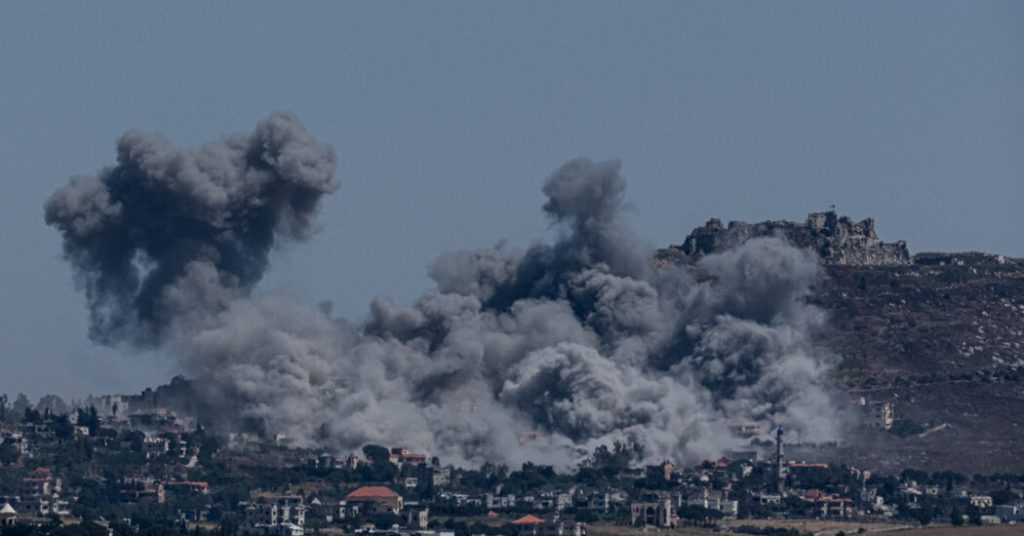

Israel attacks Lebanon once more, this time targeting the area surrounding the historic Beaufort Castle in the country’s south. Lebanese state media confirmed that a series of powerful explosions shook the region overnight, rattling nearby villages and reigniting fears that the fragile truce between the two sides is unraveling completely. The blasts mark yet another chapter in a conflict that officially ended with a ceasefire but has continued almost without pause on the ground.
Background
The latest round of violence comes against the backdrop of a ceasefire agreement brokered by the United States, meant to end months of intense fighting between Israel and the Iran-backed group Hezbollah. That truce, however, has never fully held. Since it was signed, Israel has carried out repeated strikes across southern Lebanon, arguing that Hezbollah continues to rebuild its military infrastructure in violation of the deal. Lebanese officials, meanwhile, insist that Israeli forces have refused to withdraw from several positions they seized during the war, including the medieval Beaufort Castle, a fortress that has changed hands many times over the centuries and now sits inside an Israeli-controlled buffer zone in southern Lebanon.
The castle itself, known locally as Qalaat al-Shaqif, has become something of a symbol in this latest chapter of the conflict. Built by Crusaders nine centuries ago, it was added just last week to UNESCO’s List of World Heritage in Danger, a recognition of both its historical value and the risk posed by ongoing military activity around it. Its capture earlier this year by Israeli troops was framed by officials in Jerusalem as a strategic necessity, giving them a commanding view over the Litani River and the approach routes toward northern Israel.
Details
According to Lebanon’s National National News Agency, residents near the fortress reported hearing extremely loud detonations shortly after midnight, powerful enough to shatter windows in nearby homes. Correspondents on the ground described a chaotic scene as families rushed outside, unsure at first whether the explosions signaled a fresh escalation or something more contained.
The Israeli military later confirmed it was behind the blasts, saying its forces had destroyed an underground tunnel network in the Beaufort area. Officials described the tunnels as part of a broader effort by Hezbollah to plan future incursions into communities inside the Galilee region of northern Israel. Reports indicate the operation involved a massive quantity of explosives, with figures cited around 700 tons, underscoring just how extensive the demolition effort was.
Israeli officials tied the timing of the strikes to an earlier incident, alleging that Hezbollah had violated the ceasefire days prior by launching an explosive-laden drone at an Israeli military vehicle stationed in southern Lebanon. Hezbollah has not publicly claimed responsibility for that specific incident, though the group has continued to insist that Israeli forces are the ones violating the terms of the truce by remaining on Lebanese soil and carrying out near-daily strikes.
This pattern has repeated itself for months. Since the ceasefire was announced, Israel attacks Lebanon on a near-continuous basis, ranging from targeted airstrikes on suspected weapons depots to larger demolition operations like the one at Beaufort. Lebanese authorities argue that this steady drumbeat of military activity makes the word “ceasefire” almost meaningless in practice, even as diplomats in Washington and elsewhere continue to describe the arrangement as technically in effect.
Quotes
In a joint statement, Israeli Prime Minister Benjamin Netanyahu and Defence Minister Israel Katz framed the overnight operation as a necessary step to dismantle what they called a core piece of Hezbollah’s infiltration strategy. Katz has previously described the continued Israeli presence at Beaufort as part of a long-term security buffer, telling reporters that troops would remain stationed there to protect communities in northern Israel.
On the Lebanese side, officials have repeatedly condemned the ongoing military activity as a violation of Lebanese sovereignty. Municipal leaders in the Arnoun area, close to the castle, have previously appealed to international organizations to intervene and protect the site given its protected UNESCO status, arguing that continued military operations put an irreplaceable piece of world heritage at risk of permanent damage.
Impact
The renewed blasts near Beaufort Castle carry consequences that stretch well beyond the immediate area. Regionally, they reinforce a growing perception that the ceasefire between Israel and Hezbollah exists more on paper than in practice, a dynamic that continues to strain diplomatic efforts led by the United States. Washington has pushed for calm on multiple fronts simultaneously, and any breakdown in Lebanon threatens to complicate broader negotiations involving Iran, which has signaled that a durable Lebanon ceasefire is central to any wider regional settlement.
For residents of southern Lebanon, the impact is far more immediate and personal. Thousands of families displaced earlier in the conflict have been unable to return home, with many villages still sitting inside or near areas under Israeli military control. Every fresh round of explosions adds to a climate of uncertainty that makes any large-scale return of displaced civilians increasingly difficult to imagine in the near term.
There are also cultural and heritage concerns at stake. Beaufort Castle’s addition to UNESCO’s endangered list highlights how modern warfare is intersecting with sites of deep historical significance, raising questions about the long-term preservation of structures that have survived nearly a thousand years of regional conflict, only to face fresh threats from twenty-first century military technology.
Internationally, the incident is likely to draw renewed criticism from governments that have already voiced concern over Israel’s continued military footprint in Lebanon. Previous Israeli operations in the area prompted France to request a UN Security Council session, and further incidents of this scale could reignite calls for stronger international oversight of the ceasefire’s implementation.
Conclusion
As it stands, there is little indication that the situation around Beaufort Castle or southern Lebanon more broadly will stabilize soon. Israel attacks Lebanon with a frequency that suggests military planners view the current arrangement as a managed conflict rather than a genuine peace, while Hezbollah continues to insist it is defending Lebanese territory from an occupying force. With diplomatic channels still open but showing limited progress, further strikes, demolitions, and skirmishes appear likely in the weeks ahead. Analysts following the region closely say the coming months will be critical in determining whether the ceasefire evolves into something more durable or collapses entirely into renewed full-scale conflict.
Frequently Asked Questions
What is Israel doing in Lebanon right now?
Israel currently maintains a military presence in parts of southern Lebanon, including strategic positions like Beaufort Castle, despite the existence of a US-brokered ceasefire. Israeli forces regularly carry out strikes, demolition operations, and patrols in the region, which officials describe as necessary to prevent Hezbollah from rebuilding its military capabilities near the border with northern Israel.
How much of Lebanon has Israel taken?
Israel has established what it calls a security zone across parts of southern Lebanon, including territory around the Litani River and strategic high ground such as Beaufort Castle. While Israel has not formally annexed this territory, its continued military occupation of these areas has drawn strong criticism from the Lebanese government, which views the presence as a violation of the ceasefire and Lebanese sovereignty.
Is the Israel-Lebanon ceasefire still in effect?
Technically, the ceasefire between Israel and Hezbollah remains active, but both sides accuse each other of repeated violations. Israel continues to conduct strikes it says are necessary for self-defense, while Hezbollah and the Lebanese government argue that Israel’s ongoing military presence and attacks make the ceasefire largely symbolic rather than a genuine end to hostilities.