

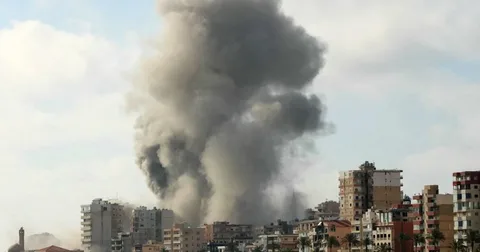

Iran’s Supreme Leader has drawn a clear line in the sand: no peace with America until Israel stops hitting Lebanon. The current status of the Iran America war just got more complicated and here is everything you need to know right now.
What Happened Today Khamenei’s Statement on the US-Iran Peace Deal
Iranian Supreme Leader Mojtaba Khamenei stated on Sunday, July 26, that any peace deal between Tehran and Washington is directly tied to Israel stopping its attacks on Lebanon. He made the statement in a post on X.
Iran, in Khamenei’s own words, “has designated the preservation of Lebanon’s territorial integrity, and the absolute, unconditional termination of the Zionist regime’s aggression as the primary condition for any agreement to ending the imposed war against the aggressive US.” He also strongly voiced his support for Hezbollah, its former leader Hassan Nasrallah, and the people of southern Lebanon.This is the clearest and most direct statement from Iran’s leader on the US-Iran peace deal conditions to date. It comes at a moment when the two sides are reportedly closer to a final agreement than they have been at any point since the war began.
Background: How the Iran America War Started
To understand what is happening today, you have to go back to February 28, 2026. The 2026 Iran war was initiated by the United States and Israel on that date and has fundamentally upended the dynamics of the Middle East. The opening salvo of US and Israeli air strikes killed Iran’s then-Supreme Leader Ali Khamenei and triggered a massive wave of retaliatory missiles and drones from Iran across the entire region.
Iran responded by attacking US bases in the region, targeting Israel, and striking sites in neighbouring Middle Eastern states. Iran also closed the Strait of Hormuz, one of the world’s most vital shipping lanes. From Lebanon, Iran-backed Hezbollah launched large-scale attacks on Israel, which in turn launched a ground invasion of southern Lebanon.The conflict dragged on through March and into April, with enormous casualties on all sides. Thousands were killed in Iran and Lebanon, dozens in Israel and Gulf Arab states, and more than one-sixth of Lebanon’s population was displaced.
The Ceasefire and the June Memorandum of Understanding
Attacks continued across the Middle East region until April 8, when Pakistan announced that the US and Iran had agreed to a two-week pause. On June 17, the US and Iran signed a 14-point memorandum of understanding.
Key elements of the memorandum included an immediate and permanent termination of military operations on all fronts, including in Lebanon. It also stated the US would lift its naval blockade of the Strait of Hormuz and Iran would ensure safe passage for vessels. On nuclear matters, Iran reaffirmed it would not procure or develop nuclear weapons.That deal, known as the US-Iran MOU, looked like it could end the Iran America war for good. But Israel’s continued operations in Lebanon quickly threw the entire framework into doubt.
Why Is Israel Hitting Beirut? Did Israel Bomb Beirut?
Yes Israel has bombed Beirut multiple times since the ceasefire was signed. Israel launched airstrikes on Beirut’s southern suburbs, specifically the Dahiyeh district, in what Israeli Prime Minister Benjamin Netanyahu’s office described as retaliation after Hezbollah struck Israel’s military with fighter drones.
The Israeli military stated that Hezbollah had launched three projectiles towards communities in northern Israel, calling it a blatant ceasefire violation. In one Israeli strike on Dahiyeh, three people were killed and six others wounded. Netanyahu and Defense Minister Israel Katz released a joint statement confirming the attack on “terrorist targets of the Hezbollah terrorist organization.”Israel’s stated reason for hitting Beirut is always the same: Hezbollah keeps firing into Israeli territory, and Israel says it has the right to respond. But the reality on the ground is far more complex. Analysts have noted that multiple ceasefires have been breached since November 2024. Senior fellow Brian Katulis of the Middle East Institute observed that ceasefires between Israel and Hezbollah have been “quite tenuous” and have been broken “almost on a daily basis over the last few weeks.”
From Iran’s perspective, every bomb that drops on Beirut is a direct violation of the June memorandum and a reason to walk away from the US-Iran peace deal entirely.
Trump Reacts: “This Should Not Have Happened”
Even the United States is not fully on board with Israel’s Beirut strikes. President Donald Trump posted on Truth Social that the Beirut strikes “should not have happened, particularly on a special day when we are so close to a Peace Deal with Iran.” He added: “We are very close to a Deal that will bring peace to the region, including to Lebanon, and all sides should stand down. There should be no more attacks by Israel anywhere in Lebanon.
That is a remarkable statement a sitting US president publicly criticising Israel’s military actions while an active US-Iran peace deal is on the table. It reflects just how delicate the current situation has become. The current status of the Iran America war is one where the diplomacy and the battlefield are pulling in opposite directions.
US-Iran Talks Schedule: Where Things Stand Now
The US-Iran talks schedule has gone through several disruptions over the past few months. Talks were paused following the death of former Iranian Supreme Leader Ali Khamenei and the week-long funeral processions. They had been expected to resume around July 11.
In earlier rounds of talks held in Switzerland, Iran and the US formed a new communication line aimed at ensuring safe passage in the Strait of Hormuz. A “de-confliction cell” involving Lebanon was also established, facilitated by Qatar and Pakistan, to help end military operations in Lebanon.
US Vice President JD Vance said in late June that talks in Doha were “going well,” adding that discussions about the nuclear issue would begin soon. “It’s still pretty early, but talks are going well,” he told CNN.As of July 26, no confirmed meeting time or location for US-Iran talks today has been officially announced. The situation remains fluid, with Khamenei’s latest statement adding new pressure to the negotiating process.
Iran Attacks After Ceasefire: The Lebanon Flashpoint
Iran attacks after the ceasefire have not been direct military strikes by the Iranian state. Instead, Iran’s response to continued Israeli bombardment has been political and diplomatic but the tone is escalating. Iran’s deputy commander of its top joint military command stated on Sunday that Israeli “crimes” will not go unanswered.
Iran has consistently maintained that a ceasefire between Israel and Hezbollah in Lebanon is a precondition for any wider agreement with the United States. Iran has also reiterated that some issues, such as its ballistic missile programme, are not open for negotiation.
The Lebanon front is the single biggest obstacle to closing the US-Iran peace deal. Iran sees Hezbollah not just as an ally but as a strategic arm of its regional influence. Any agreement that disarms Hezbollah without resolving Israel’s military presence in southern Lebanon is a non-starter for Tehran.
Does Israel Have a Peace Treaty With Lebanon?
Israel and Lebanon do not have a formal peace treaty. For the first time since the failure of the May 17 Agreement of 1983, Israel and Lebanon announced the opening of direct negotiations in 2026, with the goal of reaching a peace agreement and disarming Hezbollah.On June 26, following the signing of the US-Iran memorandum, Lebanon and Israel signed a US-mediated framework agreement stipulating a phased Israeli withdrawal from occupied Lebanese territory but without a timetable for the withdrawal. The deal stated Israel would withdraw from occupied territories only once Hezbollah is disarmed. Iran and Hezbollah rejected the deal outright.
The Lebanese army has since reported that Israeli forces are obstructing the withdrawal process from designated zones, further inflaming the situation.
What Agreement Did Trump Make With Iran?
The US and Iran signed a memorandum of understanding in June 2026. The negotiations focused on sanctions relief and other contentious issues. The memorandum provided negotiators with up to 60 days to reach a final agreement covering Iran’s nuclear programme. The head of the IAEA welcomed the signing and offered to assist both sides with verification measures related to Iran’s nuclear activities.
Iran’s Supreme Leader Mojtaba Khamenei said he initially had “a different opinion” on the agreement but granted permission after President Masoud Pezeshkian and other officials pledged to safeguard “the rights of the Iranian nation and the resistance front.” Khamenei also warned that Tehran would not accept additional demands from Washington.
The deal signed by Trump’s team was a framework, not a final peace agreement. The 60-day negotiating window is now running, and Israel’s continued attacks on Beirut are threatening to collapse it before a final deal can be reached.
Global and Regional Impact
The stakes here go far beyond Iran, the United States, and Lebanon. The Strait of Hormuz remains a key pressure point. Iran’s military threatened to close the vital waterway in response to Israel’s continued attacks in Lebanon and the US failing to implement its agreement. Trump threatened to “take over the Strait” in remarks that nearly derailed the negotiations entirely.
Oil markets, global shipping routes, and the broader Middle East order are all hanging on whether or not these talks survive the pressure being applied by events on the ground in Beirut. The Iran America war current status is one of fragile diplomacy under the shadow of active bombardment.
What Comes Next
The next few days will be critical. Iran has set clear conditions: Israel must stop hitting Lebanon unconditionally before any final US-Iran peace deal can be signed. The United States has privately acknowledged that Israel’s Beirut strikes are damaging the negotiations. Israel shows no signs of halting operations against Hezbollah.
The world is watching whether the 60-day window for a final agreement will be used for diplomacy or consumed by escalation. If Israel continues bombing Beirut and the US fails to restrain it, Khamenei’s latest statement suggests Iran is prepared to walk awa and that would mean the Iran America war is not yet over.
Frequently Asked Questions
Who signed Trump’s peace deal with Iran?
The memorandum of understanding between the United States and Iran was signed in June 2026. On the US side, negotiations were led by the Trump administration’s diplomatic team. On the Iranian side, Foreign Minister Abbas Araghchi played a central role in the talks, which were mediated through Qatar and Pakistan. Iran’s elected President Masoud Pezeshkian gave formal approval to the agreement, though Supreme Leader Mojtaba Khamenei later revealed he initially had reservations before granting his permission. The deal was not a full peace treaty but a framework agreement giving both sides 60 days to negotiate a final resolution covering Iran’s nuclear programme, sanctions relief, and the broader conflict.
Does Israel have a peace treaty with Lebanon?
No, Israel and Lebanon do not have an active peace treaty. The two countries have been in a formal state of conflict for decades, and the only previous attempt at a formal agreement the May 17 Agreement of 1983 ultimately failed and was never implemented. In 2026, following the broader Iran America war, Israel and Lebanon for the first time in over four decades entered direct negotiations toward a peace framework. In June 2026, a US-mediated agreement was signed outlining a phased Israeli withdrawal from occupied Lebanese territory, conditional on Hezbollah being disarmed. However, Iran, Hezbollah, and many Lebanese political factions rejected this deal, and Israel has been accused of obstructing the withdrawal from designated zones, leaving the situation deeply unresolved.
What agreement did Trump make with Iran?
President Donald Trump’s administration reached a 14-point memorandum of understanding with Iran in June 2026, following weeks of direct and mediated negotiations held in multiple countries including Pakistan and Switzerland. The key elements of the deal included an immediate end to military operations on all fronts, the lifting of the US naval blockade of the Strait of Hormuz, and Iran’s reaffirmation that it would not seek or develop nuclear weapons. The MOU gave both governments a 60-day window to negotiate a final comprehensive agreement covering nuclear verification, sanctions relief, and the future of the Lebanon conflict. Trump publicly described the deal as historic but acknowledged that Israel’s continued attacks on Beirut were creating serious obstacles to finalising a permanent peace.