A British court has jailed four Palestine Action activists Charlotte Head, Samuel Corner, Leona Kamio and Fatema Rajwani for their roles in a violent raid on an Israeli-linked defence factory. Judge Johnson jailed Samuel Corner, 23, for seven years and eight months after he was convicted of hitting police officer Kate Evans twice on the back with a 3kg sledgehammer, leaving her with a fractured spine. The sentencing has triggered widespread protest across the United Kingdom.
Background
The case centres on an incident that took place nearly two years ago. Charlotte Head, 30, Samuel Corner, 23, Leona Kamio, 30, and Fatema Rajwani, 21, used an old prison van to crash into the Elbit Systems site near Bristol in the early hours of August 6, 2024.
The activists used sledgehammers and crowbars to destroy computers, drones and other equipment before police and security intervened. The Palestine Action activists were targeting Elbit Systems because of its links to Israeli defence manufacturing.
The four were among six defendants known collectively as the Filton Six, tried at a retrial in May at Woolwich Crown Court for their roles in the direct action on the Elbit Systems UK weapons factory near Bristol. Two co-defendants were acquitted during that retrial.
Jordan Devlin was acquitted of criminal damage and was not sentenced, while Zoe Rogers was acquitted of all charges. Only Head, Corner, Kamio and Rajwani, now known widely as the Filton Four, faced sentencing.
Details of the Raid and Trial
Court evidence detailed the scale of destruction caused during the raid. Details of the military drones damaged in the raid emerged as part of a submission from the prosecution, which argued the scale of the damage was significant enough to justify applying a terrorist connection to the group during sentencing.
The forensic consultant’s report listed damage to military assets including the Magni X drone and multiple Thor drones in the Legion X and Helios configurations. The financial cost of the raid was substantial.
Four Palestine Action activists who mounted the raid caused £1.2 million of damage and left a police officer with a fractured spine. Samuel Corner’s role in the attack drew particular scrutiny from the judge.
The judge told the former Oxford student that he had used extreme and gratuitous force against a vulnerable police officer acting in the course of her duties. Head also played a direct role in breaching the factory perimeter.
Charlotte Head, 30, who crashed a van through the gates of the site, was sentenced to five years, along with Leona Kamio, also aged 30. Fatema Rajwani was given a prison term of four years and eight months.
Beyond prison time, the group now faces long-term legal restrictions. All four will serve at least two-thirds of their sentences before parole eligibility, and upon eventual release they face fifteen years of terrorist notification requirements, during which they must register new mobile devices, email addresses, and bank accounts with police.
The terrorism connection finding was a late and significant development in the case. Justice Johnson announced his finding of a terrorist connection under Section 69 of the Sentencing Act 2020, after the CPS applied on the day of sentencing to have the four young people sentenced as terrorists.
The legal maneuver drew criticism for bypassing jury involvement. This application allows a judge, rather than a jury, to find that an offence meets the statutory definition of terrorism and impose significantly harsher punishment as a consequence.
Quotes from Officials and Victims
The injured police officer gave a powerful account of the lasting effects of the attack. Pc Kate Evans held back tears as she read out an impact statement, revealing that she had been forced to give up her rank of sergeant after struggling in the aftermath of the attack by Corner.
Her statement described ongoing psychological trauma. She said, “The emotional impact of this incident has been profound and ongoing,” adding that she experiences disturbed sleep, often waking in a panicked state or after distressing dreams.
Evans also revealed she faced online abuse during the trial process. She said she had been the target of a hate-filled email from a troll during legal proceedings, including a suggestion she was working for the Zionist occupation of Britain.
Defence lawyers for the activists pushed back on the harshness of the sentencing. Representing one of the defendants during proceedings, counsel argued the case did not merit terrorism classification, though the court ultimately disagreed.
Regional and Global Impact
The sentencing has become a flashpoint in the broader debate over UK policy toward pro-Palestinian activism. The Palestine Action activists jailed over factory raid case marks what critics describe as a watershed moment in Britain’s approach to prosecuting opposition to the war in Gaza.
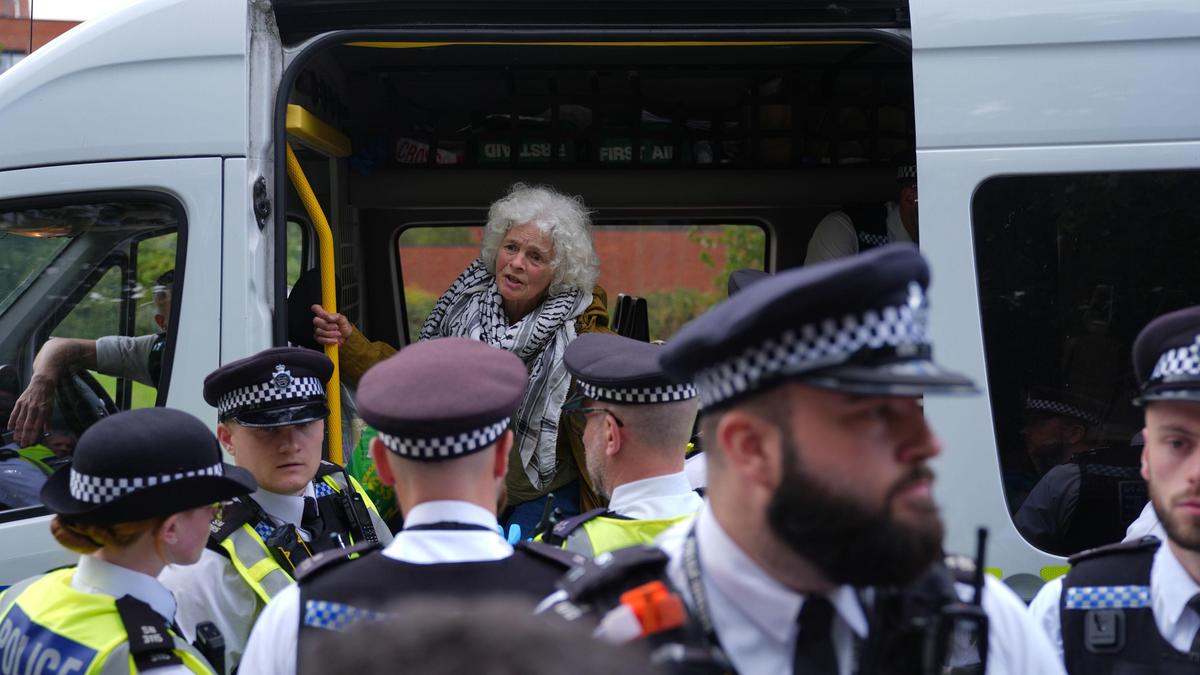
Large crowds gathered outside the courthouse in solidarity with the defendants. About 500 protesters gathered outside the court on Friday in support of the four activists, leading to the arrests of dozens of people for holding up signs in support of Palestine Action.
The case also intersects with an ongoing legal battle over the group’s banned status. Friday’s ruling came just before the High Court was due to rule on the government’s appeal against the lifting of a ban on Palestine Action.
The ban, imposed under the 2000 Terrorism Act which took effect on July 5 last year, made membership of or support for the direct action group a criminal offense punishable by up to 14 years in prison. The High Court had previously found problems with that ban.
After Palestine Action challenged the ban, the High Court in London ruled in February that the decision was disproportionate and had a very significant impact on human rights, and should be lifted. Elbit Systems, the company targeted in the raid, remains a significant defence sector player.
Elbit Systems is a defense technology company with around 20,000 staff and revenues of $2 billion, according to the firm’s website. The case has renewed scrutiny of foreign defence contractors operating in the UK.
Conclusion and Future Developments
The Filton Four case is likely to remain a reference point for future prosecutions involving direct-action protest groups in Britain. Legal experts anticipate appeals from the defence team challenging both the convictions and the terrorism connection finding attached to the sentences.
The High Court’s pending decision on the government’s appeal regarding the Palestine Action ban will also shape how similar cases are treated going forward. Human rights organisations have signalled they will continue monitoring how the UK balances protest rights against national security law.
Meanwhile, Rajwani’s legal team has indicated hope for rehabilitation after release. Her lawyer told the court that Goldsmith University is willing to welcome her back to complete her degree, and that her time in prison has allowed her a period of significant reflection.
The broader questions raised by this case around protest, terrorism law, and defence industry accountability are expected to remain prominent in UK political discourse in the months ahead.
Frequently Asked Questions
What did Samuel Corner do?
Samuel Corner, 23, was one of four Palestine Action activists involved in the raid on the Elbit Systems factory near Bristol in August 2024. He was convicted of criminal damage and grievous bodily harm after striking police officer Kate Evans twice on the back with a seven-pound sledgehammer during the raid, fracturing her spine. The judge described his use of force as extreme and gratuitous against a vulnerable officer acting in the course of her duties. Corner, a former Oxford student, received the longest sentence among the four defendants, totaling seven years and eight months, and will also face fifteen years of terrorist notification requirements after his eventual release.
Are police officers allowed to protest in the UK?
UK police officers are subject to strict rules that limit their ability to participate in political protests or campaigns while serving. Under regulations governing police conduct, serving officers are generally expected to remain politically neutral and avoid public demonstrations that could compromise perceptions of impartiality. This is separate from officers’ rights as private citizens, which are more restricted than those of ordinary members of the public due to the nature of their public office and the need to maintain public trust in policing.
Is the UK arresting people for free speech?
This remains a contested and actively debated issue in Britain. Critics, including civil liberties groups, argue that recent prosecutions of Palestine Action supporters including arrests of people simply holding signs in support of the banned group represent an overreach that criminalises legitimate political expression. Government officials and prosecutors maintain that these actions are separate from free speech protections because Palestine Action has been formally proscribed as a terrorist organisation under UK law, meaning public support for the group itself, rather than pro-Palestinian speech generally, is what triggers arrest.