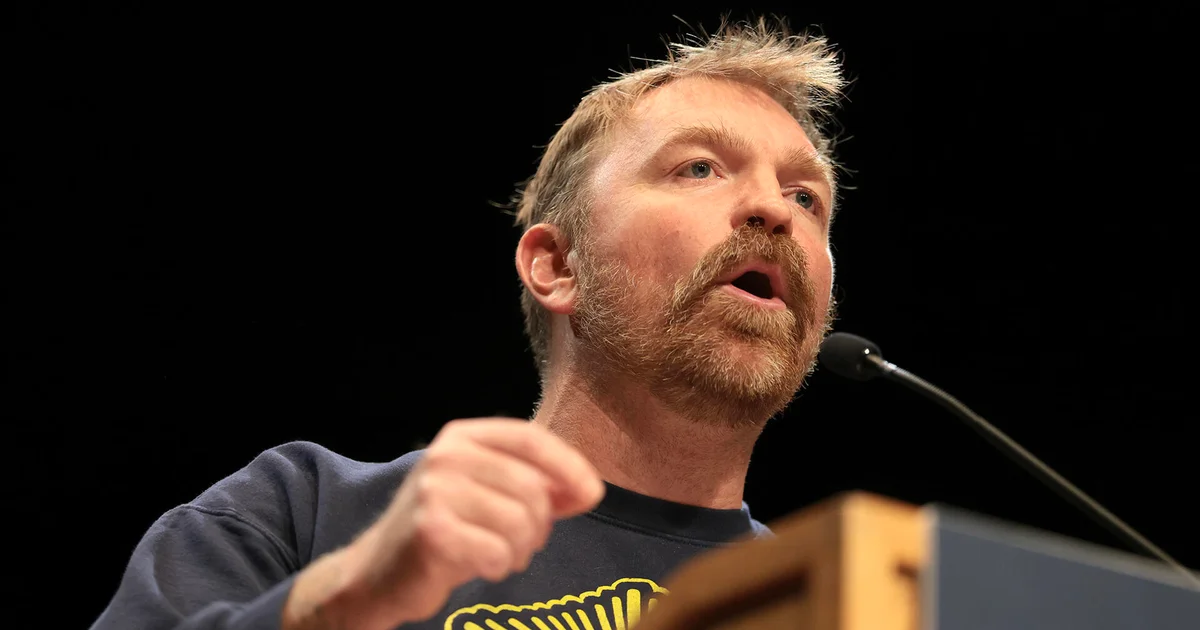
In the biggest American politics news story of the week, Democratic Senate nominee Graham Platner has suspended his campaign in Maine. The decision came after a former girlfriend accused him of sexual assault. This single event has reshaped one of the most closely watched Senate races heading into the 2026 midterms.
Platner announced his withdrawal in an eleven-minute video posted online on Wednesday. He denied the allegations completely but admitted that the political pressure had become impossible to overcome. His exit throws a race that many saw as central to control of the Senate into total uncertainty.
Background: Why This Story Matters in American Politics Party Circles
Understanding this story requires some background on how the American politics party system decides who runs for office. Platner, a 41-year-old veteran and oyster farmer from coastal Maine, rose from relative obscurity last year. He quickly built a following among progressive Democrats and was endorsed by figures like Senator Bernie Sanders.
He easily won the Democratic primary after Governor Janet Mills exited the race earlier in the cycle. His populist, working-class message resonated strongly with voters frustrated by the current political establishment. For students studying an American politics class, this race offers a real-time example of how party endorsements and grassroots momentum can shift almost overnight.
The Maine seat is currently held by longtime Republican Senator Susan Collins. Unseating her has been a top Democratic priority for more than a decade, especially since Republicans currently hold a narrow 53-47 Senate majority.
Full Details of the Allegations Against Platner
The controversy accelerated after Politico published a report detailing an accusation from Jenny Racicot, a Maine woman who previously dated Platner. She alleged that in 2021 he entered her home without permission while intoxicated and forced her to have sex with him. CNN later aired an interview where she described the incident as a violation of multiple boundaries she had clearly set.
Platner has firmly denied the claim, calling it false and inaccurate. He said he learned of the allegations through media inquiries without any real opportunity to respond or have the matter properly investigated before facing public judgment.
This was not the first controversy of his campaign. Earlier reports detailed offensive posts he made on Reddit years ago, a tattoo resembling a Nazi symbol that he later covered, and messages showing he had sent explicit texts to other women during his marriage. Each scandal chipped away at his support, but the assault allegation proved to be the breaking point.
Quotes From Officials and Key Figures
Senate Minority Leader Chuck Schumer and Senator Kirsten Gillibrand, who leads the Democratic Senatorial Campaign Committee, publicly urged Platner to withdraw immediately after the Politico report surfaced. The DSCC also stated it would not invest campaign funds in Maine if he remained on the ballot.
The Maine Democratic Party’s executive director accused Platner’s team of trying to influence the process of choosing his replacement, a claim his campaign denied. Meanwhile, Republican National Committee Chair Joe Gruters issued a sharply worded statement criticizing Democrats for their earlier support of Platner despite the mounting controversies.
Impact on the 2026 Senate Race and American Politics Republican vs Democrat Battle
This development is a major blow in the ongoing American politics republican vs democrat struggle for Senate control. Analysts widely agree that flipping Maine is essential for Democrats hoping to reclaim the majority this November. Without a strong nominee in place, that path becomes significantly more difficult.
Several potential replacement candidates have already emerged, including former state Senate President Troy Jackson, Maine Secretary of State Shenna Bellows, and former Maine CDC director Nirav Shah. The Maine Democratic Party has voted to hold a nominating convention to select a new candidate once a vacancy is officially confirmed.
If you tried to map this race using a US political system diagram, it would show just how quickly a single Senate seat can affect the national balance of power. A shift of just a few seats determines which party controls committee chairs, legislative priorities, and confirmation votes for years to come.
Broader Reactions Across American Politics People and Media
Reactions have poured in from American politics people across the spectrum, from grassroots activists to national commentators. Some sympathizers argue Platner was judged too quickly without due process, while critics say the party was right to distance itself given the seriousness of the allegation.
Interestingly, this real-world political drama has even sparked comparisons online to political thriller storylines, with some commentators joking it feels like something out of an American politics movie rather than an actual campaign. The scandal’s twists, sudden reversals, and internal party conflict have certainly captured public attention in a dramatic way.
President Trump’s influence also looms over the race, since he lost Maine in the last presidential election, making this Senate seat a symbolic battleground in the wider American politics trump era narrative that continues to shape national discourse.
Conclusion: What Happens Next
Under Maine election law, Democrats now have until later this month to formally select a new nominee to face Senator Collins in November. The coming weeks will be critical in determining whether the party can regroup effectively or whether the scandal will leave a lasting mark on their chances.
This story remains developing, and further updates are expected as the Maine Democratic Party moves forward with its selection process. As always with major American politics news, official statements and verified reporting will determine how the narrative unfolds from here.
Frequently Asked Questions
What are the 5 core American political beliefs?
American political culture is generally built around five widely recognized core beliefs: liberty, equality, democracy, individualism, and the rule of law. Liberty refers to personal freedom from excessive government interference, while equality emphasizes that all citizens should have equal rights and opportunities regardless of background. Democracy reflects the belief that government power comes from the consent of the people through free and fair elections. Individualism highlights the importance of personal responsibility and self-reliance, and the rule of law ensures that everyone, including elected officials, is accountable to the same legal standards. These values often shape debates like the one surrounding the Platner campaign, where questions of accountability, due process, and public trust collide.
Is America still a democracy?
Yes, the United States remains a constitutional federal republic, which is a specific and well-established form of representative democracy. Citizens elect representatives at the local, state, and federal levels, and power is distributed among three separate branches of government to prevent any single group from gaining excessive control. Elections, free press coverage of events like the Platner scandal, and peaceful transitions of power all continue to function as core democratic mechanisms. While debates about polarization, campaign finance, and media influence are common, the fundamental democratic structures of voting, checks and balances, and judicial oversight remain firmly in place.
What are the 7 types of political ideologies?
Political science generally identifies seven major ideological categories that shape movements and parties around the world. These include liberalism, which emphasizes individual rights and gradual reform; conservatism, which values tradition and stability; socialism, which prioritizes collective ownership and equality; libertarianism, which champions minimal government interference; nationalism, which centers on national identity and sovereignty; populism, which positions ordinary people against elite establishments; and progressivism, which pushes for rapid social and economic reform. Many modern political figures, including several involved in the current Senate race controversy, draw on elements of populism and progressivism to build grassroots support.