Margan Valley, a high-altitude mountain pass linking Kishtwar’s Warwan Valley with Anantnag in the Kashmir valley, has quietly become one of the region’s most talked-about destinations. Despite an official closure order following the Pahalgam attack, thousands of visitors continue reaching this remote meadow every season. Local authorities say enforcement remains difficult given the area’s easy road access and growing popularity among trekkers.
Background
Margan Valley sits roughly 130 kilometres from Srinagar, perched at an elevation of nearly 3,700 metres along the route that connects Anantnag district with Kishtwar’s Warwan region. For decades this stretch of the Himalayas remained largely unknown outside trekking circles, cut off for months at a time by heavy snow and unpredictable storms.
That isolation earned the pass its grim nickname, the valley of death, a reference to sudden weather changes that can trap travellers within minutes of clear skies turning hostile. Yet in recent years, better road connectivity through Margan Top has transformed this once-forbidding route into an accessible escape for domestic and international tourists chasing untouched Himalayan scenery.
Details
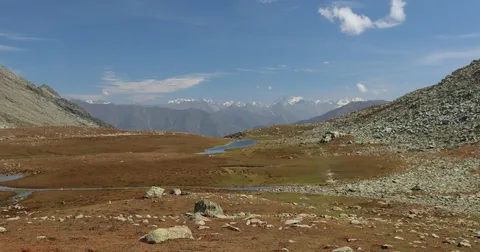
The final stretch of the journey to Margan Valley runs from Daksum along a narrow, winding mountain road that climbs steeply enough to unsettle travellers with a fear of heights or breathing difficulties at altitude. Once past this section, visitors reach expansive alpine meadows that stretch across the Anantnag-Kishtwar border, dotted with glacial lakes and grazing grounds used by nomadic shepherd communities for generations.
Margan Top itself, standing near 14,000 feet, functions as the gateway separating Margan Valley from the deeper, more remote Warwan Valley beyond. Warwan remains one of the least-visited corners of Kashmir, a narrow green corridor carved by the Marusudar river and hemmed in by the Pir Panjal and Zanskar ranges. Villages such as Inshan, Sukhnai, and Basmina still lack reliable electricity or mobile networks, leaving residents cut off from the outside world for several months each winter.
Following the Pahalgam terror attack earlier this year, authorities placed dozens of tourist destinations across Kashmir under an official closure order, and Margan Valley was among the 48 locations listed as off-limits. Despite this, ground reports indicate that tourist footfall has barely slowed, with camping groups and day-trippers continuing to arrive in significant numbers throughout the summer season.
Quotes
Officials overseeing the region have acknowledged the gap between policy and ground reality. A representative of the body managing Margan Valley told journalists that he has personally avoided visiting the site since the closure order was issued, stating he would return only once the government formally lifts the restriction. Trekking guides who regularly lead groups through the area have separately raised concerns about the growing litter problem, noting that untrained visitors often leave behind plastic waste in meadows that previously stayed pristine for generations.
Impact
The surge in uncontrolled tourism carries consequences beyond the immediate security concerns that prompted the closure. Environmentalists and local trekking organisers warn that the meadows and glacial streams around Margan Valley are increasingly strained by waste left behind by careless visitors, threatening an ecosystem that took decades to remain untouched. For the communities living just beyond Margan Top in Warwan, tourism growth also represents a rare economic opportunity, since the valley’s isolation has historically limited access to healthcare, education, and basic supplies for residents.
There is also a broader regional dimension. Kashmir’s tourism economy has increasingly looked toward offbeat destinations like Margan Valley and Warwan as alternatives to overcrowded hubs such as Pahalgam and Gulmarg. This shift brings fresh revenue to lesser-known districts but also raises questions about how authorities can manage safety, security, and environmental protection simultaneously in areas that were never built for mass tourism.
Conclusion
Whether Margan Valley continues operating as a semi-official destination or reverts to strict closure will likely depend on how security conditions evolve across the wider Kashmir valley in the coming months. Local tourism bodies have signalled that any formal reopening would need to come with stronger waste management and visitor regulation measures attached. For now, the valley remains a striking example of how quickly an isolated Himalayan pass can shift from being called a place of death to becoming one of Kashmir’s most sought-after hidden gems, even while official paperwork says otherwise.
Frequently Asked Questions
Why is Margan Top called Death Valley?
Margan Top earned the nickname valley of death because of its extreme and unpredictable weather patterns at high altitude. Clear skies over the pass can turn into sudden hailstorms or heavy snowfall within minutes, catching travellers off guard. Before proper road connectivity existed, this unpredictability made the crossing genuinely dangerous, with limited shelter available for anyone caught mid-journey. Even today, though a motorable road now connects Margan Top to the Kashmir valley, the name has stuck as a reminder of how harsh conditions here can turn from scenic to severe almost without warning, especially outside the summer months between June and September.
Where is the Valley of Kashmir located?
The Valley of Kashmir, often simply called the Kashmir valley, lies in the northern part of the Indian union territory of Jammu and Kashmir, nestled between the Pir Panjal range to the south and the Great Himalayan range to the north. It stretches roughly 135 kilometres in length and includes major towns and districts such as Srinagar, Anantnag, Baramulla, and Kupwara. Within this larger valley system lie smaller sub-valleys and passes, including the route toward Margan Valley and Warwan, which branch off from the main valley through the southern districts near Anantnag and Kokernag.
Why is Pahalgam so famous?
Pahalgam has long been celebrated as one of Kashmir’s most accessible and picturesque hill destinations, known for its pine forests, the Lidder river, and meadows like Betaab Valley and Aru. Its relatively easy road access from Srinagar, combined with well-developed tourist infrastructure including hotels, pony rides, and organised sightseeing routes, has made it a favourite among first-time visitors to the region. Pahalgam also serves as a base camp for the annual Amarnath Yatra pilgrimage and several trekking routes into the interior Himalayas, further cementing its reputation as one of the most visited destinations in the Kashmir valley.