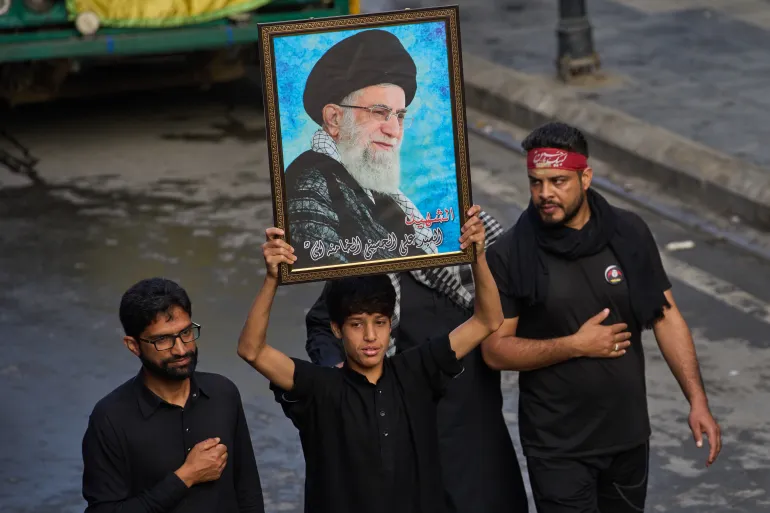
Iran is preparing for one of the largest funerals in its modern history this week, as state ceremonies begin July 4 for former Supreme Leader Ayatollah Ali Khamenei, who was killed in a US-Israeli airstrike on February 28, the opening day of the war between Iran and the US-Israel coalition. Iranian officials say between 15 and 20 million people are expected to attend events stretching from Tehran to the Iraqi holy cities of Najaf and Karbala.
The funeral comes during a fragile ceasefire that has paused, but not resolved, months of fighting. US-Iran negotiations over a permanent end to the war have themselves been paused for the funeral period, and Iranian officials have issued fresh warnings to Washington and Israel against any attack during the ceremonies.
Background: How the Iran-Israel War Started
The war began on February 28, 2026, when the United States and Israel launched coordinated strikes against Iran. Ayatollah Ali Khamenei, Iran’s Supreme Leader since 1989, was killed in the opening attack. His son, Mojtaba Khamenei, was reportedly seriously wounded in the same strike, which also killed his mother and wife.
Mojtaba has since been named Iran’s new Supreme Leader, but he has not appeared publicly since taking office, communicating with the public only through written statements. Iranian officials maintain he has fully recovered and is personally directing Tehran’s negotiations with Washington, though that claim has not been independently verified.
Fighting between Iran and the US-Israel coalition continued for months after the initial strike, drawing in related fronts including Lebanon, where the Health Ministry reports that Israeli attacks since March have killed at least 4,298 people and injured 12,196 more. The conflict also disrupted global shipping and energy markets after Iran moved to restrict traffic through the Strait of Hormuz, a critical passage for international oil supplies.
Details: Where Things Stand Now
The two sides eventually signed a preliminary memorandum of understanding establishing a ceasefire and committing to negotiate a final agreement within a maximum of 60 days, a window that can be extended by mutual consent. Since then, US and Iranian negotiators have met only twice once directly and once through Qatari and Pakistani mediators in Doha.
Those talks have now paused for at least a week to allow for Khamenei’s funeral. Iran’s parliament speaker and chief negotiator, Mohammad Bagher Ghalibaf, has publicly called on citizens to turn out in massive numbers for the ceremonies, framing the funeral as a show of national resolve. Iranian state media report that authorities have ordered public and private offices in Tehran closed from Saturday through Monday, along with major traffic restrictions across the capital.
The funeral processions are scheduled to move through Tehran, the holy city of Qom, and finally Mashhad, where Khamenei will be buried in his hometown on July 9. Additional ceremonies are planned in the Iraqi cities of Najaf and Karbala. Foreign dignitaries expected to attend include Pakistani Prime Minister Shehbaz Sharif, who has played a mediating role in the US-Iran talks, along with representatives from China, India, and roughly 30 other countries.
Iran’s military has simultaneously escalated warnings over the Strait of Hormuz, telling oil tankers and other vessels they must use Tehran-approved shipping routes or risk a “forceful response.” A senior Iranian military commander separately warned the US and Israel against any strikes during the funeral period, citing the risk of what he called harsh retaliation from Iran’s armed forces.
Quotes and Official Statements
Ali Abdollahi, commander of Iran’s Khatam al-Anbiya Central Headquarters, warned that Iran’s enemies should “avoid any miscalculation” during the funeral, cautioning that any aggression would draw a forceful military response.
President Trump, describing the state of negotiations in a CNBC interview, characterized the current situation as something short of active war and said talks toward Iran’s denuclearization were “moving along well” following this week’s round of indirect discussions in Doha.
Qatari and Pakistani mediators, who have facilitated the indirect talks between Washington and Tehran, said Thursday that further negotiating sessions would resume “at the earliest possible time” once the funeral commemorations conclude.
Impact: Regional and Global Effects
The war’s economic fallout has been significant well beyond the Middle East. US gasoline prices remain more than 60 cents higher per gallon than a year ago, a rise directly linked to disrupted oil flows through the Strait of Hormuz. Major airlines, including Cathay Pacific, suspended flights to Gulf destinations like Dubai and Riyadh when the war broke out and have only recently begun scheduling a phased return of service.
Regionally, the conflict has strained relationships well beyond Iran and Israel themselves. Reports suggest Washington is reconsidering elements of its troop presence in Saudi Arabia amid friction over the war’s handling, while Lebanon continues to absorb a heavy civilian toll from related Israeli strikes.
Inside Iran, the succession to Mojtaba Khamenei adds a layer of political uncertainty on top of the war itself. Whether he appears publicly during his father’s funeral his first public appearance since being named Supreme Leader is being closely watched as a signal of both his health and his political standing at home.
For Israel, the war has reshaped domestic politics as well. Prime Minister Benjamin Netanyahu has publicly credited the conflict with preventing Iran from completing a nuclear weapon, a claim disputed by political rivals who accuse him of exaggerating the threat for political gain.
Conclusion: What Comes Next
The ceasefire holding between Iran and the US-Israel coalition remains genuinely fragile, dependent on negotiations that have barely begun to address the central issue of Iran’s nuclear program. With talks paused for Khamenei’s funeral and both sides issuing fresh warnings to one another, the coming days will test whether the truce can survive a moment of heightened nationalist sentiment inside Iran.
Once negotiations resume, analysts caution that a comprehensive agreement could take considerably longer than the initial 60-day window suggests pointing to the roughly two years it took to negotiate the 2015 Iran nuclear deal as a rough comparison. For now, the immediate concern for diplomats and regional governments alike is simply ensuring the funeral itself passes without triggering a fresh round of military escalation.
FAQs
Did Iran attack Israel today?
No. The current war began when the United States and Israel launched strikes against Iran on February 28, 2026, killing Supreme Leader Ayatollah Ali Khamenei. Since then, the two sides have moved into a fragile ceasefire, and current developments center on Khamenei’s funeral and paused negotiations rather than new attacks. Any claims of a fresh Iranian attack on Israel “today” should be checked against major outlets like Al Jazeera, CNN, or Reuters before being treated as confirmed.
Who won the Israel-Iran war? The war has not formally ended, and no side has declared a clear victory. A ceasefire and preliminary memorandum of understanding are currently in place, with both sides committed to negotiating a permanent resolution within 60 days of the agreement, a timeline that may be extended. Israeli officials have claimed the conflict prevented Iran from completing a nuclear weapon, though this claim remains politically disputed even within Israel.
Why is Trump negotiating with Iran now?
The Trump administration has been involved in the conflict since US forces participated in the February 28 strikes that killed Khamenei. Since then, Washington has pursued a negotiated settlement through Qatari and Pakistani mediators, with the stated goal of securing Iran’s denuclearization as part of a permanent end to the war. President Trump has described progress in these talks as positive, though key issues remain unresolved.