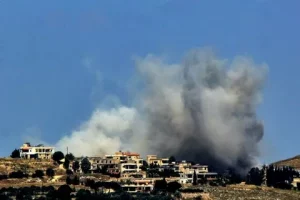


The Strait of Hormuz update today is being tracked by governments, energy markets, and shipping companies simultaneously because what happens in this narrow strip of water affects all three at once. Iran’s emergency security measures following recent military strikes have pushed the 2026 Strait of Hormuz crisis into the center of global attention, and the Strait of Hormuz status today remains tense, active, and unresolved.
Military patrols, surveillance drones, and naval forces are all operating in the region right now. Commercial traffic has not stopped, but it is moving under conditions that no shipping company would describe as normal.
Rising Tensions in the Gulf Region
The current escalation traces back to military strikes that pushed Iranian officials into a harder public posture. Warnings from Tehran about possible restrictions on maritime movement near the strait came fast after those strikes, and the phrase Strait of Hormuz closure 2026 date landed in financial markets before diplomats had time to respond.
That reaction tells you something. Oil traders do not wait for confirmed closures. The possibility alone moves prices, and prices moved. Global crude showed immediate volatility after the latest Strait of Hormuz update today. Shipping insurance costs jumped. Supply chain planners started making calls.
Analysts say the 2026 Strait of Hormuz crisis sits at a genuinely dangerous pressure point one where the consequences of escalation are large enough that most parties have strong reasons to avoid it, but where the political dynamics make restraint harder to sustain than usual.
Security agencies from multiple countries are now monitoring ships passing through Strait of Hormuz today in real time. The question is not whether commercial traffic continues — for now it does — but for how long and under what conditions.
Helicopter Strait of Hormuz Operations Intensify
Military helicopter activity over the strait has expanded noticeably. Helicopter Strait of Hormuz surveillance missions are covering more of the maritime corridor than in recent weeks, with low-altitude patrols becoming more frequent near commercial shipping lanes.
The operational logic is straightforward: helicopters provide rapid response capability and visual monitoring at a level that satellite systems and naval vessels cannot replicate for close-range incident management. Defense analysts watching the deployments say these are patrols designed for deterrence and emergency readiness, not offensive positioning.
Several Gulf nations have also upgraded their maritime monitoring infrastructure during this period. The combination of expanded helicopter operations and improved tracking systems is aimed at reducing the risk of accidental confrontation which is the scenario that worries military planners more than deliberate escalation.
Strait of Hormuz Drone Rescue Mission Reported
A reported Strait of Hormuz drone rescue operation added another layer to the coverage this week. A surveillance drone lost communication near a naval monitoring zone and was subsequently recovered in a coordinated operation. Officials have not released full technical details, but regional sources confirmed the basic sequence of events.
The Strait of Hormuz drone rescue drew attention not just because of the incident itself but because of what it reveals about current operational density in the region. Multiple countries are running unmanned aerial surveillance over the same stretch of water simultaneously. The chances of technical incidents — lost communications, navigation failures, close approaches are higher than they would be in less contested airspace.
Drones have become central to the 2026 Strait of Hormuz crisis response on multiple sides. Intelligence gathering, ship tracking, rapid visual assessment of incidents — all of it is running through unmanned systems in ways that would not have been possible even five years ago.
Global Markets React to Strait of Hormuz Status Today
The Strait of Hormuz status today is moving markets in real time. Nearly one-fifth of global seaborne oil passes through this waterway. That number does not leave room for comfortable hedging when serious disruption becomes plausible.
Energy analysts have flagged that uncertainty around the Strait of Hormuz closure 2026 map is already affecting insurance premiums for Gulf shipping. Underwriters price risk, and the current risk environment is significantly elevated. That cost gets passed through to shipping companies, and then to customers.
Some shipping operators have begun contingency planning around alternative routes. Rerouting around the Cape of Good Hope adds weeks and significant cost to voyages that currently take days through the strait. It is not a practical replacement it is a very expensive backup. The Strait of Hormuz is not easy to route around, which is precisely why it matters so much.
Stock markets linked to energy and logistics sectors showed volatility following the latest update. That pattern will continue as long as the situation remains unresolved.
Military Presence Expands Across the Region
Naval deployments from multiple countries have increased during the 2026 Strait of Hormuz crisis. Joint patrol operations are running in international waters, focused on maintaining freedom of navigation for commercial shipping and monitoring the situation for early warning of escalation.
Ships passing through Strait of Hormuz today are doing so under heavier security conditions than a month ago. Tankers carrying crude oil and LNG are still moving. Military escorts and close surveillance have become part of the operational environment.
Satellite monitoring and naval intelligence tracking are both running at elevated intensity. Unusual vessel movement near strategic ports is being flagged and investigated quickly. The operational environment is crowded, which creates its own risks alongside the deterrence benefits.
Concerns Over Strait of Hormuz Closure 2026 Map
Search traffic for Strait of Hormuz closure 2026 map jumped sharply as speculation spread about possible shipping restrictions. That kind of public interest reflects genuine economic anxiety the people searching are not only journalists. They are logistics managers, energy traders, and procurement officers trying to assess exposure.
A complete closure would be a significant economic event for energy-importing nations. Emergency strategic reserves exist precisely for scenarios like this, and governments have already begun reviewing activation thresholds. Partial disruption harassment of vessels, extended delays, higher security incidents would be less acute but sustained, and potentially more corrosive to market confidence over time.
Regional diplomacy is currently focused on preventing the closure scenario from becoming real. That work is happening in parallel with the military posturing, which is the normal dynamic in these situations. Both tracks run simultaneously.
International Response and Diplomatic Efforts
The Strait of Hormuz update today has produced clear statements from world leaders calling for restraint. International organizations are pushing the same message. Diplomatic conversations between regional powers and Western governments are reportedly ongoing, though the details are not public.
Foreign policy analysts note that previous regional crises have shown how quickly economic pressure from Hormuz disruption can accelerate negotiations. No party with significant economic exposure to Gulf energy exports benefits from a sustained closure. That shared interest creates some diplomatic leverage even when political trust is low.
The question is whether that leverage is enough to produce de-escalation before an incident a miscalculated military exchange, an accidental confrontation between naval units forces a harder outcome.
Impact on Global Shipping and Oil Supply
The ships passing through Strait of Hormuz today are carrying cargo that reaches consumers across Asia, Europe, and North America. The route handles not just crude oil but LNG, refined products, and industrial goods. Thousands of commercial vessels use it every year.
Shipping companies operating in the Gulf are running under strict security advisories right now. Some have added onboard security personnel. Others are coordinating directly with naval authorities for transit escort information. The operational cost of the current situation is real even before any confirmed incident occurs.
Oil-producing nations are watching carefully because export revenue is tied to whether their cargo moves reliably. Prolonged disruption affects them directly which gives Gulf producers their own reasons to push for stabilization through diplomatic channels.
Future Developments Expected
The Strait of Hormuz update today points toward a situation that is still developing and not close to resolution. Military activity will continue. Diplomatic conversations will continue alongside it. International monitoring operations are not winding down.
Whether a confirmed Strait of Hormuz closure 2026 date materializes depends on decisions that have not yet been made. The current trajectory keeps that possibility alive without making it inevitable. Governments are preparing contingency plans precisely because the outcome is genuinely uncertain.
The 2026 Strait of Hormuz crisis has placed one of the world’s most critical pieces of maritime infrastructure at the center of a geopolitical confrontation that was already running hot before the strait became the focal point. How it resolves through diplomacy, through de-escalation, or through something more serious will affect energy markets, regional security, and international trade in ways that extend well beyond the Gulf.
FAQs
Which country owns the Strait of Hormuz?
No single country owns the Strait of Hormuz. Iran controls the northern coastline and Oman controls the southern side, with the UAE also holding territory near the entrance. Under international maritime law, the strait qualifies as an international waterway, which gives all nations the right of transit passage regardless of the territorial waters on either side. Iran has long used its geographic position as leverage the ability to complicate or threaten shipping does not require legal ownership of the waterway itself.
How many times has Iran closed the Strait of Hormuz?
Iran has never implemented a complete, sustained closure of the strait, though it has threatened to do so repeatedly during periods of tension most prominently during confrontations over nuclear sanctions and US military presence in the Gulf. There have been incidents involving harassment of commercial vessels, seizures of tankers, and periods of heightened military activity that disrupted normal operations without technically closing the waterway. The distinction between a formal closure and a de facto disruption is significant the latter has happened; the former has not.
Did Iran agree to open the Strait of Hormuz?
During the current 2026 crisis, Iran has participated in diplomatic discussions around maritime security, and ceasefire arrangements have included language about allowing commercial shipping to continue. Iran has historically framed its position as supporting legitimate trade while reserving the right to restrict access under conditions it defines as threatening to its security. Whether the current diplomatic framework holds and what Iran considers compliant behavior from the other parties remains the central uncertainty in the Strait of Hormuz status today.