

UNITED NATIONS | ECOSOC 2026 | OFFICIAL STATEMENT
Pakistan Calls for Stronger National Ownership and Adequate Funding in UN Development Reform
Ambassador Asim Iftikhar Ahmad raises five key concerns at ECOSOC Operational Activities Segment on UN80 reform agenda
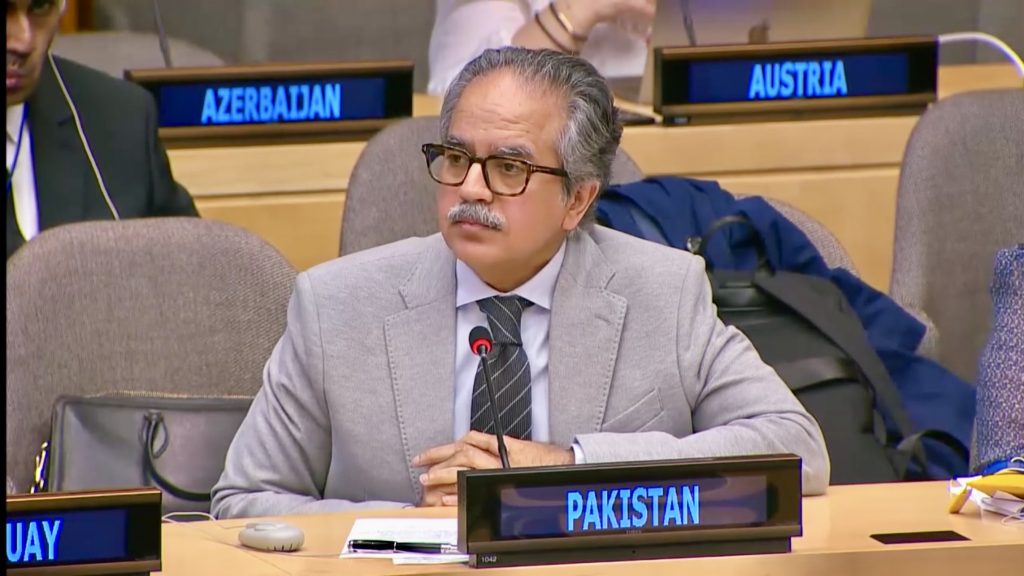
NEW YORK, 2 June 2026 — Statement by the Permanent Mission of Pakistan to the United Nations
Pakistan’s Permanent Representative to the United Nations, Ambassador Asim Iftikhar Ahmad, delivered a formal statement at the ECOSOC Operational Activities Segment 2026, Session 4 — a high-level dialogue with Executive Heads of the UN Development System (UNDS). Speaking on behalf of Pakistan, the Ambassador welcomed contributions from the UNDP Administrator and UNICEF Executive Director, while raising five substantive concerns about the ongoing UN80 reform agenda.
Funding Cuts and the Primacy of Delivery
Pakistan aligned itself with growing concern over the decline in Official Development Assistance (ODA) and overall UN development funding. Ambassador Ahmad stressed that the primary focus of any reform effort must be on delivery, implementation, and tangible results on the ground — rather than structural reorganisation for its own sake. He underscored that coordination must serve to deepen partnerships with recipient countries and reinforce genuine national ownership of development processes.
UN Presence in Pakistan: Appreciation and Concern
Pakistan hosts more than 20 UN entities and, like many programme countries, has not been spared the effects of funding pressures across the UN development system. The Ambassador noted with concern the drawdown of humanitarian coordination capacity on the ground within Pakistan. He nonetheless recognised that certain entities — notably UNDP — have maintained their in-country presence despite significant financial headwinds, and expressed Pakistan’s appreciation for that continued commitment.
Five Queries on the UN80 Reform Agenda
Ambassador Ahmad directed five specific questions to the Executive Heads, each targeting a structural dimension of the reform agenda:
- Coherence and Alignment of Planning Frameworks
The Ambassador noted findings in the UNSDG Chair’s report that Cooperation Frameworks continue to be shaped around entity timelines rather than national planning cycles, and that Country Programme Documents are not substantively derived from them — despite RC certification. He asked whether the QCPR proposal to finalise Cooperation Frameworks before work begins on Country Programme Documents would resolve this misalignment, or whether deeper structural obstacles remain.
- Alignment with Genuine National Priorities
Pakistan highlighted room for improvement in aligning entity programming with host country priorities. In Pakistan’s case, the Ambassador noted that programming toward poverty eradication, employment, and economic growth could be scaled up, rather than focusing on areas driven by funding availability rather than comparative advantage. He called for better real-time visibility into entity plans and resource pipelines, and asked whether the QCPR proposal for live workplans and visible resource pipelines is feasible to implement.
- Knowledge Hubs and Expertise on Demand
While acknowledging these as promising mechanisms, Pakistan sought clarification on whether demand would be genuinely country-defined, whether expertise would fill real gaps, and whether such models would prove more cost-effective than in-country presence. The Ambassador requested further detail from the UNDP Administrator on implementation.
- Country Configuration and Host Government Agency
Pakistan signalled openness to a more focused UN country presence but insisted that any reconfiguration must constitute a genuine dialogue led or co-led by host governments. He also stressed that programme countries must retain flexible points of access to the UNDS, rather than being funnelled through narrower channels.
- Efficiency Initiatives and Their Limits
Pakistan reported ongoing progress on common premises and entity relocation to cost-effective sites, while acknowledging uneven progress on common back offices. The Ambassador called for a frank assessment of why efficiency initiatives falter in certain contexts. He closed with a pointed observation: “No amount of efficiency gains can replace adequate funding. Without predictable and core resources, even the leanest system won’t be able to deliver.”
In closing, Ambassador Ahmad reaffirmed Pakistan’s commitment as a partner of the UN development system, expressing particular appreciation for the presence and leadership of UNDP and UNICEF in the country.
Source: Permanent Mission of Pakistan to the United Nations • ECOSOC Operational Activities Segment 2026 • 2 June 2026