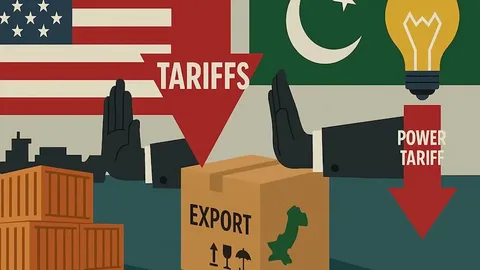

The United States’ evolving tariff policies on Pakistan in 2026 have triggered renewed debate over trade stability between the two countries.Reports suggest possible tariff adjustments affecting multiple export categories, especially textiles and manufacturing.
The move comes amid broader global trade realignments and compliance concerns.
Background
Trade relations between Pakistan and the United States have long been shaped by shifting geopolitical and economic priorities.
Over the years, tariffs have been used as a policy tool to influence market access, labor standards, and regulatory compliance.
Pakistan’s export-driven sectors, especially textiles, have remained closely tied to US market demand.
Historically, Pakistan US tariffs 2022 reflected relatively stable trade flows, although some restrictions remained in place for specific goods.However, evolving global supply chain policies and labor compliance frameworks have started reshaping tariff discussions.
Details
Recent developments indicate that US tariff on Pakistan 2026 could include stricter conditions for selected export categories.
The focus is reportedly on compliance with international labor and production standards, which may affect shipment costs and pricing structures.Businesses are closely monitoring whether these changes will increase import duties or tighten existing trade regulations.
Comparatively, US tariff on Pakistan today discussions suggest more scrutiny than in previous years, especially in labor-intensive sectors.Analysts believe that US tariff on Pakistan before and after comparisons show a gradual tightening trend in regulatory expectations.Exporters fear that even minor tariff increases could significantly impact competitiveness in global markets.
There is also ongoing debate about US tariff on Pakistan vs India, as regional competitors often compete for similar export markets in the United States.Any differential tariff advantage could reshape South Asia’s export balance, especially in textiles and apparel industries.
Quotes
Trade experts suggest that evolving tariff frameworks are part of broader global policy shifts.
An economist noted that “tariff adjustments are no longer just economic tools, but also instruments of regulatory compliance enforcement.”Business leaders in Pakistan argue that clearer communication from US authorities is needed to avoid uncertainty in export planning.
Impact
The potential impact of US tariff on Pakistan 2026 could be significant for Pakistan’s export economy.Textile exporters, which form a major portion of Pakistan’s foreign earnings, may face higher production costs if tariffs increase.This could reduce competitiveness in the US market and shift orders to alternative regional suppliers.
On a broader level, changes in US tariff policy may also affect investor confidence in Pakistan’s export sector.Small and medium-sized exporters could be hit hardest due to limited capacity to absorb additional costs.Meanwhile, government trade authorities may seek negotiations to stabilize long-term trade conditions.
Conclusion
The future of US tariff on Pakistan 2026 remains uncertain as global trade policies continue to evolve. Pakistan’s export industry will likely depend on diplomatic engagement and compliance improvements.Any final tariff decisions will play a crucial role in shaping bilateral trade relations in the coming years.
FAQs
What is the tariff rate of Pakistan?
Pakistan’s tariff rates vary depending on the product category and trade agreements. In general, export tariffs to the US are relatively low, but certain goods may face additional duties based on compliance rules and international trade policies. These rates are periodically reviewed by US trade authorities.
Is Pakistan affected by the tariffs?
Yes, Pakistan is affected by US tariffs, especially in sectors like textiles, apparel, and manufacturing. Any increase in tariff rates can impact export competitiveness, production costs, and demand in international markets, particularly in the United States.
Does Pakistan have a trade deal with the US?
Pakistan does not currently have a comprehensive free trade agreement with the United States. However, both countries maintain bilateral trade relations under World Trade Organization (WTO) frameworks and periodic trade policy discussions.