

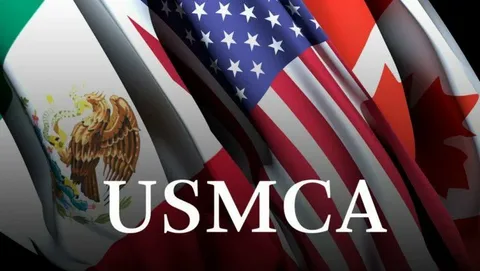

The USMCA Trade Agreement 2026 has once again become a major topic across North America as political leaders, businesses and economists debate the future of regional trade cooperation. The agreement, which replaced NAFTA, remains one of the world’s most important trade frameworks and affects hundreds of billions of dollars in cross-border commerce every year.
Recent discussions among the United States, Canada and Mexico have highlighted the importance of maintaining stable trade relations while addressing concerns related to tariffs, manufacturing, energy policy and supply chains. As economic uncertainty continues to influence global markets, the future of the USMCA Trade Agreement 2026 is attracting renewed attention from governments and investors alike.
Background: What Is the USMCA Trade Agreement?
The United States-Mexico-Canada Agreement, commonly known as USMCA, is a trade pact between the three North American countries. The agreement officially replaced NAFTA in July 2020 after years of negotiations.
The deal was negotiated during the administration of former US President Donald Trump, making the phrase “USMCA trade agreement Trump” one of the most searched terms associated with the pact. Supporters argued that the updated agreement modernised trade rules, strengthened labour standards and addressed digital commerce issues that were not covered under NAFTA.
Since its implementation, the agreement has governed trade relations among economies that collectively represent trillions of dollars in economic activity.
Why the Agreement Matters in 2026
The USMCA Trade Agreement 2026 is entering a particularly important period because member countries are reviewing how effectively the pact is functioning. Businesses across manufacturing, agriculture, technology and automotive industries depend heavily on predictable trade rules.
North American supply chains have become increasingly interconnected over the past two decades. Vehicles assembled in one country often contain components manufactured in another. Agricultural products frequently cross borders multiple times before reaching consumers.
Because of this economic integration, any uncertainty surrounding the agreement can have significant consequences for investment decisions and employment levels throughout the region.
USMCA Trade Agreement Summary
A brief USMCA trade agreement summary helps explain why the pact remains important.
The agreement provides tariff-free access for most goods traded among the United States, Canada and Mexico. It also includes updated rules covering intellectual property, labour rights, environmental standards and digital trade.
The automotive sector received particular attention during negotiations. New rules require a higher percentage of vehicle content to originate within North America. Labour provisions were also strengthened to improve working conditions and wage standards.Supporters believe these measures encourage regional manufacturing while maintaining the benefits of free trade.
Trade Tensions and Tariff Debates
One of the most closely watched issues involves USMCA Trade Agreement tariffs. Although the agreement aims to reduce trade barriers, disputes occasionally emerge regarding the interpretation of specific provisions.
Agricultural exports, energy policies and automotive regulations have all generated disagreements among member countries at various times. Governments often seek consultations or dispute resolution mechanisms established under the agreement.
Businesses generally favour stable tariff policies because sudden changes can increase production costs and disrupt supply chains. As a result, industry groups continue to encourage policymakers to resolve disagreements through negotiation rather than imposing new trade barriers.
USMCA vs NAFTA: What’s Different?
The debate over USMCA vs NAFTA remains relevant because many people continue to compare the two agreements.NAFTA was introduced in 1994 and significantly expanded trade among the three countries. However, critics argued that the agreement needed modernization to address changes in technology, labour markets and global commerce.
USMCA retained many of NAFTA’s core principles while introducing new provisions. Digital trade protections were strengthened, labour standards were enhanced and updated rules were created for the automotive industry.
Supporters of USMCA argue that it better reflects the realities of the modern economy, while critics continue to debate whether the changes have delivered all the promised benefits.
Economic Impact Across North America
The economic impact of the USMCA Trade Agreement 2026 extends far beyond government policy discussions. Millions of jobs across North America depend directly or indirectly on trade among the three countries.
Manufacturing remains one of the largest beneficiaries. Automotive production networks connect factories across borders, creating a highly integrated regional industry.
Agriculture also benefits significantly. Farmers and food producers rely on access to neighbouring markets for exports ranging from grains and dairy products to fruits and vegetables.
Technology companies increasingly view North America as a unified production and innovation hub, making trade stability a key factor in future investment decisions.
Political Perspectives
Political leaders in all three countries continue to express support for maintaining strong economic ties while protecting national interests.
Trade agreements often become major political issues during election campaigns. Candidates may promise reforms, stricter enforcement or adjustments to existing provisions.
However, many economists argue that preserving a stable framework for regional commerce remains essential for economic growth. They note that businesses typically prefer predictable trade rules over prolonged uncertainty.
As governments prepare for future reviews of the agreement, policymakers are expected to balance domestic concerns with broader economic considerations.
Accessing the USMCA Trade Agreement PDF
Many businesses, researchers and students search for the USMCA trade agreement PDF to better understand the treaty’s provisions.
The official document contains detailed chapters covering market access, customs procedures, labour obligations, environmental commitments and dispute resolution mechanisms. Legal experts often refer directly to the text when interpreting specific requirements or evaluating compliance issues.
Understanding the agreement’s full scope can help businesses make informed decisions regarding exports, imports and investment strategies.
Looking Back at the USMCA Trade Agreement 2022
The USMCA trade agreement 2022 period was viewed as an important stage in the pact’s implementation. Governments and businesses were still adapting to the new rules while monitoring economic recovery efforts following global disruptions.
Several trade disputes emerged during that period, providing an early test of the agreement’s dispute resolution mechanisms. Analysts viewed those cases as indicators of how effectively the updated framework could manage disagreements.The lessons learned during 2022 continue to influence discussions surrounding the USMCA Trade Agreement 2026.
Future Outlook
The future of North American trade will likely depend on continued cooperation among the United States, Canada and Mexico. While disagreements are inevitable, economic interdependence creates strong incentives for maintaining productive relationships.
Business groups, industry associations and economists generally support preserving the agreement while addressing concerns through established consultation processes.
As global competition intensifies, many experts believe North America benefits from presenting a coordinated economic framework that encourages investment, innovation and regional competitiveness.
Conclusion
The USMCA Trade Agreement 2026 remains a cornerstone of North American economic cooperation. While debates over tariffs, regulations and trade policies continue, the agreement provides an essential framework for commerce among the United States, Canada and Mexico.
The ongoing discussions surrounding the pact demonstrate its importance to businesses, workers and governments across the region. Whether through future reviews, policy adjustments or dispute resolutions, the agreement is expected to remain central to North America’s economic strategy for years to come.
FAQs
What is the USMCA trade agreement?
The USMCA trade agreement is a free trade pact between the United States, Mexico and Canada. It replaced NAFTA in 2020 and includes updated rules covering digital trade, labour standards, environmental protections, automotive manufacturing requirements and dispute resolution procedures. The agreement is designed to facilitate trade while modernising regulations for the contemporary economy.
Is the USMCA still in effect today?
Yes, the USMCA agreement is still in effect today and remains the primary framework governing trade relations among the United States, Mexico and Canada. Businesses across numerous industries continue to rely on its provisions for tariff-free trade, supply chain coordination and investment planning. Governments also use its dispute resolution mechanisms to address trade disagreements.
Why was NAFTA replaced by USMCA?
NAFTA was replaced by USMCA because policymakers believed the older agreement required modernization. The updated pact introduced stronger labour protections, revised automotive industry rules, enhanced digital commerce provisions and new mechanisms for addressing modern trade challenges. Supporters argued that these changes would better reflect the realities of twenty-first-century economic activity.