


The Chagai nuclear tests remain one of the most significant moments in Pakistan’s history. Conducted in May 1998, the tests demonstrated Pakistan’s nuclear capability and reshaped the strategic balance in South Asia. The explosions in the mountains of Balochistan marked Pakistan’s entry into the group of declared nuclear powers and continue to influence regional security policies today.
The event gained renewed attention following discussions surrounding Pakistan’s strategic achievements and national defence milestones. More than two decades later, the Chagai nuclear tests remain a key part of Pakistan’s security narrative and foreign policy identity.
Background: Why Pakistan Pursued Nuclear Capability
Pakistan’s nuclear journey began in the early 1970s amid growing security concerns in South Asia. Although many people search for the term Pakistan nuclear test 1974, Pakistan did not conduct a nuclear test in that year. The reference usually relates to India’s first nuclear explosion, known as Pokhran-I, which took place in 1974.
The Indian test significantly altered regional security calculations. Pakistani policymakers believed that maintaining strategic balance required the development of an independent nuclear capability. As a result, Pakistan accelerated its scientific and technological efforts over the following decades.
The program continued through multiple governments and received support from scientists, engineers, and military planners who viewed nuclear deterrence as essential for national security.
The Road to Chagai-I
The immediate trigger for Pakistan’s nuclear tests came in May 1998 when India conducted a series of nuclear explosions known as Pokhran-II. These tests generated intense debate within Pakistan regarding the appropriate response.
International powers urged restraint and warned of potential economic sanctions. However, many Pakistani leaders argued that failing to respond would weaken the country’s strategic position.
After days of consultations involving political leadership, military officials, and nuclear scientists, Pakistan decided to proceed with nuclear testing.
Chagai-I: Pakistan Nuclear Test 1998
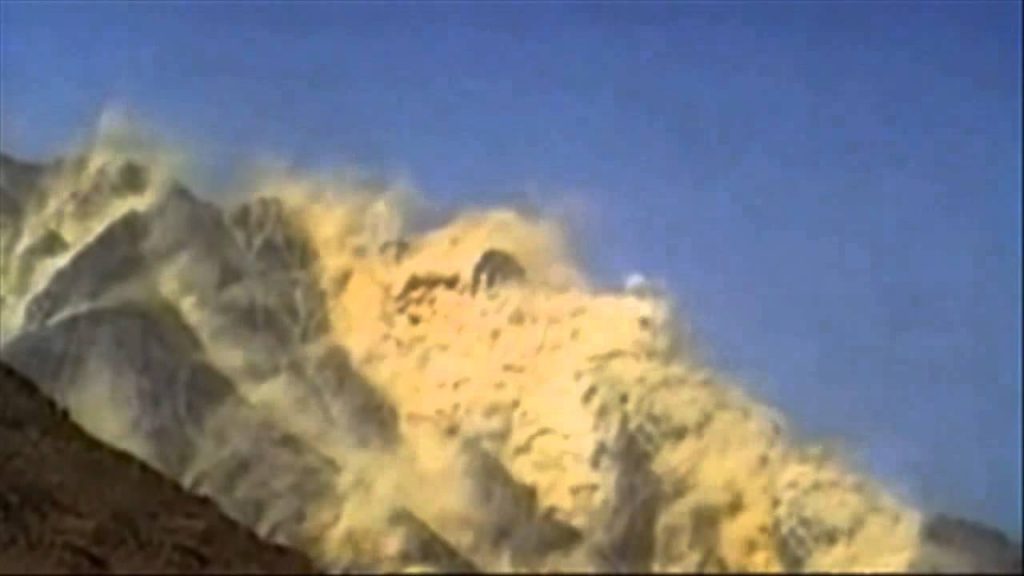
On May 28, 1998, Pakistan carried out Chagai-I, often written as Chagai 1. The tests took place in the Ras Koh Hills district of Balochistan.
The explosions transformed the mountain landscape and became a defining symbol of Pakistan’s defence capability. Images of the mountains turning white after the blasts were widely circulated across local and international media.
Chagai-I consisted of multiple underground nuclear detonations. Government officials declared the operation successful and announced that Pakistan had become a nuclear weapons state.
The date is now commemorated annually as Youm-e-Takbeer, marking what many Pakistanis consider a major national achievement.
Chagai-II: The Second Phase
Just two days after the first operation, Pakistan conducted Chagai-II, commonly referred to as Chagai 2, on May 30, 1998.
Unlike the first test, which occurred in the Ras Koh mountain range, the second series was conducted in the Kharan Desert area of Balochistan. Officials stated that the second phase was designed to validate additional scientific and technical aspects of the nuclear program.
Together, Chagai-I and Chagai-II completed Pakistan’s public demonstration of nuclear capability and established its position among the world’s declared nuclear powers.
Understanding the Chagai Nuclear Tests Map
Many researchers and students search for a Chagai nuclear tests map to understand where the detonations occurred.
The primary testing locations were situated in remote parts of Balochistan. Chagai-I took place in the Ras Koh Hills near Chagai District, while Chagai-II was conducted in the Kharan Desert.
These isolated regions were selected due to geological suitability and security considerations. Their remote location helped minimize risks to populated areas while ensuring secrecy during preparation stages.
International Reaction to the Tests
The international response was immediate and mixed. Several countries expressed concern about a potential arms race in South Asia. Economic sanctions were imposed by some governments, and international organizations called for restraint from both Pakistan and India.
At the same time, many analysts acknowledged that the tests reflected longstanding security concerns between the two neighboring states. The nuclearization of South Asia became a major topic in global strategic discussions.
Despite international criticism, Pakistan maintained that the tests were necessary to establish credible deterrence and preserve regional balance.
Impact on South Asian Security
The Pakistan nuclear test 1998 significantly transformed regional security dynamics. Since both India and Pakistan now possessed declared nuclear capabilities, military planners on both sides had to account for nuclear deterrence in strategic calculations.
Supporters argue that nuclear deterrence has helped prevent large-scale wars between the two countries. Critics, however, warn that the presence of nuclear weapons increases the risks associated with crises and military confrontations.
The debate continues among defence experts, policymakers, and international observers.
Chagai Nuclear Tests in Public Memory
Today, the Chagai nuclear tests remain a prominent part of Pakistan’s national narrative. Educational institutions, defence organizations, and government bodies often reference the tests when discussing national security and scientific achievement.
Interest in the event is also reflected in online searches related to Chagai nuclear tests Wikipedia, historical records, and documentary coverage. Researchers frequently examine the political, military, and diplomatic consequences of the 1998 explosions.
For many Pakistanis, the tests symbolize technological progress and strategic independence achieved under challenging international circumstances.
Legacy of Pakistan’s Nuclear Program
More than twenty-five years after Chagai-I and Chagai-II, Pakistan continues to maintain a nuclear deterrent as a central component of its defence policy.
The country’s nuclear program is now supported by established command-and-control structures and strategic planning mechanisms. Officials consistently emphasize that nuclear weapons serve defensive purposes and are intended to deter aggression.
The legacy of the tests extends beyond military considerations. They are also viewed as a demonstration of scientific expertise, national determination, and technological capability.
Conclusion
The Chagai nuclear tests of May 1998 changed the course of Pakistan’s strategic history. Through Chagai-I and Chagai-II, Pakistan publicly demonstrated its nuclear capability and altered the security landscape of South Asia.
While debates continue regarding nuclear deterrence and regional stability, the significance of the tests remains undisputed. They continue to influence defence policy, diplomatic relations, and public discourse more than two decades after the explosions echoed through the mountains and deserts of Balochistan.
FAQs
When was the Chagai Hills nuclear test done?
The Chagai Hills nuclear test, known as Chagai-I, was conducted on May 28, 1998, in the Ras Koh Hills of Balochistan. Pakistan carried out multiple underground nuclear detonations during the operation, officially becoming a declared nuclear weapons state. A second series of tests, known as Chagai-II, followed on May 30, 1998.
Who has 90% of the world’s nuclear weapons?
The vast majority of the world’s nuclear weapons are held by the United States and Russia. Together, these two countries possess roughly 90 percent of global nuclear warheads, making them the dominant nuclear powers in terms of stockpile size and strategic capability.
What is Pokhran 1 and Pokhran 2?
Pokhran-I was India’s first nuclear test, conducted in 1974 in Rajasthan. It was officially described as a peaceful nuclear explosion but significantly affected regional security dynamics. Pokhran-II refers to a series of nuclear tests carried out by India in May 1998. These tests played a major role in Pakistan’s decision to conduct the Chagai nuclear tests later that same month.