

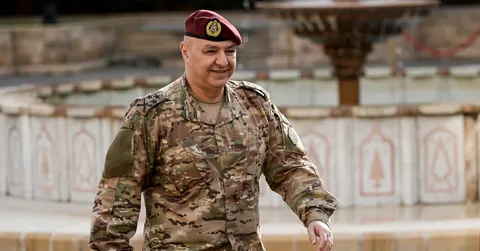

Lebanon is entering a critical political phase after years of instability, economic collapse, and regional conflict. The election of President Joseph Aoun has created new expectations among citizens who hope the country can move beyond political paralysis and security challenges. His leadership arrives at a moment when Lebanon faces pressure from both internal divisions and external threats.
The country has struggled with financial hardship, government deadlock, and rising tensions linked to regional conflicts. Many analysts believe Joseph Aoun’s presidency could become one of the most significant turning points in Lebanon’s modern political history. His military background and reputation for neutrality have attracted support from different political groups.
Background: Why Lebanon Needed New Leadership
Lebanon spent more than two years without a president before Joseph Aoun was elected. The prolonged vacancy reflected deep divisions among political parties and sectarian groups. During that period, the country continued to suffer from economic decline, inflation, and weak state institutions.
The Lebanese political system is based on a delicate balance between religious communities. Under this arrangement, the presidency is reserved for a Maronite Christian. Joseph Aoun’s election ended a lengthy political deadlock and offered hope for institutional recovery.
Many citizens viewed the leadership vacuum as a symbol of Lebanon’s broader governance crisis. Political negotiations repeatedly failed before lawmakers finally agreed on a compromise candidate acceptable to multiple factions.
Who Is Joseph Aoun?
Joseph Aoun is a career military officer who served as commander of the Lebanese Armed Forces before becoming president. During his military career, he was widely viewed as a relatively neutral figure capable of maintaining stability during difficult periods.
His leadership of the army included managing security challenges, economic turmoil, anti-government protests, and regional tensions. Supporters describe him as pragmatic and disciplined, while critics question whether he can overcome Lebanon’s deeply entrenched political system.
The president’s rise also reflects growing international interest in Lebanon’s future. Countries including the United States, France, and Saudi Arabia supported efforts to end the political vacuum and stabilize the country.
Hezbollah Remains Lebanon’s Biggest Challenge
One of the most sensitive issues facing Joseph Aoun is the role of Hezbollah. The Iran-backed group remains a major military and political force inside Lebanon. While Hezbollah participates in politics, it also maintains an armed wing that operates outside the direct control of the Lebanese state.
President Aoun has repeatedly emphasized the importance of strengthening state institutions and ensuring that security responsibilities remain under official authorities. His statements have been interpreted as part of a broader effort to increase state control over armed groups.
This issue remains highly controversial. Hezbollah supporters argue that the group provides protection against Israeli threats, while opponents believe parallel military structures weaken state sovereignty and democratic governance.
Lebanon and Israel: A Dangerous Security Environment
The security situation along the Lebanon-Israel border continues to influence Lebanese politics. Cross-border tensions, military operations, and fears of wider conflict have placed additional pressure on the government.
Recent diplomatic efforts have focused on preventing further escalation between Israel and Hezbollah. International mediators have encouraged both sides to avoid actions that could trigger a larger regional war. President Aoun has supported diplomatic initiatives aimed at reducing tensions and protecting Lebanese territory.
The ongoing security concerns make it difficult for Lebanon to focus entirely on economic recovery and institutional reform. Many experts argue that long-term stability requires both political reforms and improved regional security.
Economic Crisis Still Overshadows Politics
Despite political developments, Lebanon’s economy remains one of the country’s biggest concerns. The financial crisis has damaged public services, reduced purchasing power, and increased poverty across the country.
Citizens continue to face challenges related to employment, banking restrictions, and inflation. Economic recovery requires structural reforms, international assistance, and stronger public confidence in government institutions.
Joseph Aoun has inherited a political system under immense pressure. Analysts say his administration will be judged not only on security matters but also on its ability to improve daily life for ordinary Lebanese families.
International Support and Regional Diplomacy
Foreign governments have closely monitored political developments in Lebanon. International partners view stability in Lebanon as important for broader Middle East security.
Support from regional and Western countries may help Beirut secure financial assistance and reconstruction funding. However, foreign involvement also creates political sensitivities because different Lebanese factions maintain varying international alliances.
The government must balance domestic priorities with regional realities. Any progress on reforms will likely require cooperation among political parties that often disagree on key national issues.
Public Expectations from the New Presidency
Lebanese citizens expect meaningful change after years of uncertainty. Public demands include economic recovery, judicial reforms, anti-corruption measures, and improved security.
Many people hope the presidency can serve as a unifying institution capable of bridging political divisions. Others remain cautious, noting that previous leaders also promised reforms but struggled to implement lasting changes.
The success of Joseph Aoun’s presidency may depend on whether he can build consensus among rival political groups while maintaining public trust.
Regional Impact of Lebanon’s Political Transition
Lebanon’s future matters beyond its borders. The country occupies a strategic position in the Middle East and frequently becomes affected by regional rivalries involving Iran, Israel, Syria, and Gulf states.
A stable Lebanon could contribute to regional security and reduce the risk of broader conflict. Conversely, renewed instability could have consequences for neighboring countries and international diplomatic efforts.
Political observers therefore view Lebanon’s transition as part of a larger regional story involving security, governance, and geopolitical competition.
Conclusion
Lebanon stands at a crossroads as President Joseph Aoun attempts to guide the country through political, economic, and security challenges. His election ended a prolonged leadership vacuum, but major obstacles remain.
The relationship between the state and Hezbollah, economic recovery efforts, and regional tensions will shape the future of the country. While many citizens remain hopeful, meaningful progress will require difficult reforms and sustained political cooperation.
The coming years will determine whether Lebanon can transform a period of crisis into an opportunity for national renewal. For now, Joseph Aoun’s presidency represents both a new beginning and a significant test for the Lebanese state.
FAQs
Who is the enemy of Lebanon?
The answer depends on political perspectives and historical context. Lebanon has experienced conflicts with Israel, internal militias, extremist groups, and foreign interventions over several decades. Officially, Lebanon seeks diplomatic relations and national security rather than permanent hostility toward any state. Political parties within Lebanon often hold different views regarding regional threats and security priorities.
Is Hezbollah more powerful than the Lebanese Army?
Hezbollah possesses significant military capabilities, including rockets, trained fighters, and independent command structures. However, the Lebanese Army remains the country’s official military institution responsible for national defense. The army receives international support and represents the state, while Hezbollah operates as both a political movement and armed organization. Comparisons depend on the specific military, political, and strategic criteria being evaluated.
What religion is Joseph Aoun?
Joseph Aoun belongs to Lebanon’s Maronite Christian community. Under Lebanon’s power-sharing political system, the presidency is traditionally reserved for a Maronite Christian. His election follows a longstanding constitutional arrangement designed to maintain representation among the country’s diverse religious communities.