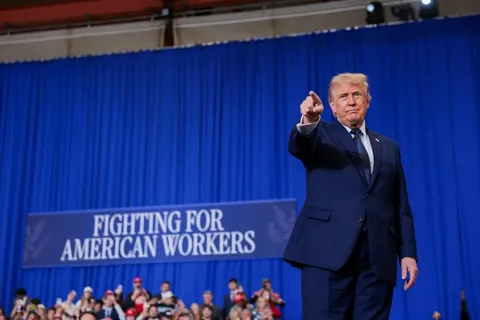
President Donald Trump announced on Saturday that a US-Iran peace deal has been “largely negotiated,” raising hopes of a formal end to the US-Iran war that began on February 28, 2026. The proposed US-Iran deal involves a ceasefire extension, the reopening of the Strait of Hormuz, and a framework for nuclear negotiations. However, breaking news on the Iran war shows Iran and the US are still sending mixed signals, with major sticking points unresolved.
Background: How the US-Iran War Began
The US-Iran war did not begin without warning. Months of failed diplomacy, expanding sanctions, and a rapidly advancing Iranian nuclear program brought the two countries to the edge of open conflict.
Tensions between the United States and Iran stretch back to the Islamic Revolution in 1979 and the subsequent Iran hostage crisis. The immediate concerns leading up to the 2026 Iran war included Iran’s nuclear program, its ballistic missiles, its military reach in the Middle East, and failed attempts to renegotiate a nuclear deal after the collapse of the 2015 Joint Comprehensive Plan of Action (JCPOA).
The attacks also followed the failure of indirect negotiations in early 2026 on a new agreement to curtail Iran’s nuclear program. The mediating Omani foreign minister had stated significant progress was made, with Iran willing to make concessions but President Trump said he was “not thrilled” with the talks. Diplomacy collapsed, and US attacks on Iran followed within days.
The United States and Israel launched coordinated military operations against Iran on February 28, 2026. The action was focused on the regime’s nuclear facilities, military infrastructure, and leadership, following a conclusion reached in Washington and Jerusalem that diplomacy had been exhausted.
Details: What Happened in the US-Iran War
The US-Iran war was one of the most intense military conflicts in the Middle East in decades. It caused massive destruction, thousands of deaths, and a global energy crisis.
Operation Epic Fury was the U.S. code name for its joint military operations with Israel against Iran. On February 28, U.S. and Israeli forces launched nearly 900 strikes in 12 hours targeting Iranian missiles, air defenses, military infrastructure, and leadership. The opening salvo killed Supreme Leader Ali Khamenei and dozens of other officials, but also killed about 170 people when a missile struck a girls’ school adjacent to a naval base.
In response, Iran launched retaliatory missile and drone strikes targeting U.S. embassies, military installations, and oil infrastructure including vessels in the Strait of Hormuz throughout the Middle East. The attacks left enormous damage, thousands of people dead in Iran, Lebanon, Israel, and the Gulf Arab states, and millions of people displaced in the region.A conditional ceasefire was finally declared on April 8, 2026, following more than 40 days of sustained combat. But a permanent US-Iran peace deal remained elusive, and US-Iran negotiations today are still focused on bridging deep divisions.
US-Iran Negotiations Today: Where Talks Stand
The most critical phase of US-Iran negotiations today centres on a one-page memorandum of understanding (MOU) that would formally end the US-Iran war and set the stage for longer negotiations.
President Trump posted on social media: “An Agreement has been largely negotiated, subject to finalization between the United States of America, the Islamic Republic of Iran, and the various other Countries.” Iran’s foreign ministry confirmed the agreement includes a memorandum of understanding as a first phase, before broader talks within 30 to 60 days.
The agreement the U.S. and Iran are close to signing involves a 60-day ceasefire extension during which the Strait of Hormuz would be reopened, Iran would be able to freely sell oil, and negotiations would be held on curbing Iran’s nuclear program.
According to a US official, the potential US-Iran deal would ensure Iran can never possess a nuclear weapon and would commit it to giving up highly enriched uranium, which Trump often refers to as “nuclear dust.” The official explained: “The important part of how this is structured is if Iran doesn’t perform, they don’t get anything. No dust? No dollars. As the Strait opens, the blockade loosens proportionately.”
Breaking News on Iran War: Iran Pushes Back
Despite Trump’s optimism, breaking news on the Iran war tells a more complicated story. Iran and the US remain far apart on several core issues.
Iran’s Fars news agency reported the Strait of Hormuz would remain under Iran’s management, and dismissed Trump’s announcement of a “largely negotiated” deal as “incomplete and inconsistent with reality.” Trump also failed to mention any agreement on Iran’s nuclear program or its highly enriched uranium stockpile, both of which his administration has repeatedly cited as critical to ending the war.
Negotiations over the duration of a moratorium on uranium enrichment remain active, with sources saying it would be at least 12 years, with 15 as a likely landing spot. Iran proposed a 5-year moratorium while the U.S. demanded 20.
Secretary of State Marco Rubio stated: “We don’t have to have the actual agreement written in one day. But we have to have a diplomatic solution that is very clear on the topics they are willing to negotiate on and the extent of the concessions they are willing to make at the front end in order to make it worthwhile.”
Quotes: What Leaders Are Saying
Trump’s latest comments came a day after he said a deal to end the war and reopen the Strait had been “largely negotiated.” Netanyahu, in his first official statement about a potential end to the war, said he and Trump agreed that any deal needed to eliminate any nuclear threats posed by Iran.
Trump himself admitted that “most points were agreed to, but the only point that really mattered nuclear was not.” He described Iran as “unyielding” on the issue.
American officials reportedly believe that Iranian leaders are of two minds, making it difficult to reach an agreement. The Trump Administration previously said that the first round of talks collapsed because the Iranian team had to return to Tehran to get approval to sign a deal.
Impact: Global and Regional Consequences
The US-Iran war and the ongoing search for a US-Iran peace deal have already reshaped the Middle East and rattled global markets in ways that will take years to fully assess.
The deal would avoid an escalation of the war and decrease pressure on the global oil supply. However, it remains unclear whether it will lead to a lasting peace agreement that also addresses President Trump’s nuclear demands.
US officials say the campaign has severely damaged Iran’s economy, with Iran’s currency in freefall and foreign reserves near zero. Regional tensions continue despite the fragile ceasefire, with the UAE reporting intercepted Iranian drones and Kuwait dealing with hostile drone activity in its airspace.
The closure of the Strait of Hormuz through which roughly 20 percent of the world’s oil supply passes has pushed energy prices sharply higher across the globe. Any US-Iran deal that restores free navigation through the Strait would bring immediate relief to global oil markets and ease inflationary pressure in dozens of countries.
Iran’s counter-strikes on Arab Gulf states, who had sought to deepen relations with Tehran in recent years, may leave it further isolated regionally a strategic setback that gives additional urgency to reaching a US-Iran peace deal quickly.
Conclusion: What Comes Next
The US-Iran deal news today suggests a formal agreement may be closer than at any point since the US-Iran war began. Both sides face powerful domestic pressure to reach a settlement Trump faces midterm elections later in 2026, and Iran’s economy is in deep crisis.
Both sides are talking of a memorandum of understanding that will set out a roadmap for resolving all outstanding issues, though a deal is not expected immediately. The central premise is that the memo, once signed, would stop the fighting welcome news to both sides.
Negotiations are expected to take place in Islamabad or Geneva, with the US expecting Iranian responses on several key points in the coming 48 hours. Sources close to the talks described this as the closest the parties have been to an agreement since the war began.
The world is watching closely. A successful US-Iran deal would not only end one of the most destructive conflicts in recent Middle East history, but could also reshape the global nuclear non-proliferation landscape for a generation.
FAQs
Is the USA Army stronger than Iran?
Yes, by a very wide margin. The United States operates the world’s most powerful military, with a defence budget exceeding $850 billion annually, 11 aircraft carrier strike groups, thousands of advanced fighter jets, and the world’s most sophisticated missile defence systems. Iran, despite possessing a large standing army and an extensive ballistic missile arsenal, cannot match the US in technology, logistics, or global power projection. The 2026 US-Iran war demonstrated this gap clearly US and Israeli strikes destroyed much of Iran’s air defence network, military infrastructure, and leadership in the opening days of the conflict. Iran’s strength lies primarily in asymmetric warfare, proxy networks, and its ability to disrupt regional shipping lanes.
Who is Iran’s biggest friend?
Iran’s most significant strategic partners are China and Russia, though neither has offered direct military support during the 2026 US-Iran war. China is Iran’s largest trading partner and has invested heavily in the Iranian economy through long-term energy agreements. Russia and Iran have cooperated on military technology, drone development, and regional influence operations, particularly in Syria. At the non-state level, Iran maintains deep ties with Hezbollah in Lebanon, various Iraqi militias, the Houthis in Yemen, and Hamas in Gaza networks collectively known as the “Axis of Resistance.” The US-Iran war has tested these alliances, with Hezbollah significantly degraded as part of the broader regional conflict.
Is Russia allied with Iran?
Russia and Iran are strategic partners rather than formal allies. They have no mutual defence treaty equivalent to NATO’s Article 5. However, the two countries have cooperated extensively across military, energy, and diplomatic fronts particularly since Russia’s invasion of Ukraine in 2022, which pushed both countries closer together under the pressure of Western sanctions. Russia has supplied Iran with advanced weapons technology, and Iran has reportedly provided Russia with Shahed drones used in Ukraine. During the 2026 US-Iran war, Russia condemned the US and Israeli strikes diplomatically but stopped short of military intervention, prioritising its own conflict in Ukraine and not wishing to risk direct confrontation with the United States.