JUI-F Chief Maulana Fazlur Rehman has announced nationwide protests on Wednesday and Friday following the killing of prominent cleric Maulana Idrees. This development has once again brought the right to protest in Pakistan into sharp public focus. As political and religious parties take to the streets, it is important to understand what the Constitution of Pakistan 1973 actually guarantees and where the limits lie.
Background: The Killing That Sparked the Protests
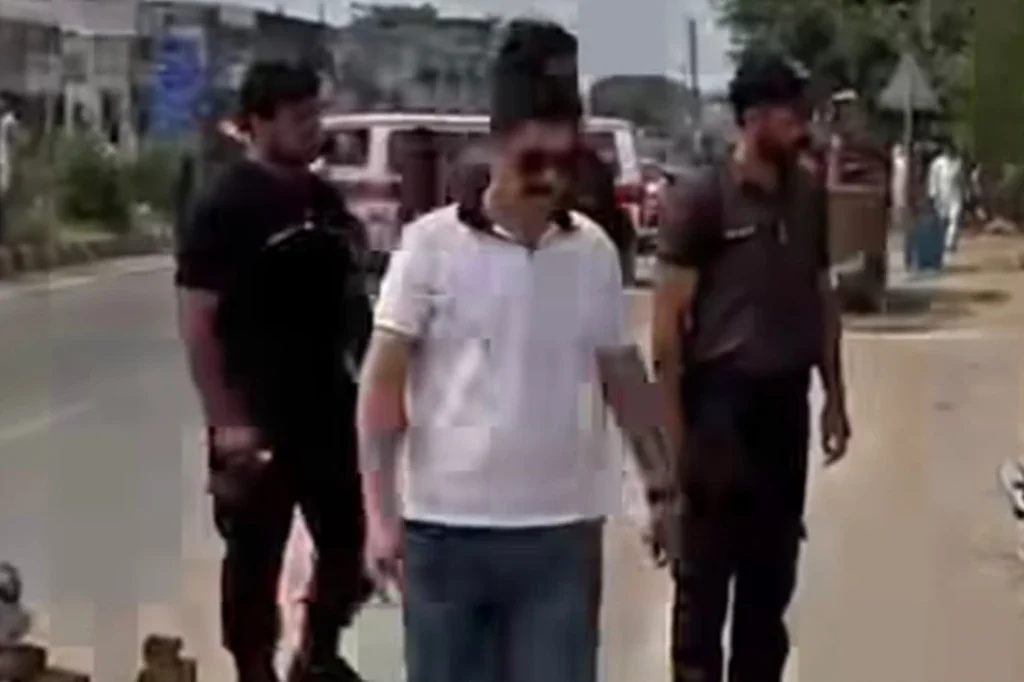
Maulana Idrees, a former JUI-F MPA and a trusted adviser of Fazlur Rehman, was shot dead by unidentified assailants while he was on his way to Darul Uloom Noumania from his home in Tarangzai, Charsadda.
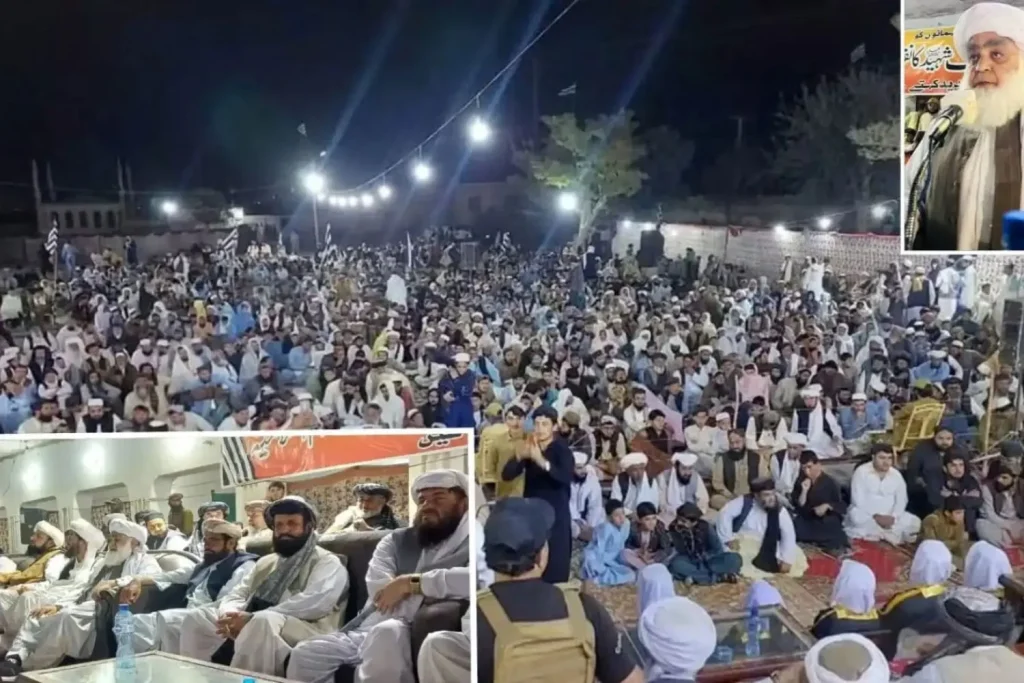
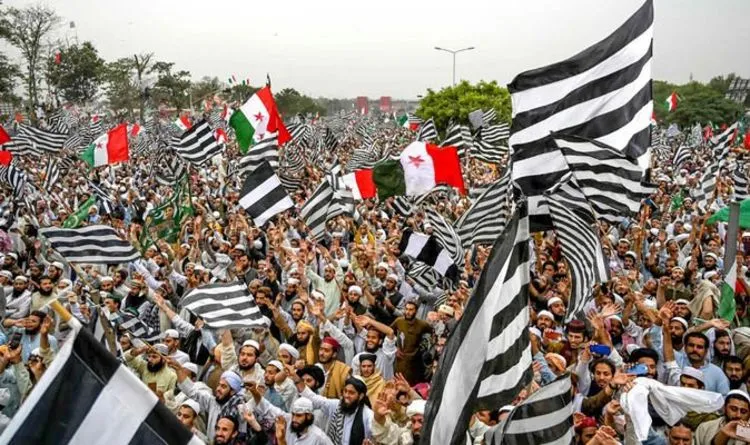
The JUI-F spokesperson Aslam Ghouri said that provincial and district organisations would arrange protest demonstrations at all four provincial headquarters and across districts of the country. The party called the death an irreparable loss and accused the government of failing to maintain law and order.
This is not the first time a religious party has exercised the right to protest in Pakistan. From TLP sit-ins to PTI marches, street protest has become a defining feature of Pakistani political life. But how much of this is actually protected by law?
Article 16 of Constitution of Pakistan: Freedom of Assembly
The Constitution of Pakistan 1973 is the supreme law of the land. Article 16 of Constitution of Pakistan guarantees every citizen the right to assemble peacefully and without arms. This is a fundamental right meaning the state cannot take it away through ordinary legislation.
However, Article 16 also contains an important qualification. The government can impose restrictions on this right in the interest of public order. This is the legal door through which authorities often justify crackdowns, Section 144 orders, and container blockades on roads during protests.
The balance between allowing assembly and maintaining public order has always been a contested space in Pakistani politics. Critics argue that governments misuse “public order” justifications to suppress legitimate political expression.
Article 19 of Constitution of Pakistan: Freedom of Speech and Expression
Article 19 of Constitution of Pakistan protects freedom of speech and expression, including the freedom of the press. It allows citizens to speak, criticize, and dissent rights that are closely tied to the right to protest in Pakistan.
Again, this right comes with permissible restrictions. The state can limit expression on grounds of the glory of Islam, public order, decency, morality, or relations with foreign states. Legal experts have long argued that these broad qualifications give the state excessive room to silence dissent when it becomes politically inconvenient.
In the case of JUI-F’s planned protests, the party is acting well within what Article 19 of Constitution of Pakistan permits calling for accountability and expressing political grief over the murder of a religious figure.
Article 17 of Constitution of Pakistan: Freedom of Association
Article 17 of Constitution of Pakistan protects the right of citizens to form associations or unions. Political parties, trade unions, and civil society organizations all derive their legal standing from this provision.
When JUI-F as a political party organizes protests, it is exercising rights protected under Article 17 of Constitution of Pakistan. The party has a constitutional right to exist, to organize, and to mobilize its members. Any attempt by the state to dissolve or ban a political party requires going through the Supreme Court not an executive order.
This is a right that is often overlooked in public debate, yet it is foundational to how democratic politics functions in Pakistan.
Article 21 of Constitution of Pakistan: Protection of Property
While Article 21 of Constitution of Pakistan deals primarily with property rights protecting citizens from unlawful seizure of property it becomes relevant in protest contexts when police or authorities damage property belonging to protestors, confiscate vehicles, or demolish structures used for sit-ins.
Protestors and organizers have, on multiple occasions, invoked Article 21 of Constitution of Pakistan when the state damaged their belongings during crackdowns. It is a reminder that constitutional protections do not end where a protest begins.
The Role of RMP Police Pakistan
When protests are called, one of the first forces deployed on the ground is the Riot Management Police Punjab, also known as RMP Police Pakistan. The Riot Management Police Punjab is a specialized unit trained to handle large crowds, prevent violence, and manage demonstrations without excessive force.
The RMP Police Pakistan operates under strict protocols that are supposed to align with constitutional rights. In theory, RMP Police Pakistan personnel are trained to facilitate peaceful protests while responding only to situations that pose a genuine threat to public safety.
In practice, however, the Riot Management Police Punjab has faced criticism for excessive use of force during political demonstrations. From PTI protests to TLP sit-ins, the conduct of the RMP Police Pakistan has repeatedly come under scrutiny by human rights organizations and the courts.
What Happens When the State Overreacts?
The JUI-F spokesperson questioned how long the state would continue to test the party’s patience, saying the government had failed to maintain law and order. This kind of political frustration is not unique to JUI-F. It reflects a broader pattern in Pakistan where citizens feel that the state protects the powerful while leaving ordinary people and their leaders vulnerable.
When protests turn violent, the blame is rarely straightforward. The Constitution of Pakistan 1973 does not grant the right to protest in Pakistan in absolute terms. But it does demand that any restriction on that right be reasonable, proportionate, and lawful. Deploying Riot Management Police Punjab with tear gas and batons against peaceful mourners does not meet that standard.
The courts have, in several landmark cases, ruled that citizens’ rights under Article 16 and Article 19 of Constitution of Pakistan cannot be curtailed simply because the government finds the protest inconvenient.
Quote
“The government has failed. The public will have to step forward to protect themselves,” the JUI-F spokesperson stated, calling on citizens to participate in the protests and register their anger against lawlessness.
Prime Minister Shehbaz Sharif contacted the JUI-F chief to convey condolences and assured the party that the killers would be arrested soon. Whether that assurance translates into action will determine whether these protests remain peaceful or escalate.
Regional and National Impact
The JUI-F protests come at a politically sensitive time. The party is one of the most influential religious-political forces in Khyber Pakhtunkhwa and Balochistan. A sustained protest movement by JUI-F can disrupt governance in multiple provinces and put pressure on the federal government.
More importantly, the right to protest in Pakistan is being tested at a time when multiple groups from political parties to civil society are increasingly vocal about state accountability. The Hinglah Mata Temple, recently seen in the news, is located in Balochistan’s Lasbela district a region where minority rights and freedom of religion intersect with the same constitutional framework being discussed here. Article 20 of the Constitution of Pakistan guarantees freedom of religion, and minority communities in Balochistan continue to raise similar questions about whether the state protects their fundamental rights in practice.
These are not isolated conversations. They are all part of the same national debate about whether the Constitution of Pakistan 1973 is truly honored or merely displayed.
Conclusion
The JUI-F protests are constitutionally grounded. The right to protest in Pakistan is not a privilege granted by the government it is a fundamental right enshrined in the Constitution of Pakistan 1973 under Article 16 of Constitution of Pakistan and Article 19 of Constitution of Pakistan. The state is obligated to protect peaceful protestors, not suppress them.
As the Riot Management Police Punjab and RMP Police Pakistan prepare for possible crowd management duties, authorities must remember that their job is to facilitate lawful protest not obstruct it. The coming days will test not just law enforcement but the health of Pakistani democracy itself.
FAQs
What is Article 47 in Pakistan?
Article 47 of the Constitution of Pakistan deals with the removal of the President of Pakistan through an impeachment process. It outlines the grounds and procedure by which the Parliament can vote to remove the President from office if a resolution is passed by a two-thirds majority of the total membership of both houses sitting in a joint session.
What is the TLP protest in Karachi?
The Tehreek-e-Labbaik Pakistan (TLP) has organized multiple protests in Karachi over the years, primarily centered on the issue of blasphemy laws and demands related to foreign policy. These protests have at times resulted in sit-ins, road blockages, and clashes with law enforcement. TLP exercises its right to protest in Pakistan under Article 16 and Article 17 of Constitution of Pakistan, though its demonstrations have frequently raised law-and-order concerns for the Riot Management Police Punjab and city police alike.
Why are Gen Z protesting?
Globally, Gen Z has taken to the streets over issues ranging from climate change and economic inequality to digital rights and political corruption. In Pakistan specifically, young people many politically active online have participated in PTI-led protests, student union campaigns, and digital rights movements. They invoke Article 19 of Constitution of Pakistan to justify their right to speak, organize, and assemble. Gen Z protestors often argue that they are inheriting a broken system and are demanding accountability from a generation of leaders who have repeatedly failed them.