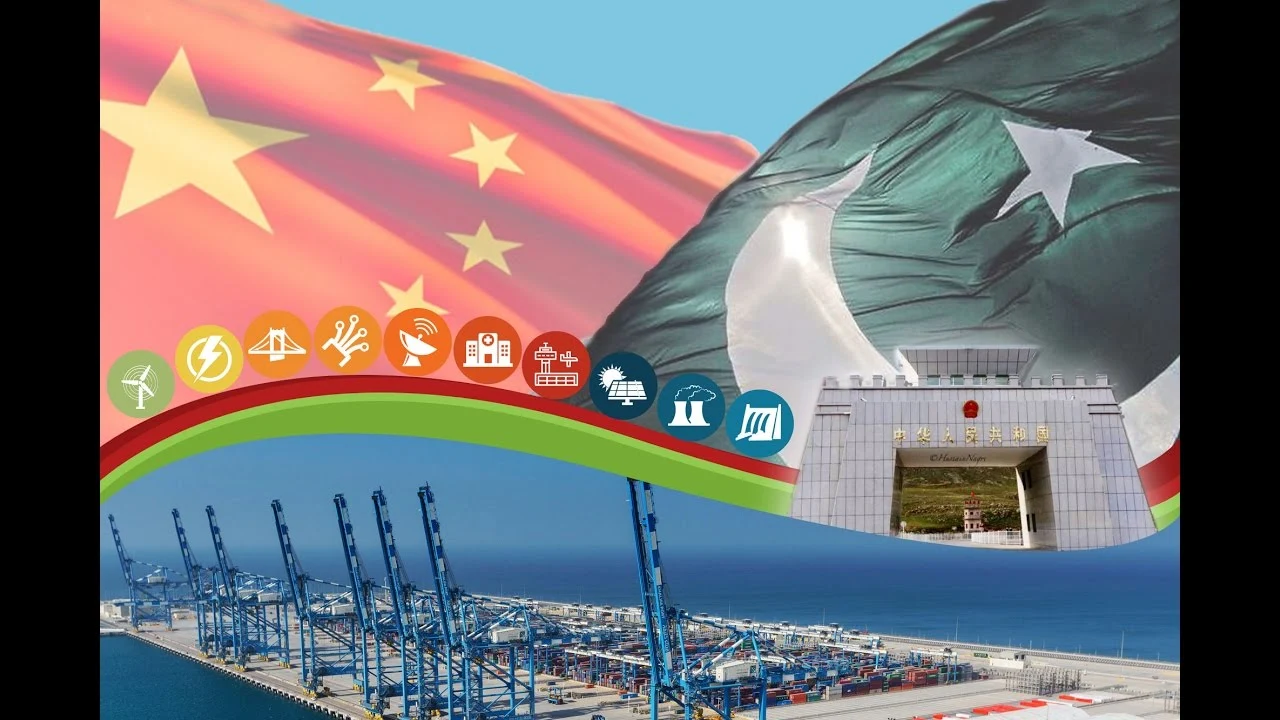
Pakistan has officially missed its ambitious target of attracting over $8 billion in foreign direct investment through Special Economic Zones under CPEC between 2018 and 2024. The country also failed to generate 500,000 jobs within the same period, according to Investment Minister Qaiser Ahmed Sheikh. The admission came at a high-level dialogue in Islamabad and raises serious questions about the pace and governance of Pakistan’s flagship economic corridor.
Background: What Are Pakistan’s Special Economic Zones?
Special Economic Zones in Pakistan are designated industrial areas offering tax incentives, streamlined regulations, and infrastructure support to attract both local and foreign investors. Under the China-Pakistan Economic Corridor, nine Special Economic Zones were designated in the first phase, targeting sectors including food processing, ceramics, textiles, pharmaceuticals, and auto assembly.
The Special Economic Zone Act governs the legal framework for establishing and operating these zones in Pakistan. The law was designed to offer a favourable business environment to industrialists and international investors. However, the gap between legislation and implementation has proven to be enormous.
Details: How Many Special Economic Zones Are Actually Operational?
Despite ambitious planning, the number of functional Special Economic Zones in Pakistan remains deeply disappointing. As of 2025, only four SEZs have advanced beyond the planning stage with partial implementation.
The four Special Economic Zones are located in Rashakai in Khyber Pakhtunkhwa, Allama Iqbal Industrial City in Punjab, Dhabeji in Sindh, and Bostan in Balochistan. The Bostan Special Economic Zone, located in Balochistan, is particularly significant as it serves one of Pakistan’s most underdeveloped and strategically sensitive provinces. The proposed Islamabad Model Special Economic Zone was also discussed at the Joint Cooperation Committee level as a government-to-government initiative targeting Chinese industrial relocation.
Out of nine Special Economic Zones in CPEC, only four have shown any meaningful progress. This means more than half of the promised industrial zones remain stuck at the planning stage a sobering indictment of Pakistan’s investment environment and bureaucratic hurdles.
The Trade Imbalance Problem
Pakistan’s SEZ investment shortfall cannot be understood in isolation. It is deeply tied to a growing structural trade imbalance with China. China’s exports to Pakistan rose from $16.67 billion in 2023 to $20 billion in 2024, a 17.7 percent year-on-year increase, while Pakistan’s exports to China remained around $3 billion annually against China’s total annual imports of $2 trillion.
Pakistan exports predominantly primary commodities like cotton, seafood, and gum resins, while importing capital goods, machinery, organic chemicals, and electronics from China. This is exactly the kind of lopsided trade relationship that SEZs were supposed to fix by enabling Pakistan to manufacture and export value-added goods rather than remain a raw material supplier.
The first phase of the China-Pakistan Free Trade Agreement, which has been in force since 2007, increased bilateral trade by 242 percent between 2007 and 2018, but Pakistan’s trade deficit with China simultaneously rose from 25 percent to 35 percent of bilateral trade, reaching $13 billion. More trade, it seems, has not meant better trade for Pakistan.
Quotes: Minister’s Vision for CPEC Phase II
Investment Minister Qaiser Ahmed Sheikh did not shy away from the hard truths at the Pakistan-China Industrialisation Dialogue. “Pakistan has immense potential, but we must transition from an import-driven economy to one that produces and exports value-added goods,” he remarked.
The minister outlined a renewed push toward industrialisation. He stated that Pakistan has proposed government-to-government industrial parks targeting the relocation of Chinese manufacturing capacity in electronics, electric vehicles, pharmaceuticals, and textiles as China’s own industrial cost structure shifts upward.
The Joint Cooperation Committee, at its meeting in Beijing last September, had proposed government-to-government SEZs in Karachi and Islamabad, specifically targeting Chinese industrial relocation in electronics, textiles, pharmaceuticals, and electric vehicles. These two proposed zones including what could become the Islamabad Model Special Economic Zone represent Pakistan’s best near-term opportunity to close the SEZ gap.
Chinese Embassy Counsellor Yang Guangyuan also reaffirmed Beijing’s commitment, underscoring the vast potential for bilateral cooperation across multiple sectors, including agriculture, information technology, pharmaceuticals, and manufacturing.
CPEC’s Actual Achievements vs. Targets
Amid the SEZ investment shortfall, it is important to acknowledge what CPEC has delivered. CPEC has cumulatively attracted $30 billion in realised investment across energy, transport, and industrial sectors, and directly created over 261,000 jobs.
CPEC, originally valued at $46 billion at inception in 2015, expanded to $62 billion by 2020 and $65 billion by 2022, making it China’s single largest overseas investment and Pakistan’s largest inbound investment since independence. These are not small numbers. Yet the mismatch between what CPEC promised and what it has delivered in terms of industrialisation remains the central concern.
The focus of the next phase is on labour-intensive manufacturing in textiles, electronics assembly, and light engineering, estimated to have the potential to generate 500,000 formal jobs within the CPEC framework by 2030. That same job target already missed once has now been pushed to a new deadline.
Hinglaj Mata Temple: A Symbol of Balochistan’s Importance
It is worth noting that the Bostan Special Economic Zone falls within Balochistan the same province that is home to the revered Hinglaj Mata Temple, recently in the news for drawing massive crowds. The three-day annual festival at the historic Hinglaj Mata Temple concluded with around 300,000 Hindu pilgrims attending, with officials describing the gathering as a symbol of interfaith harmony and religious tolerance.
The Hinglaj Mata Temple is located in the Lasbela district of Balochistan, within Hingol National Park, and is one of the 51 Shakta pithas in Shaktism. The Balochistan government has recently declared it a world tourism site, reflecting how the province is attempting to grow its profile both spiritually and economically. The success of the Bostan Special Economic Zone in this same province could amplify that potential significantly if governance and investment challenges are addressed.
Impact: What Does the SEZ Shortfall Mean for Pakistan?
The Pakistan SEZ investment shortfall has real consequences. It means fewer jobs, less foreign exchange, and continued dependence on imports. CPEC’s commerce value grew from $4.8 billion in 2015 to $16 billion in 2023, and with the second phase fully operationalised, projections suggest Pakistan’s industrial export capability could increase by 20 percent, provided that SEZ governance, security infrastructure, and regulatory frameworks are brought to investment-grade standards.
That final clause is critical: investment-grade governance. Pakistan’s structural problems policy inconsistency, bureaucratic red tape, security concerns, and weak contract enforcement have kept investors away from Special Economic Zones despite the legal cover of the Special Economic Zone Act.
The Mainline-1 project would benefit the industrial sector by reducing freight transit time between Karachi port and inland manufacturing centres by an estimated 40 percent, lowering logistics costs that currently consume a disproportionate share of Pakistani manufacturers’ operating expenses. Better connectivity could make Special Economic Zones in Pakistan more attractive but only if the underlying investment climate improves.
Conclusion: Can Pakistan Course-Correct?
The SEZ investment shortfall is not a death sentence for Pakistan’s industrial ambitions but it is a serious warning. The Special Economic Zone Act exists. The CPEC framework exists. The Chinese appetite for industrial relocation to lower-cost countries exists. What is missing is Pakistan’s ability to convert legal frameworks into functioning industrial ecosystems.
CPEC Phase II offers a genuine second chance. The emphasis on government-to-government SEZs in Karachi and Islamabad, the push to attract Chinese electronics and EV manufacturers, and the focus on export-led growth are all the right instincts. However, China has been Pakistan’s largest trading partner for twelve consecutive years, and the trade deficit has only widened. Words must now give way to execution.
Pakistan needs to demonstrate to Chinese and other foreign investors that the country’s Special Economic Zones from Rashakai to Bostan are not just lines on a map, but functioning industrial hubs with reliable power, security, and regulatory certainty. The clock is ticking.
FAQs
Is Pakistan in trouble financially?
Yes, Pakistan continues to face serious fiscal challenges. The country has relied on repeated IMF bailouts, faces a chronic current account deficit, and struggles with rising external debt. The SEZ investment shortfall under CPEC adds to these concerns, as the country has failed to attract the foreign investment needed to diversify and strengthen its industrial base. However, some stabilisation has occurred through IMF programmes and bilateral support from friendly countries.
Has Pakistan repaid its debt?
Pakistan has been restructuring rather than fully repaying much of its external debt. The country has engaged in debt rollovers with China and Saudi Arabia, and continues to operate under an IMF Extended Fund Facility. While Pakistan meets scheduled repayments to avoid default, the overall debt burden remains high and repayment pressure continues to strain the national budget.
Why is the PKR falling?
The Pakistani Rupee (PKR) continues to face downward pressure due to several factors: a large trade deficit, high import bills (especially for energy), low foreign exchange reserves, inflationary pressure, and a lack of sufficient export earnings. The failure to operationalise Special Economic Zones in Pakistan and generate export-oriented industrial activity is one structural reason why the PKR remains vulnerable. Until Pakistan transitions from an import-heavy to an export-driven economy, the currency will remain under stress.