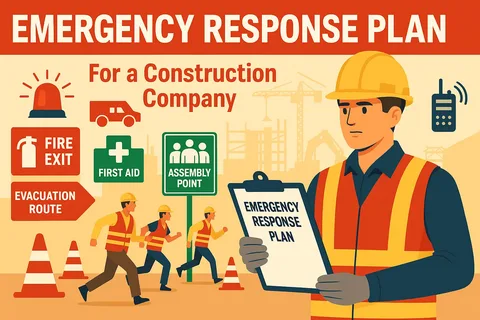
An Emergency Response Plan is not a luxury it is a workplace necessity. Every organization, from small offices to large industrial sites, must have a structured emergency preparedness plan for workplace safety that outlines exactly what to do when disaster strikes. Without one, confusion and chaos can cost lives and damage property beyond recovery.
Background: Why Emergency Preparedness Matters
Emergencies can strike at any time and in any form fire, chemical spill, natural disaster, or workplace violence. A workplace emergency is a situation that threatens workers, customers, or the public; disrupts or shuts down operations; or causes physical or environmental damage. Emergencies may be natural or man-made, and may include hurricanes, tornadoes, earthquakes, floods, wildfires, chemical spills or releases, and disease outbreaks.
The financial reality is alarming too. Up to 40% of businesses affected by a natural or human-caused disaster never reopen.This single statistic alone should motivate every employer to take emergency preparedness and response seriously.
A well-crafted Security Emergency Response Plan is your organization’s first line of defense against the unexpected.
What Is an Emergency Response Plan in Safety?
An Emergency Response Plan (ERP), also called an Emergency Action Plan (EAP), is the formal document that guides everyone in your organization during a crisis. An emergency action plan (EAP) is a written document required by particular OSHA standards. The purpose of an EAP is to facilitate and organize employer and employee actions during workplace emergencies.
Think of it as a safety roadmap. An effective Emergency Action Plan is more than just a document it’s a roadmap to safety in times of crisis. OSHA’s requirements for EAPs are designed to cover all bases, ensuring that no aspect of emergency response is left to chance.
Every emergency response procedure within the plan should be specific, clear, and regularly rehearsed with all staff.
Emergency Response Procedure: Key Elements of a Strong Plan
Building a solid emergency preparedness plan for workplace requires covering several critical areas. Essential elements of an OSHA-compliant EAP include: procedures for reporting emergencies with clear guidelines on how to alert authorities and colleagues; evacuation policies and escape route assignments that account for various scenarios, including provisions for employees with disabilities; and protocols for essential personnel who must stay behind, balancing operational needs with personal safety.
Beyond these basics, every emergency response procedure must also include the following components that OSHA and safety experts recommend:
- Hazard Assessment Identifying all potential threats specific to your workplace, including both human-made and environmental risks.
- Communication Protocol Implementing a communication plan that includes multiple channels such as alarms, notifications, and messaging apps, ensuring that all employees are familiar with the communication methods and have access to up-to-date contact information for emergency responders and key personnel
- Evacuation and Shelter-in-Place Plans Plans should define the most appropriate protective action for each hazard to ensure the safety of employees and others within the building, and determine how you will warn building occupants to take protective action.
- First Aid and Medical Response Every Security Emergency Response Plan must include first aid procedures and identify who is trained to administer them on-site.
- Regular Training and Drills Train all workers, including temporary and part-time workers, in your emergency response procedures, and conduct drills at least once a year or when workplace circumstances change
Emergency Response Team Roles and Responsibilities
One of the most critical parts of any emergency preparedness and response plan PDF or live document is defining who does what. Without clear Emergency Response Team roles and responsibilities, even the best written plan falls apart in real time.
The team will establish four essential working groups: Operations, Planning, Logistics, and Finance and Administration as separate functions managed by individual section officers. The emergency director heads the ERT and is responsible for convening the team or some portion of its members.
Here is a breakdown of the key roles every Emergency Response Team should have:
Emergency Director / Incident Commander The incident coordinator will be responsible for the front-line management of the emergency, including the development of incident objectives and managing all incident operations.
Safety Officer The safety officer will develop and recommend measures to the ERT for assuring personnel health and safety and to assess and/or anticipate hazardous and unsafe situations.
Operations Section The operations section is responsible for managing tactical operations at the incident site directed toward reducing the immediate hazard, saving lives and property, establishing situation control, and restoring normal conditions.
Planning Officer The planning officer is responsible for collecting, evaluating, and disseminating tactical information pertaining to the incident.
First Aid / Medical Team Roles include incident command, first aid, firefighting, safety monitoring, and communication, with regular training conducted every 3–6 months along with periodic drills.
These Emergency Response Team roles and responsibilities must be documented clearly in your Emergency Preparedness and response PPT presentations and training sessions so every team member knows exactly where to go and what to do.
Emergency Response Examples in the Workplace
Real-world emergency response examples help employees understand what proper response looks like. Common scenarios include:
Fire Emergency A fire is the most common type of emergency for which small businesses must plan. Evacuation plans that designate or require some or all of the employees to fight fires with portable fire extinguishers increase the level of complexity of the plan and the level of training that must be provided employees.
Chemical Spill Workers must know whether to evacuate or shelter in place. Chemical, biological, or radiological contaminants may be released into the environment in such quantity and/or proximity to a place of business that it is safer to remain indoors rather than to evacuate employees
Natural Disaster Earthquakes, floods, and tornadoes each require different emergency response procedures tailored to the specific threat and geography of the workplace.
Workplace Violence or Security Threat A Security Emergency Response Plan must include lockdown procedures, communication with law enforcement, and safe assembly protocols.
These emergency response examples should be incorporated into tabletop exercises and drills conducted regularly across all departments.
How to Create an Emergency Preparedness and Response Plan PDF
Turning your planning into a formal Emergency Preparedness and response plan PDF ensures it can be distributed, stored, and reviewed easily. To create an emergency plan, assess potential risks, establish clear procedures for evacuation, communication, and first aid, assign responsibilities, and regularly train employees. Ensure the plan is accessible and reviewed periodically to address any changes in the workplace or emerging threats.
OSHA also stresses the importance of worker involvement. Most organizations find it beneficial to include a diverse group of representatives management, workers, local health departments and agencies, and public safety officials in this planning process, and to meet frequently to review progress and allocate development tasks.Your Emergency Preparedness and response PPT presentations used during training sessions should mirror the contents of your formal PDF document so all staff receive consistent information
.Quotes: What Safety Experts Say
OSHA’s approach to emergency preparedness is not just about reacting to crises it’s about creating a culture of readiness. The agency’s proactive stance emphasizes the importance of foresight and planning, ensuring that when disaster strikes, workplaces are not caught off guard.
For emergency situations, have an individual in charge of following and getting others to follow the procedures you outline. For larger companies, you may need more than one individual, in separate departments or as backups, but in this case make sure the hierarchy is clearly laid out. Employees must know this individual is in charge and has authority during an emergency
The message from every safety authority is unified: preparation before a crisis is infinitely more effective than improvisation during one.
Impact: Why This Matters Globally and Locally
The need for a strong Emergency Response Plan is not limited to large corporations. Small businesses, schools, hospitals, and community organizations all face real risks. Mitigation efforts include enhancing entry point security by screening visitors or limiting access to your facility. The goal is to reduce the costs of an emergency event costs that could relate to lost productivity, property, and lives
Governments and regulatory bodies around the world now mandate formal emergency preparedness and response documentation. Failing to comply with OSHA standards or equivalent local regulations can result in heavy fines, legal liability, and most importantly, preventable harm to workers.
Conclusion: The Future of Emergency Preparedness
The world is changing climate events are becoming more extreme, cyber threats are rising, and workplaces are becoming more complex. As we navigate an increasingly complex world of workplace hazards, OSHA’s guidance remains a cornerstone of emergency preparedness. By embracing these principles and continuously refining our approach, we can create safer, more resilient workplaces capable of withstanding whatever challenges the future may hold.
Every organization regardless of size must treat its emergency preparedness plan for workplace not as a one-time document, but as a living, breathing system that evolves alongside new threats, new personnel, and new operations. Download or create your Emergency Preparedness and response plan PDF today, train your Emergency Response Team, and never leave safety to chance.
FAQs
What is emergency response in security?
Emergency response in security refers to the coordinated actions taken by a Security Emergency Response Plan team to protect people, assets, and facilities during a crisis. It includes threat detection, communication, evacuation or lockdown procedures, and coordination with law enforcement. A security-focused emergency response procedure covers scenarios such as unauthorized access, workplace violence, bomb threats, and cyberattacks that may endanger physical safety.
What are the 4 pillars of emergency management?
The four pillars also called the four phases of emergency management are Mitigation, Preparedness, Response, and Recovery. Mitigation efforts aim to reduce the costs of an emergency event, while preparedness involves establishing an emergency response team and assigning roles and responsibilities. Response involves implementing established plans, and recovery focuses on restoring normal conditions after an incident.These four pillars form the foundation of any comprehensive Emergency Preparedness and response plan PDF.
What are the 5 basic emergency response actions?
The five basic emergency response actions are: (1) Recognize the emergency and assess the threat; (2) Alert notify staff, management, and emergency services using your established emergency response procedure; (3) Contain limit the spread of harm through evacuation or shelter-in-place protocols; (4) Respond deploy your Emergency Response Team to manage the incident; and (5) Recover restore normal operations and document lessons learned. The actions taken in the initial minutes of an emergency are critical prompt action and warnings can save lives, minimize physical damage to structures and property, and allow for better resilience.