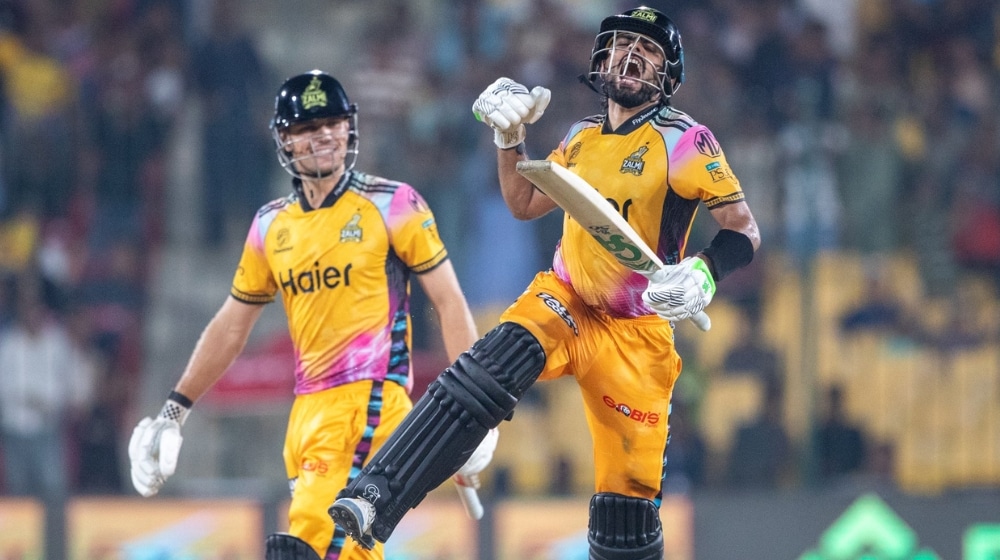
Who win today match? The answer is clear Babar Azam. Pakistan’s star batter produced a stunning match winning performance at the National Bank Stadium in Karachi on April 29, 2026. His century powered Peshawar Zalmi to a commanding 70-run victory over Islamabad United in the HBL PSL Qualifier. This match winning percentage was one of the most dominant T20 match winning performances of the entire PSL season.
Background
For nearly two years before this PSL campaign, Babar Azam had endured a difficult patch by his own high standards. Questions about his strike rate grew louder. Critics debated whether Pakistan’s top batter had lost his edge. The pressure mounted with every innings he played. His match winning performance today was not just a cricketing moment it was a personal statement.
Babar Azam, as captain of Peshawar Zalmi, led his team to a decisive win in the PSL Qualifier at the National Bank Stadium, smiling wide after the match.The victory was historic for Zalmi, sending them into their first PSL final in five years.
Details: Who Won Today’s Match?
The T20 match winning performance of Babar Azam was the talking point of the cricketing world. He scored his fourth century in PSL history during this Qualifier fixture. Fans searching for “who win today match live score” found just one answer all evening Babar Azam and Peshawar Zalmi.
With 588 runs in the tournament, Babar equalled Fakhar Zaman’s record for the most runs in a single PSL campaign and there is still one match remaining.His strike rate this season hovered above 146, proving that his today match winning percentage reflects both volume and intent.
The match winning performance 2026 from Babar was built on discipline, not recklessness. It was calculated batting driven by clarity of purpose and deep situational awareness. For fans tracking yesterday match who won T20, Tuesday night provided a definitive answer.
Quotes
Babar Azam spoke candidly at the post-match press conference. He reflected on the weight of the moment:
“I can definitely say it is quite different in the sense that it was a semi-final of sorts for us. That’s why it’s very special for me. Performing in such a big match, the team needed me to stay out there as long as possible, and I think that’s exactly what was required.”
He also opened up about the difficult phase he had experienced before this revival:
“Time teaches you everything. With time and experience, you keep learning. These things are part of life. I’ve learned a lot from this phase and it has also helped me a lot. When you fall and come back stronger, it feels really good.”
On the topic of his improved execution and match winning performance today, he explained:
“Sometimes in a short period you feel that what you are doing is right, but actually it isn’t. So sometimes you have to accept that you need to go back to normal back to the basics.”
He also addressed how player performance is calculated on a personal level:
“No one else makes you realise it. You realise it yourself. You analyse yourself. You watch your videos or your old innings. That’s how I prepare myself. I take motivation from that. But my belief is that your routines matter the most.”
Analysis: What Makes a Match Winning Performance?
In T20 cricket, a true match winning performance goes beyond just runs. It includes timing of innings, control of match situation, strike rotation, and the ability to accelerate when the team demands it. Babar’s T20 match winning performance in this Qualifier checked every box.
His innings was not an ego-driven assault. It was a team-first effort. He stayed long, scored heavily, and gave Zalmi a total that Islamabad United could never realistically chase. For fans asking about today match winning percentage Zalmi’s chances in this final are now sky-high.
Babar explained that the difference in his game now is not a new technique, but better execution: “As for hitting, my hitting was like this before as well. The difference is that now the execution is better. I’m trying to understand what I can achieve or target in the given scenario.”
This is the essence of match winning performance 2022, 2023, and now 2026 adapting to the moment rather than following a fixed script.
How Is Player Performance Calculated in Cricket?
Understanding match winning performance requires looking at how player performance is calculated. In cricket, analysts use multiple metrics to evaluate a player’s contribution to a win. For batters, the key figures include runs scored, strike rate, boundary percentage, and runs scored in the powerplay or death overs. For bowlers, it is economy rate, wickets taken in pressure situations, and dot ball percentage.
In T20 cricket specifically, today match winning percentage is often linked to the performance of one or two key players. Teams with a high-performing top-order batter win significantly more matches. A player like Babar capable of anchoring the innings and accelerating at will dramatically increases a team’s match winning percentage today and across the tournament.
Modern cricket analysis also factors in the “Player Impact” index, which weighs performance against match context. A century in a knockout game carries far more weight than one scored in a dead-rubber group stage fixture. That is precisely why Babar’s match winning performance today is being celebrated as one of the finest in PSL history.
What Are the 4 Possible Results in a Test Match?
While this article focuses on T20 cricket and PSL, it is worth briefly noting the broader cricketing context. In Test cricket, there are four possible results: a win for Team A, a win for Team B, a draw, or a tie. A draw occurs when neither team completes their innings in the allotted time. A tie extremely rare happens when both teams finish with the same total runs. Unlike T20 format, where match winning performance can be calculated in a few hours, Test cricket demands sustained excellence over five days.
Who Is the Best All-Round Performance in Cricket History?
The debate around the best all-round match winning performance in cricket history often centers on players who excelled in both batting and bowling. Sir Garfield Sobers of the West Indies is widely regarded as the greatest all-rounder of all time. He contributed match winning performances across formats for over two decades. In modern cricket, names like Jacques Kallis, Imran Khan, and Kapil Dev are frequently cited for their combined batting and bowling contributions.
In T20 cricket, all-round match winning performances are evaluated differently. Players like Shakib Al Hasan, Ben Stokes, and Hardik Pandya have all delivered complete T20 match winning performances contributing with both bat and ball in the same match. These kinds of performances are rare and are heavily valued in franchise cricket like PSL and IPL.
Impact: What This Means for PSL 2026
Peshawar Zalmi’s path to the final was powered entirely by Babar’s match winning performance today. With 588 runs and a strike rate of over 146, he has arguably had the best individual PSL campaign by any batter in the tournament’s history. His match winning performance 2026 cements his place not just among PSL greats, but among the finest T20 batters in the world.
For Islamabad United, the loss will sting. They were outplayed comprehensively, with their batting lineup never mounting a credible chase. The question of who win today match T20 was settled early in Zalmi’s innings, and it never felt in doubt thereafter.
On a broader level, this match reaffirms why T20 franchise cricket matters. It produces moments of individual brilliance match winning performances that define seasons and careers. Babar’s century in the Qualifier is already being called one of the most important innings in PSL history.
Conclusion: A Captain’s Statement
Babar Azam’s match winning performance today was more than a century. It was a declaration. A statement to his critics, to his teammates, and to himself that he belongs at the very top of the game. His return to form has been gradual, deliberate, and deeply personal.
He said it plainly: “As for my mind, I try to keep it as cool as possible, focus on cricket, and try to win matches.”That focus, that routine, and that disciplined approach have brought him back to the summit of T20 cricket.
Peshawar Zalmi now head into the PSL 2026 Final with their captain in the form of his life. If today match winning percentage is any guide, Babar will be the man to watch and the man opponents fear most. The cricket world will be watching closely when Zalmi take the field in the Final, hoping to see another match winning performance from one of the game’s most gifted players.
FAQs
Q: Who is the best all-round performance in cricket history?
Sir Garfield Sobers is widely regarded as the greatest all-rounder in cricket history. He delivered consistent match winning performances with both bat and ball over a long international career. In modern cricket, Jacques Kallis, Imran Khan, and Kapil Dev are also celebrated for their all-round match winning performances across formats.
Q: How is player performance calculated in cricket?
Player performance in cricket is calculated using multiple metrics. For batters, these include runs scored, strike rate, average, and boundary rate. For bowlers, economy rate, wickets, and dot ball percentage matter most. In T20 cricket, analysts also use contextual metrics like “Player Impact” to weigh a performance against the match situation and its outcome.
Q: What are the 4 possible results in a Test match?
The four possible results in a Test match are: a win for the batting side, a win for the fielding side, a draw (when time runs out before a result is reached), and a tie (when both teams finish with equal scores). Draws are common in Test cricket, while ties are extremely rare in international cricket history.