

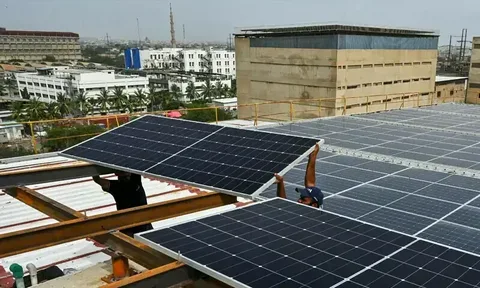

Pakistan’s Power Division has proposed a major change under the Nepra solar policy Pakistan, suggesting that solar consumers generating up to 25kW should no longer need licences or pay associated fees.
The move is aimed at encouraging renewable energy adoption and making solar power more accessible for households and small businesses.

What the Proposal Includes
The recommendation has been submitted to National Electric Power Regulatory Authority (NEPRA), which regulates electricity tariffs and policies in Pakistan.
If approved, the proposal would eliminate licensing requirements and fees for small-scale solar users, simplifying the process of installing and operating solar systems.
Impact on Solar Consumers
Under the current Nepra solar policy Pakistan, certain solar users are required to obtain licences and comply with regulatory procedures. These steps can increase costs and slow adoption.
Removing these requirements for systems below 25kW would make solar installations easier and more affordable, particularly for residential users.
Boost to Net Metering
The proposal is also expected to influence the net metering policy Pakistan 2026, which allows consumers to sell excess electricity back to the grid.
Simplifying regulations could encourage more users to adopt net metering, increasing renewable energy contribution to the national grid.
Why the Change Matters
Pakistan faces ongoing energy challenges, including rising electricity costs and supply shortages. Expanding solar adoption can help reduce pressure on the national grid and lower dependency on imported fuels.
The updated Nepra solar policy Pakistan could play a key role in promoting clean energy while supporting economic savings for consumers.
Government’s Broader Energy Strategy
The proposal reflects a wider shift toward renewable energy in Pakistan. Authorities are exploring ways to reduce barriers for solar users and improve energy sustainability.
Encouraging small-scale solar generation aligns with global trends toward decentralized and environmentally friendly power systems.
Conclusion
The proposed changes to the Nepra solar policy Pakistan could significantly boost solar adoption by removing regulatory hurdles for small consumers.
If implemented, the policy would make solar energy more accessible, reduce costs, and support Pakistan’s transition toward a more sustainable energy future.
FAQs
What is the new policy of NEPRA?
The proposed policy aims to remove licence requirements and fees for solar users generating up to 25kW, making solar adoption easier.
What is the new solar policy in Pakistan?
The new approach focuses on simplifying regulations, promoting net metering, and encouraging small-scale solar installations.
What is the 20% rule for solar panels?
The 20% rule generally refers to limits on how much excess electricity solar users can export to the grid under certain net metering regulations.