The White House confirmed that US envoys Steve Witkoff and Jared Kushner will travel to Islamabad for talks with Iran. However, Iran’s Foreign Ministry spokesperson stated that “no meeting is planned to take place between Iran and the US,” adding that Tehran’s position would be conveyed through Pakistan.The contradictory statements reflect the fragile and fluid nature of the ongoing Iran-US peace talks, with Islamabad once again at the center of diplo matic activity.
Background: How the War and Ceasefire Began
On February 28, 2026, Israel and the United States launched an air war against Iran, killing its Supreme Leader and many other officials. Iran responded with missile and drone strikes against Israel, US bases, and US-allied countries in the Middle East, and closed the Strait of Hormuz, disrupting global trade.
On April 8, 2026, the United States and Iran agreed to a two-week ceasefire mediated by Pakistan. Iran had rejected an earlier draft proposal for a 45-day ceasefire framework, instead putting forward its own 10-point peace plan.
The truce, brokered by Pakistan, followed fierce exchanges of air strikes, missile attacks, and threats that saw unprecedented strikes on Gulf nations, disrupted global shipping routes, and heightened fears of a prolonged confrontation.
First Round of Islamabad Talks: No Deal Reached
The Islamabad Talks were held on April 11 and 12, 2026. The 300-member US negotiating team was led by Vice President JD Vance, alongside special envoys Steve Witkoff and Jared Kushner. The 70-member Iranian team was led by parliamentary speaker Mohammad Bagher Ghalibaf and Foreign Minister Abbas Araghchi. The talks lasted 21 hours but ended without a deal.
The main unresolved issues included Iran’s nuclear program, the status of the Strait of Hormuz, sanctions relief, and frozen assets. While the US insisted on phased relief linked to compliance, Iran demanded comprehensive lifting of sanctions as a precondition.
Iran’s Foreign Minister Araghchi later said they were close to a preliminary agreement but accused the US delegation of shifting its demands at the last moment.
Iran Ceasefire End Date: Extension and Ongoing Uncertainty
President Trump extended the ceasefire, saying it would continue “until such time as” Iran’s leaders and representatives submit a “unified proposal” to end the war. He cited Tehran’s government being “seriously fractured” as the reason for the extension.
Trump stated he had directed the military to continue the blockade while remaining ready, and extended the ceasefire at the request of Pakistani mediators Prime Minister Shehbaz Sharif and Field Marshal Asim Munir.
Despite the ceasefire, tensions remained acute. The United States imposed a naval blockade on Iran following the failure of the first round of Islamabad Talks. Iran declared the blockade an “act of war” and said it would view military vessels near the Strait of Hormuz as a breach of the ceasefire
Islamabad Talks Live: What Is Happening Now
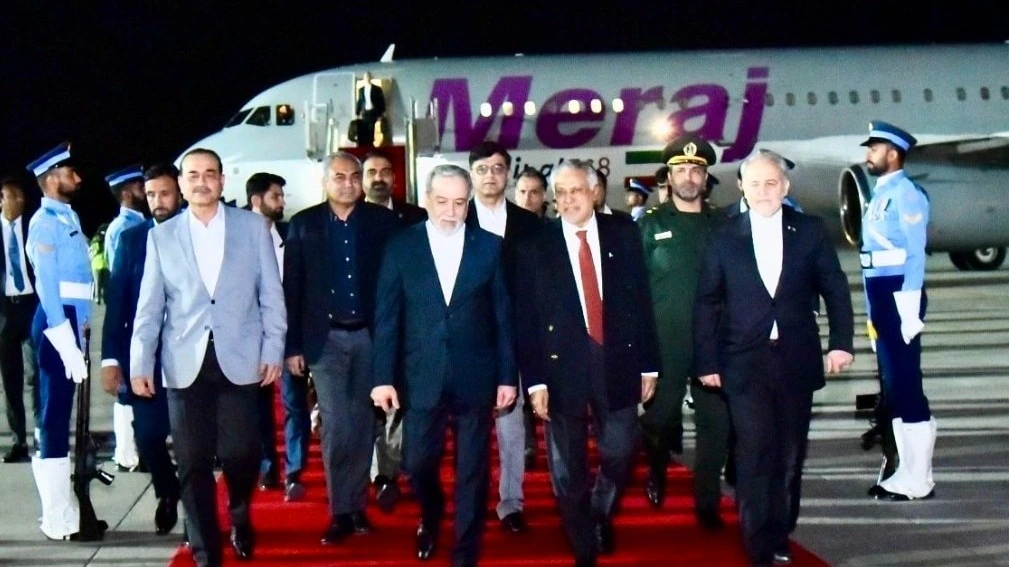
Iranian Foreign Minister Abbas Araghchi arrived in Pakistan’s capital with a small delegation, in what officials described as a key step toward the resumption of direct talks with the United States aimed at ending the war. At least nine US aircraft had already arrived in Islamabad carrying communications equipment, vehicles, security staff, and technical personnel in preparation for dialogue.
White House press secretary Karoline Leavitt said US envoys would sit down with Araghchi, expressing hope that the parties would “move the ball forward to a deal.” She said the Iranians had reached out as President Trump had called on them to do, prompting Trump to dispatch Witkoff and Kushner to listen.
However, Iran’s Foreign Ministry spokesperson Esmaeil Baghaei posted on X that there were no plans for a meeting between Iranian and US negotiators in Pakistan, and that Araghchi was in Islamabad to meet with Pakistani officials as part of their ongoing mediation.
Key Sticking Points in Iran-US Peace Talks
To end the war, the US is seeking a complete shutdown of Iran’s nuclear program, limits on its missile production, and restrictions on its support for regional allies including Hezbollah and Hamas. But Tehran has insisted on its right to enrich uranium domestically as part of a civilian nuclear program and ruled out using its military capabilities as concessions.
Another major dispute centers on the Strait of Hormuz. The US imposed a blockade to pressure Tehran into ending its grip on the Strait, a key shipping lane through which 20% of the world’s natural gas and crude oil transited in peacetime. Iran’s hold on the strait sent oil prices soaring, with Brent crude trading near $95 per barrel.
Quotes from Officials
Vice President JD Vance, who led the prior US delegation to Islamabad, will not attend this round of talks. Leavitt said Vance “remains deeply involved in this entire process, and he’ll be standing by here in the United States, along with the president and the Secretary of State, Marco Rubio, and the entire national security team for updates.”
Iran’s Ambassador to Pakistan, Reza Amiri Moghadam, stated that a nation with a long civilisation “will not negotiate under threat and force,” calling it a fundamental principle of Tehran’s foreign policy.
Pakistani Prime Minister Shehbaz Sharif thanked Trump for extending the ceasefire and said: “I sincerely hope that both sides will continue to observe the ceasefire and be able to conclude a comprehensive Peace Deal during the second round of talks.”
Global and Regional Impact
The Iran war negotiations today carry enormous consequences for global energy markets, regional security, and international diplomacy. The Strait of Hormuz is a key shipping lane through which 20% of the world’s natural gas and crude oil transited in peacetime. Disruption caused oil prices to surge sharply.
Pakistan has emerged as a critical neutral mediator. Its role in hosting and facilitating the Islamabad talks has elevated its diplomatic standing globally, with both Washington and Tehran relying on Islamabad’s good offices to maintain any prospect of a settlement.
The war has also drawn in other regional actors. Pakistan’s mediating team has included Prime Minister Shehbaz Sharif, Field Marshal Asim Munir, and Foreign Minister Ishaq Dar, who have acted as intermediaries between the two delegations.
Conclusion: What Comes Next
The Iran ceasefire end date remains officially open-ended, tied to Tehran submitting a unified proposal. The Islamabad talks latest news points to a second round being imminent, though the two sides continue to disagree on whether a direct meeting is even planned. Pakistani mediators remain the key channel, and the world watches closely to see whether this latest diplomatic push results in a breakthrough or another stalemate.
With US envoys on their way and Iran’s top diplomat already in the Pakistani capital, the coming 48 hours could prove decisive for the fate of the Iran-US peace talks and the fragile ceasefire holding the region together.
FAQs
Who is the Minister of Foreign Affairs in Iran?
Abbas Araghchi has served as the foreign minister of Iran since August 2024. He is a veteran diplomat who previously served as Iran’s chief nuclear negotiator in talks leading up to the 2015 Joint Comprehensive Plan of Action (JCPOA), as well as ambassador to Finland and Japan.
Who is Reza Amiri Moghadam?
Reza Amiri Moghadam is Iran’s Ambassador to Pakistan. He has been a visible figure during the ongoing Iran-US talks in Islamabad, regularly meeting with Pakistani leadership and issuing public statements on behalf of Tehran regarding the conditions for continued negotiations.He is also separately listed by the FBI in connection with the disappearance of former FBI agent Robert Levinson on Kish Island in 2007.
What happened to Sadegh Ghotbzadeh?
Sadegh Ghotbzadeh was an Iranian politician who served as foreign minister from 1979 to 1980, playing a prominent role during the US hostage crisis.In 1982, he was executed by a firing squad for allegedly plotting the assassination of Ayatollah Khomeini and the overthrow of the Islamic Republic.His dramatic fall from Khomeini’s inner circle to the execution wall remains one of the most striking examples of the Islamic Revolution consuming its own founding figures.