Protests in Israel against Netanyahu have surged dramatically in 2026, with thousands of demonstrators repeatedly flooding Tel Aviv’s Habima Square and cities across the country. The protests in Israel against the government now span multiple causes opposition to the Iran war, judicial overhaul fears, hostage negotiations, and ultra-Orthodox military exemptions. Israel protest 2026 has become one of the most significant domestic political stories of the year.
Background
Israel has seen waves of anti-government protests for several years, but the demonstrations of 2026 carry a sharper edge. The Netanyahu-led coalition has faced fierce public criticism over its handling of the Gaza war, its military campaign against Iran, corruption allegations, and its controversial push to reshape the judiciary. Anti-war protests in Israel today reflect a society deeply divided over the country’s direction and increasingly frustrated with those steering it.
The protest movement, long rooted in Tel Aviv’s activist community, has now spread to Jerusalem, Haifa, Beersheba, and over a dozen other cities. Haaretz and other Israeli media outlets have consistently covered these demonstrations, documenting both their scale and the government’s response.
Details: What Is Happening on the Ground?
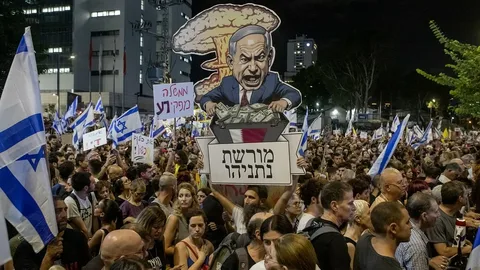
An estimated 2,000 people attended an anti-government rally in Tel Aviv on April 11, 2026, exceeding a court-ordered cap of 1,000 participants. Police did not intervene at that protest, in contrast to previous weeks when they cited security restrictions related to the Iran war.
It marked the sixth consecutive week of demonstrations led by left-wing groups opposed to the Iran war, alongside other organizations opposing Prime Minister Netanyahu’s alleged corruption and the government’s bid to overhaul the judiciary and exempt ultra-Orthodox yeshiva students from military service.
At an earlier rally on March 28, 2026, over a thousand demonstrators gathered in Habima Square demanding an end to the Iran war, carrying signs reading “children are growing up in bomb shelters” and “endless war is not a strategy.”Parallel rallies were simultaneously held in Jerusalem, Haifa, Beersheba, and elsewhere across the country.
In a demonstration organized ahead of Israel’s Memorial Day, thousands gathered in Tel Aviv’s Habima Square, with bereaved father Eyal Eshel addressing the government directly. In Jerusalem, protesters outside Netanyahu’s residence called on more Israelis to attend rallies.
The ultra-Orthodox community has also been a major flashpoint. At least 19 ultra-Orthodox protesters were arrested outside the IDF’s recruitment offices in Tel Hashomer in April 2026 after attempting to block vehicles. Additional arrests were made near military recruitment offices in Jerusalem, and protests later spread onto Jerusalem’s Jaffa Road, blocking the Light Rail.
Separately, Israeli police arrested two ultra-Orthodox extremists who were allegedly seen tearing down Israeli flags in the town of Beit Shemesh on the eve of Memorial Day, April 20, 2026.
Quotes
“We just don’t trust who’s at the wheel,” said Nava Rozolyo, a prominent anti-government activist and lawyer, explaining the mood among demonstrators at the Tel Aviv protest.
According to Rozolyo, opposition to the war among anti-government demonstrators stems from the daily burden of missile fire, uncertainty over the war’s goals, the durability of American support, and a growing sense that the coalition is exploiting the conflict to push a divisive political agenda.
At Tel Aviv protests earlier in January, speeches focused on the Qatargate corruption scandal, with activists describing the alleged payments to Netanyahu associates as “a betrayal of national security.”
Israeli political analyst Ori Goldberg offered a sobering assessment of the country’s divisions: “There’s very little sympathy for the ultra-Orthodox among much of Israeli society. Israeli society is broken.
The Legal Battle Over Protest Rights
The right to protest has itself become a battlefield. The Supreme Court issued a ruling capping the number of allowed protesters at 1,000 in Tel Aviv, following petitions by anti-government groups against police and IDF Home Front Command restrictions. The court clarified, however, that exceeding the permitted quota does not automatically give police grounds to disperse demonstrations.
Police justified earlier dispersals by citing regulations against outdoor public gatherings of over 50 people, but protesters and supporters accused law enforcement of selectively enforcing the rules noting that Haredi religious events and Purim street parties were treated differently.
This tension between security restrictions and civil liberties has added another dimension to the Israel protest 2026 story, drawing concern from legal and democracy advocates inside the country.
The Ultra-Orthodox Military Draft: A Powder Keg
One of the most divisive issues fueling protests in Israel against the government is the question of mandatory military service for ultra-Orthodox Jewish men. From Israel’s founding in 1948, a small number of highly skilled ultra-Orthodox scholars received military exemptions. Over the decades, however, the influence of religious parties like Shas and UTJ has led to a dramatic increase in exemptions currently covering around 90 percent of the roughly 13,000 ultra-Orthodox men who reach conscription age each year.
The Haredi population is growing rapidly. In 2009, they made up roughly 9.9 percent of Israel’s population; by 2065, they are projected to exceed 30 percent.For many secular and modern Orthodox Israelis risking their lives at the front, this exemption feels deeply unjust and has become a central grievance in the Israel protest movement.
Impact: Regional and Global Significance
The protests in Israel against Netanyahu carry significance well beyond Tel Aviv’s Habima Square. Internationally, they signal that public support for the government’s military campaigns in Gaza, Iran, and Lebanon is not unconditional. Support for the Iran operation among the Jewish public had shown its first signs of waning by late March 2026, coinciding with a surge in protest size.
European governments, including Spain, Slovenia, Ireland, and Belgium, have been increasingly vocal about Israeli military conduct. Within Israel, the protest movement has forced the Supreme Court into the debate, while opposition politicians have used the rallies to build momentum ahead of anticipated elections.
The Haaretz newspaper and Times of Israel have both extensively documented these protests, lending international visibility to a domestic movement that shows no signs of slowing. For global observers, anti-war protests in Israel today are a reminder that democratic pushback exists within Israeli society itself.
Conclusion: What Comes Next?
The Israel protest 2026 movement is unlikely to fade quickly. With elections reportedly on the horizon, thousands across Israel continue to mobilize against Netanyahu’s government as the country prepares for a possible vote later this year.The combination of war fatigue, economic pressure, the ultra-Orthodox draft controversy, and ongoing corruption investigations gives the anti-government movement a wide base to draw from.
As demonstrations continue every Saturday in Tel Aviv and beyond, the central question is whether street pressure can translate into political change or whether the Netanyahu coalition will outlast the anger in the squares.
FAQs
What are the protests in Israel for?
The protests in Israel in 2026 are driven by multiple issues: opposition to the ongoing wars with Iran and in Gaza, anger over Netanyahu’s alleged corruption (including the Qatargate scandal), resistance to judicial overhaul plans, frustration with ultra-Orthodox military exemptions, and broader concerns about the erosion of democratic norms. Different protest groups have different priorities, but they share a common opposition to the current government.
Is LGBTQ marriage allowed in Israel?
Israel does not perform same-sex marriages domestically, as marriage law is controlled by religious authorities the rabbinate for Jews, and equivalent bodies for other faiths. However, Israel does recognize same-sex marriages performed abroad, and LGBTQ couples have legal rights in many areas including adoption and partnership registration. The issue remains politically sensitive, with ultra-Orthodox parties firmly opposing any expansion of LGBTQ marriage rights.
Where do billionaires live in Israel?
Most of Israel’s wealthiest residents are concentrated in the greater Tel Aviv metropolitan area, particularly in upscale neighborhoods like Herzliya Pituah, Caesarea, Savyon, and Ramat HaSharon. These areas feature luxury villas, proximity to business districts, and high-end amenities. Some wealthy Israelis also maintain residences in Jerusalem’s prestigious Rehavia neighborhood or along the Mediterranean coastline.