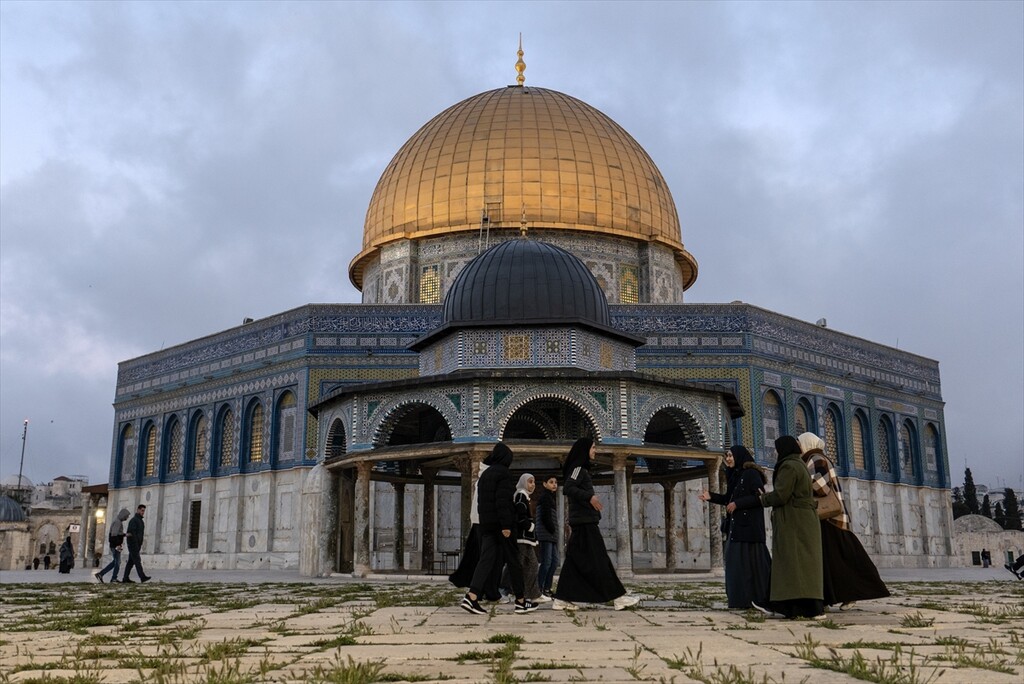
Hundreds of Palestinian Muslim worshippers flooded the courtyards of Al-Aqsa Mosque in tears and prostrations of gratitude on Thursday April 9 2026 as the holy site reopened for the first time in forty days following an unprecedented closure imposed by Israeli occupation authorities that had barred access throughout Ramadan Eid al-Fitr and five consecutive Fridays in the longest shutdown since Israel occupied East Jerusalem in 1967.
Background: How the Al-Aqsa Mosque Closure Began
The Al-Aqsa Mosque closure was imposed on February 28 2026 the same day the United States and Israel launched their joint military campaign against Iran in what Israeli authorities described as security measures necessitated by the state of emergency declared alongside the military operations. The Al-Aqsa Mosque closure immediately drew international condemnation with Muslim majority nations including Pakistan Egypt Jordan Turkey Saudi Arabia Qatar Indonesia and the UAE all calling for the immediate reopening of Islam’s third holiest site.
The Al-Aqsa Mosque closure was described by Palestinian and religious authorities as an unprecedented assault on Muslim worship rights that went far beyond any previous Israeli restriction on the site. For forty days the mosque’s prayer halls courtyards and surrounding arcades stood virtually empty with only a limited number of Jerusalem Islamic Waqf staff permitted to enter while Palestinian worshippers were forced to pray on streets pavements and in alleyways throughout Jerusalem unable to reach their holy site.
The Al-Aqsa Mosque closure also barred Eid al-Fitr prayers from being held at the site for the first time since Israel’s occupation of East Jerusalem began in 1967 marking a historic and deeply painful rupture in the continuous tradition of Muslim worship at the mosque that had been maintained across decades of occupation conflict and political crisis.
Details: Al-Aqsa Mosque Reopens to Emotional Scenes
The Jerusalem Islamic Waqf Department announced Wednesday evening that Al-Aqsa Mosque reopens to worshippers without any restrictions on numbers beginning from the dawn Fajr prayer on Thursday April 9 2026. The announcement that Al-Aqsa Mosque reopens came after forty days of closure that religious leaders had described as a blatant violation of freedom of worship and a dangerous escalation requiring urgent international intervention.
As the gates opened with the morning call to prayer and Al-Aqsa Mosque reopens for congregational worship large numbers of worshippers flocked to the compound many in tears performing prostrations of gratitude after weeks of being kept from their most sacred place of prayer in Jerusalem. Videos shared widely on social media showed volunteers and mosque custodians cleaning and preparing the site to receive the faithful as Al-Aqsa Mosque reopens to scenes of joy and deep emotion that moved observers around the world.
More than 3,000 Palestinian worshippers performed the dawn prayer at the site in the first congregation held there since the closure began demonstrating the depth of attachment that Palestinian Muslims feel for Al-Aqsa Mosque and the profound relief felt across the Muslim world at the news that Al-Aqsa Mosque reopens after one of the most painful chapters in its modern history.
Al-Aqsa Closure and Israeli Settler Activity
Even as Al-Aqsa Mosque reopens for Muslim worshippers Israeli authorities simultaneously extended the hours during which ultra-nationalist Israeli settlers conduct raids into the compound raising immediate concerns about the conditions under which the reopening has occurred. The Jerusalem Governorate described the extended settler raid schedule as a dangerous escalation that reflects an acceleration in efforts to impose new realities at Al-Aqsa and entrench time-based division in the compound.
Before the closure settler raids took place in two daily shifts totalling less than five hours. Under the new schedule approved as Al-Aqsa Mosque reopens raids now run from 6:30 in the morning until 11:30 and again from 1:30 until 3:00 in the afternoon totalling six and a half hours of daily settler incursions into a compound that international arrangements recognise as under Islamic administration and authority.
The extension of settler raid hours as Al-Aqsa Mosque reopens has been condemned by Palestinian authorities and Muslim leaders worldwide as evidence that Israeli authorities are using the reopening to consolidate rather than reverse the changes imposed during the forty-day Al-Aqsa closure. Israeli National Security Minister Itamar Ben-Gvir had entered the compound on April 6 while the Al-Aqsa closure was still in force further inflaming tensions around the site.
International Condemnation of Al-Aqsa Closure
The forty-day Al-Aqsa closure drew the strongest international condemnation of any single Israeli action affecting Jerusalem’s holy sites in recent memory. Religious authorities political leaders and Muslim governments worldwide united in demanding the immediate end of the Al-Aqsa closure with the Organisation of Islamic Cooperation issuing emergency statements and dozens of Muslim majority governments registering formal diplomatic protests.
The Al-Aqsa closure coincided with the holy month of Ramadan when Muslim attendance at the mosque traditionally reaches its annual peak with hundreds of thousands of worshippers from across Palestine and the Muslim world seeking to pray at the third holiest site in Islam during the most spiritually significant period of the Islamic calendar. Preventing this worship during Ramadan and across Eid al-Fitr gave the Al-Aqsa closure a dimension of religious injury that went beyond the political and legal violations to strike at the heart of Muslim spiritual life.
Former Grand Mufti of Jerusalem Ekrima Sabri described the Al-Aqsa closure as unjustified and illegal stating that it contravened freedom of worship and suggested that the occupation authorities were asserting control over the mosque while stripping the Islamic Waqf of its authority to administer it. Religious scholars across the Muslim world issued statements declaring the Al-Aqsa closure an act of religious aggression that demanded a unified Muslim response.
Expert Quotes
Religious leaders welcoming the news that Al-Aqsa Mosque reopens described the moment as one of profound spiritual relief while warning that the conditions attached to the reopening including extended settler raid hours represent a continuation of the assault on Muslim worship rights that the Al-Aqsa closure exemplified. Palestinian officials stated that the reopening while welcome cannot erase forty days of violation and that accountability for the unprecedented Al-Aqsa closure must be pursued through international legal and political channels.
Islamic scholars commenting on the significance of Al-Aqsa Mosque reopens noted that the mosque’s continuous function as a place of worship has been a symbol of Palestinian presence and resistance in Jerusalem for centuries and that each attempt to interrupt that continuity through measures like the Al-Aqsa closure ultimately strengthens rather than weakens Muslim determination to protect the site.
Impact of Al-Aqsa Mosque Reopens on Muslim World
The news that Al-Aqsa Mosque reopens has generated an outpouring of relief and joy across the global Muslim community that had watched the Al-Aqsa closure with mounting anguish for forty days. Social media platforms were flooded with expressions of gratitude and celebration as footage of the reopening prayer spread rapidly to Muslim communities in every corner of the world demonstrating the extraordinary emotional and spiritual significance of Masjid Al-Aqsa in the Muslim consciousness.
The Al-Aqsa Mosque reopens development has also renewed focus on the permanent and structural challenges to Muslim worship rights at the site with advocates calling for enforceable international guarantees that prevent future closures of the kind imposed since February 28 2026. The forty-day Al-Aqsa closure has demonstrated that existing international arrangements protecting the site’s Islamic character are insufficient to prevent Israeli authorities from imposing unprecedented restrictions whenever political or military circumstances provide a pretext.
Conclusion
Al-Aqsa Mosque reopens after forty days of unprecedented closure representing a moment of spiritual restoration for millions of Muslims worldwide who had watched the forced emptying of Islam’s third holiest site with grief and anger. The emotional dawn prayer that marked the first congregation at the mosque since its closure captured in footage that has moved the global Muslim community to tears of relief reflects both the depth of Palestinian attachment to Al-Aqsa and the resilience of a people who have refused to accept the permanent erasure of their presence and their worship at the heart of occupied Jerusalem.
FAQs
Has the Al-Aqsa Mosque Been Closed?
Yes Al-Aqsa Mosque was closed for forty consecutive days from February 28 2026 until April 9 2026 in what represented the longest and most comprehensive closure of the site since Israel occupied East Jerusalem in 1967. The Al-Aqsa closure was imposed by Israeli occupation authorities citing security measures related to the US-Israeli military campaign against Iran that began on February 28. During the Al-Aqsa closure Palestinian worshippers were barred from the site including during the holy month of Ramadan Eid al-Fitr and five consecutive Fridays. Al-Aqsa Mosque reopens on April 9 2026 following the announcement by the Jerusalem Islamic Waqf that restrictions would be lifted without limit on worshipper numbers beginning from the dawn prayer.
Where is Masjid Aqsa Right Now?
Masjid Al-Aqsa is located in the Old City of Jerusalem within the Al-Haram al-Sharif compound which also contains the Dome of the Rock. Jerusalem is in occupied East Jerusalem which was captured by Israel in the 1967 war and subsequently annexed in a move that is not recognised by international law or the international community. The Al-Aqsa Mosque compound covers approximately 35 acres in the southeastern corner of the Old City and is administered by the Jerusalem Islamic Waqf a Jordanian-appointed body that manages the site under the Status Quo arrangement. Al-Aqsa Mosque reopens on April 9 2026 allowing worshippers to once again access this sacred compound for the first time since the unprecedented Al-Aqsa closure that began in February.
Who Controls Masjid Al-Aqsa Today?
The question of who controls Masjid Al-Aqsa is among the most contested in the Israeli-Palestinian conflict. The Jerusalem Islamic Waqf administers the compound managing access worship and maintenance under an international arrangement known as the Status Quo that recognises the site’s Islamic character. However Israel as the occupying power controls access to the broader Old City and to the Al-Aqsa compound itself exercising physical control that it demonstrated most dramatically through the forty-day Al-Aqsa closure imposed from February 28 2026. The Al-Aqsa Mosque reopens under conditions where Israeli authorities have simultaneously extended settler raid hours demonstrating that while Muslim worship has been restored the underlying contest over who truly controls Masjid Al-Aqsa remains as unresolved as ever.