

Iran says the bombing of schools, hospitals, universities and heritage monuments proves the United States and Israel have abandoned every rule of civilised warfare — as the 34-day-old conflict claims more lives on both sides.
Iran has launched its harshest condemnation yet of the Iran US-Israel Civilian Attacks, accusing both countries of a “total collapse of the moral and legal rules that used to govern conflicts” after a relentless series of strikes levelled schools, universities, hospitals, cultural monuments, and civilian neighbourhoods across the country.
The accusations come as the war enters its fifth week with no ceasefire in sight, no deal agreed, and both sides inflicting casualties that are mounting by the day. Iran’s Foreign Ministry spokesperson Esmaeil Baqaei said on Wednesday that the attacks “amount to genocide,” calling them “a systematic and brutal pattern of illegal warfare against Iran.” He added: “This is not an isolated act of cruelty — it is part of a deliberate strategy to destroy our country, our people, and our identity.”
Schools, hospitals, monuments — nothing spared
The most harrowing dimension of Iran US-Israel Civilian Attacks concerns its children. On the very first day of the war — February 28, 2026 — a US precision strike hit an elementary school in the southern Iranian city of Minab, killing at least 150 schoolgirls. On the same day, a sports hall adjacent to a military compound in the city of Lamerd was struck, killing at least 21 people. Weapons analysts who examined videos and photographs from the scene told the New York Times that the weapon used appeared to be a US Army Precision Strike Missile.
Iran’s Foreign Ministry says more than 600 schools and educational centres have been deliberately targeted over the 33 days that followed. The Iran University of Science and Technology in Tehran — where a satellite imaging programme had been developed — was bombed on March 28. A professor who had contributed to Iran’s missile programme was assassinated along with his two children at their home in northern Tehran.
Iran’s Cultural Heritage Minister Reza Salehi Amiri spoke exclusively to Al Jazeera from inside the ruins of Golestan Palace — one of Tehran’s most celebrated UNESCO-listed monuments — which sustained damage in the strikes. “We are not talking about stone and mortar,” Amiri said. “We are talking about the memory and history of a people. This stone represents who we are.”
He confirmed that 56 cultural heritage sites across the country have been damaged. “What we see today is a total collapse of the moral and legal rules that used to govern conflicts,” Amiri said. “The targeting of these sites is a dangerous development — not just for Iran, but for the global idea of heritage protection.” He condemned UNESCO for failing to intervene despite holding the GPS coordinates of every protected site.
Iran’s UN Ambassador Amir Saeid Iravani told the Security Council that US-Israeli strikes have destroyed 9,669 civilian sites in total — including 7,943 residential homes, 1,617 commercial buildings, 32 medical and pharmaceutical facilities, 65 schools, and 13 Red Cross buildings.
The human cost: 1,937 dead in Iran, war spreading across the region
According to Iran’s Health Ministry, at least 1,937 people have been killed inside Iran since the war began, with victims ranging in age from eight months to 88 years old. Over 24,800 have been wounded, including nearly 4,000 women and more than 1,600 children.
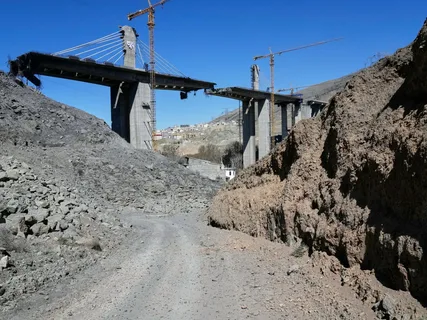
US Central Command has struck over 11,000 targets across at least 26 of Iran’s 31 provinces since February 28. Tehran has been the most heavily bombed location, with significant concentrations of strikes also recorded in central, western, and southern Iran. Two US strikes on the B1 bridge between Tehran and Karaj — described as the highest bridge in the Middle East — killed eight people and wounded 95 others, collapsing the structure entirely. Trump followed with a speech on April 2 in which he said strikes would “escalate over the next two to three weeks to bring them back to the Stone Ages.”
Iran has retaliated by firing hundreds of missiles and drones at Israel, US military bases across the Gulf, and civilian infrastructure in Arab states hosting American forces. At least 24 people have been killed in Israel and more than 6,200 wounded. In Lebanon, where Israel has simultaneously launched a ground invasion against Hezbollah, 1,318 people are confirmed dead, including 125 children, with over one million displaced.
The war shows no sign of ending. Iran’s parliament speaker accused the US of secretly planning a ground invasion. Iran’s IRGC commanders have publicly vowed to fight until full victory. Trump set an April 6 deadline for Iran to accept his terms or face strikes on its energy sector. As of this writing, no deal has been reached.
Iran’s response: missiles, defiance, and a demand for reparations
Despite the scale of destruction on its soil, Iran has not stopped fighting. It fired over 500 ballistic and naval missiles in the first week alone. It closed the Strait of Hormuz to American and Israeli vessels — a blockade that has sent oil prices surging globally. It struck the US Navy’s Fifth Fleet headquarters in Bahrain, American bases in Kuwait, Qatar, Saudi Arabia, and the UAE, and hit civilian infrastructure from Omani ports to Azerbaijani airports.
Iran has also presented a five-point peace plan to Washington through Pakistani intermediaries. It demands a complete halt to US-Israeli strikes, an end to the assassination of Iranian officials, a mechanism to prevent future wars, international compensation for the destruction of civilian infrastructure, and recognition of Iranian sovereignty over the Strait of Hormuz.
The US has called those terms “ridiculous and unrealistic.” Negotiations remain deadlocked.
FAQ
How many Americans have died in the Iran war so far?
At least 15 US military personnel have been confirmed killed in the 2026 Iran war, according to Wikipedia’s compiled list and reporting from The Intercept and Time. The first six died on March 1 when an Iranian drone struck a tactical operations centre at Port Shuaiba in Kuwait — all were Army Reserve soldiers assigned to the 103rd Expeditionary Sustainment Command. A seventh died on March 1 in an attack on Prince Sultan Air Base in Saudi Arabia. Six more were killed on March 12 when their KC-135 aerial refuelling aircraft crashed in western Iraq while supporting Operation Epic Fury. Additional deaths followed, including Sgt. Benjamin Pennington, who died from wounds sustained at a Saudi base. More than 520 US personnel have been wounded in total, though The Intercept has reported that the Pentagon appears to be providing low-ball casualty figures. Independent analysis puts the broader wounded-in-action toll since October 2023, across all Middle East operations, at close to 750 US service members killed or injured.
Who started the war in Iran in 2026?
On February 28, 2026, the United States and Israel launched a coordinated surprise military campaign against Iran — dubbed Operation Epic Fury — targeting key officials, military bases, nuclear facilities, and missile infrastructure. Iran’s Supreme Leader Ayatollah Ali Khamenei was assassinated in the opening strikes, along with approximately 40 other senior officials. The Trump administration offered multiple justifications: pre-empting an expected Iranian attack on US forces, destroying Iran’s nuclear and missile programmes, and triggering regime change. Iranian officials and the IAEA both rejected the claim that Iran was on the verge of building a nuclear weapon. Iran’s Foreign Minister Abbas Araghchi said a diplomatic deal had been “within reach” just days before the war began: “We left Geneva with the understanding that we’d seal a deal next time we meet. But it was Mr Trump, yet again, who ultimately ordered the bombing of the negotiating table.”
Who is more powerful — Israel or Iran?
Both militaries are ranked remarkably close on the 2026 Global Firepower index — Israel at 15th, Iran at 16th out of 145 countries — but they are powerful in completely different ways. Israel holds a decisive technological edge: it operates F-35 stealth fighters, the layered Iron Dome, David’s Sling and Arrow missile defence systems, an advanced offensive cyber capability, and a defence budget of approximately $30–34 billion. It is widely believed, though never officially confirmed, to possess nuclear weapons. Iran’s strength is asymmetric. It has approximately 610,000 active military personnel compared to Israel’s 170,000, a vast arsenal of ballistic missiles and low-cost Shahed drones, and an extensive network of allied proxy forces — Hezbollah, the Houthis, and Iraq-based militias — that extend its reach across the region. Iran also holds the Strait of Hormuz, which it has weaponised in this conflict to devastating economic effect. The current war has demonstrated both realities simultaneously: Israel and the US have eliminated much of Iran’s air defence and senior leadership with precision, while Iran has inflicted real costs on American forces and driven global energy prices to crisis levels.