

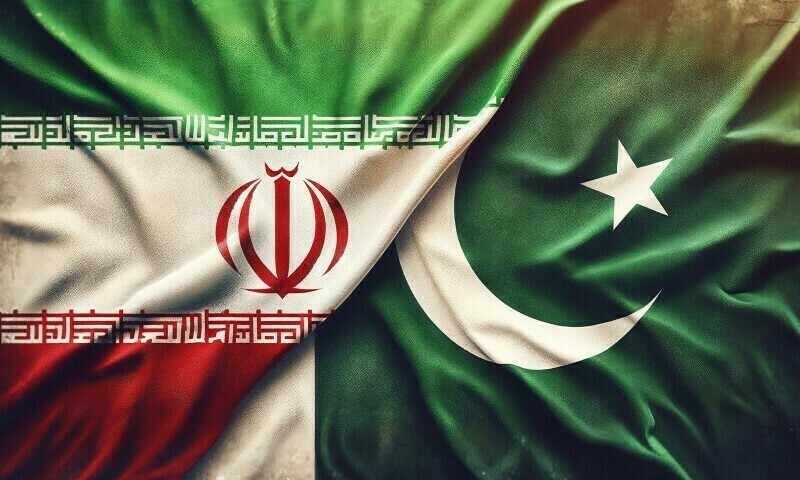
Pakistan US-Iran de-escalation diplomacy has emerged as one of the most significant diplomatic developments of the conflict as Islamabad, alongside Turkiye and Egypt, positioned itself as a key message-carrier between Washington and Tehran.
Pakistan, along with Turkiye and Egypt, is engaged in active back-channel diplomacy aimed at bridging the gap between the United States and Iran, an official source confirmed. Through this active back-channel effort — involving US Special Envoy Steve Witkoff and Iranian Foreign Minister Abbas Araghchi — the three countries were carrying out quiet communication to help restore peace.
The Pakistan US-Iran de-escalation diplomacy effort has been described as a strategic synergy between Ankara, Cairo, and Islamabad that established a vital diplomatic conduit at a moment when all direct channels between Washington and Tehran are officially denied by Iran.
Background
Pakistan US-Iran De-escalation Diplomacy — How Pakistan Earned This Role
Pakistan US-Iran de-escalation diplomacy did not emerge by accident. It reflects a carefully cultivated diplomatic position that Islamabad has built over the past four weeks of conflict.
Pakistan condemned the US-Israeli attacks on Iran while also condemning subsequent Iranian attacks on Gulf countries. Prime Minister Shahbaz Sharif’s government called the killing of Supreme Leader Khamenei a clear violation of international law. Deputy Prime Minister and Foreign Minister Ishaq Dar engaged in shuttle diplomacy, while during the OIC meeting in Riyadh, Dar reminded Iranian leaders of Pakistan’s defence obligations to Saudi Arabia and assured them that Saudi soil would not be used to attack Iran.
This dual posture — condemning the original strikes while also warning Iran against Gulf attacks — gave Pakistan the credibility to serve as a conduit that neither pure US allies nor pure Iran allies could provide.
Pakistan has avoided direct Iranian military retaliation unlike some US allies, has close relations with Gulf states including Saudi Arabia, and has a large Shia population second only to Iran. This balance allows Islamabad to act as a relatively neutral channel at a time when traditional mediators like Oman and Qatar appear less active.
The pakistan demarche to us — Pakistan’s formal communication to Washington outlining its concerns about the conflict and its offer of mediation — was part of a broader diplomatic package that also included the pakistan us defence deal framework and ongoing pakistan-us defence talks that have deepened bilateral ties since the India-Pakistan conflict of 2025.
Details
Pakistan US-Iran De-escalation Diplomacy — What Is Happening
Senior officials from Pakistan, Turkiye, and Egypt held separate talks with White House envoy Steve Witkoff and Iranian Foreign Minister Abbas Araghchi. The mediation is ongoing and making progress. The discussion is about ending the war and resolving all outstanding issues.
Pakistan’s efforts have been described by officials as a reaffirmation of its role as a net regional stabiliser, leveraging its unique diplomatic position to shift the focus from confrontation toward meaningful dialogue. The source referred to reports of tangible progress toward resolving outstanding issues and finding a sustainable end to the ongoing conflict.
The Pakistan US-Iran de-escalation diplomacy is structured around message-passing rather than direct mediation. Iran has publicly denied holding any direct talks with the US — but simultaneously confirmed receiving messages from friendly countries.
Iran’s Foreign Ministry spokesman confirmed that messages had been received from some friendly countries regarding the US’s request for negotiations, though Iran had not responded to them. Iran maintained that it was not the party that started the war and that all requests for de-escalation should be referred to Washington.
That admission confirms the Pakistan US-Iran de-escalation diplomacy channel is real — even if Tehran characterises its role differently from how Islamabad describes it.
Ishaq Dar’s Diplomatic Contacts
The Pakistan US-Iran de-escalation diplomacy has been led personally by Foreign Minister Ishaq Dar through an intensive round of contacts.
Dar spoke with Turkiye’s Foreign Minister Hakan Fidan on the evolving regional situation following recent US and Israeli strikes on Iran. Both leaders reviewed the latest developments and Dar emphasised the importance of continued diplomatic engagement to ensure peace and stability. Dar also held a telephone conversation with Iraqi Foreign Minister Fuad Hussein. Both leaders expressed deep concern over the ongoing regional escalation and Dar highlighted the need for collective efforts to de-escalate tensions, stressing that dialogue and adherence to international law remain essential for ensuring peace.
The Pakistani diplomat described Islamabad’s approach as deliberately quiet but calculated — a posture that reflects the sensitivity of the pakistan demarche to us and the ongoing pakistan-us defence talks that give Pakistan leverage it does not want to squander through overreach.
The Pakistan-US Defence Dimension
Pakistan US-Iran de-escalation diplomacy operates within a broader context of renewed pakistan-us defence talks and a deepening pakistan us defence deal framework.
Recent military exercises, arms sales, and high-level engagement suggest that defence ties between Washington and Islamabad are entering a new, more pragmatic phase. The United States approved the sale of advanced technology and upgrade packages for Pakistan’s F-16 fighter aircraft valued at approximately $686 million. President Trump has repeatedly praised Pakistan’s army chief, Field Marshal Asim Munir.
The pakistan us defence deal and pakistan-us defence talks give Islamabad direct access to Washington’s security establishment — access that the Pakistan US-Iran de-escalation diplomacy is now leveraging to pass messages that no other Muslim-majority country with Iran ties can deliver as credibly.
Defence Minister Khawaja Asif stressed the importance of the US relationship but ruled out military participation in any campaign against Iran. Pakistan offered to host mediation talks and presented itself as a potential bridge between the parties.
A possible direct call between Ishaq Dar and Iranian Parliament Speaker Ghalibaf could determine whether face-to-face peace talks proceed — a development that would represent the highest-profile outcome yet of the Pakistan US-Iran de-escalation diplomacy effort.
Iran’s Denial — What It Means
The Pakistan US-Iran de-escalation diplomacy exists in an unusual diplomatic space where one party publicly denies the process while simultaneously confirming it is receiving messages.
Iran’s parliament speaker said no negotiations had been held with the US, calling talk of productive discussions fake news used to manipulate financial and oil markets. The foreign ministry spokesman also denied that any discussions had taken place while simultaneously confirming that messages from friendly countries about Washington’s request for negotiations had been received.
A professor at the University of Tehran told media that there appear to be mediation efforts started regionally by Pakistan, Egypt, and Turkiye trying to find a way out of the standoff, and that Trump’s heavy promotion of the mediation effort speaks to him trying to climb down from the deadline he issued given the Iranian threat of retaliation that would have been really significant.
The Pakistan US-Iran de-escalation diplomacy is therefore serving its core function — creating space for both sides to make concessions without publicly acknowledging that concessions are being made.
Quotes
“Through active back-channel diplomacy involving US Special Envoy Steve Witkoff and Iranian Foreign Minister Abbas Araghchi, Pakistan, Turkiye and Egypt are engaged in quiet communication to restore peace.” — Pakistani Official Source
“A strategic synergy between Ankara, Cairo and Islamabad has established a vital diplomatic conduit, demonstrating that regional cooperation is the most effective antidote to escalation.” — Pakistani Official Source
“Pakistan’s efforts are a reaffirmation of its role as a net regional stabiliser, leveraging its unique diplomatic position to shift the focus from confrontation toward meaningful dialogue.” — Pakistani Foreign Ministry Statement
“The mediation is ongoing and making progress. The discussion is about ending the war and resolving all outstanding issues. We hope to have answers soon.” — US Source, via Axios
“It seems that there are mediation efforts that started regionally, by Pakistan, Egypt and Turkiye, trying to find a way out of this standoff.” — Hassan Ahmadian, Professor, University of Tehran
“Messages have been received from some friendly countries regarding the US’s request for negotiations.” — Iranian Foreign Ministry Spokesperson
“Islamabad’s approach is deliberately quiet but calculated.” — Senior Pakistani Diplomat, speaking anonymously
Impact
For Pakistan, the Pakistan US-Iran de-escalation diplomacy role elevates Islamabad’s global profile at a moment when it has simultaneously been fighting a war with Afghan Taliban forces and managing post-conflict relations with India. Being recognised as a key mediator in the world’s most consequential active conflict is a significant diplomatic achievement.
For the pakistan demarche to us framework, Pakistan’s mediation role has given its formal communications with Washington real leverage. The pakistan us defence deal and pakistan-us defence talks have been deepening quietly — the mediation effort gives Pakistan something concrete to offer the US in exchange for the defence cooperation Islamabad values.
For the conflict itself, the Pakistan US-Iran de-escalation diplomacy offers the best available channel for the kind of preliminary face-saving message exchange that historically precedes ceasefire negotiations. Iran will not talk to the US. The US will not publicly back down. A third-party message conduit that both sides can deny is precisely what the diplomatic situation requires.
For the region, the trilateral Pakistan-Turkiye-Egypt framework that has emerged from the Pakistan US-Iran de-escalation diplomacy represents a new configuration of Muslim-majority diplomatic power — three countries not formally aligned with either side, each with unique access to one or both parties, operating together in a coordinated diplomatic effort for the first time.
FAQs
Does Pakistan support the US or Iran?
Pakistan is maintaining a carefully calibrated dual position. Islamabad condemned the US-Israeli attacks on Iran as a violation of international law while also condemning Iranian retaliatory strikes on Gulf countries including Saudi Arabia, with which Pakistan has a mutual defence pact obligating each country to treat aggression against the other as aggression against both.The Pakistan US-Iran de-escalation diplomacy reflects this balance — Pakistan is positioned as a neutral conduit rather than an ally of either side.
Who are Iran’s best friends?
Iran’s closest strategic partners are China and Russia. China has been Iran’s largest trading partner and has provided diplomatic cover at the UN Security Council. Russia has supplied military technology and vetoed Western resolutions against Tehran. Among Muslim-majority countries, Pakistan maintains significant ties with Iran — a 900-kilometre shared border, a large shared Shia population, and trade relations — which is precisely what makes the Pakistan US-Iran de-escalation diplomacy credible. Pakistan has a large Shia population second only to Iran and has avoided direct Iranian military retaliation unlike some US allies, making it one of the few countries with meaningful access to both Washington and Tehran simultaneously.
Does Pakistan have diplomatic relations with Iran?
Yes. Pakistan and Iran share full diplomatic relations, a 909-kilometre border, significant trade links, and deep cultural and religious ties. During the current conflict, Prime Minister Sharif has held multiple telephone conversations with Iranian President Pezeshkian and stated that Pakistan would continue facilitating peace through diplomatic outreach.The pakistan demarche to us and the pakistan-us defence talks have not prevented Pakistan from maintaining its Iran relationship — and that dual access is the foundation on which the entire Pakistan US-Iran de-escalation diplomacy effort rests.
Conclusion
Pakistan US-Iran de-escalation diplomacy has placed Islamabad at the centre of the most consequential diplomatic effort of 2026.
The source described Pakistan’s mediation effort as more than just crisis management, adding that there were reports of tangible progress toward resolving outstanding issues and finding a sustainable end to the ongoing conflict in the Middle East.
The pakistan demarche to us, the pakistan us defence deal framework, and the active pakistan-us defence talks have all contributed to giving Pakistan the standing in Washington needed to carry messages Tehran will receive.
Whether the Pakistan US-Iran de-escalation diplomacy produces a ceasefire, a nuclear framework, or simply buys more time before the next escalation will depend on whether the five-day pause Trump announced extends into something real.
For now, Islamabad is doing what it has always done best — operating quietly in the spaces between powers too proud to talk directly to each other, carrying words that neither side can officially acknowledge, and hoping that quiet diplomacy achieves what missiles have not.