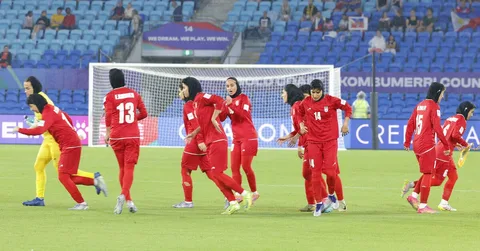
Australia has granted asylum to five Iranian women footballers who refused to return to Iran following a tournament visit, citing fears of persecution amid the ongoing US-Israel war on their country. The Iranian women footballers made their asylum applications after the outbreak of war on February 28, 2026 made return to Iran both dangerous and — for women athletes who have long operated under severe restrictions — potentially life-threatening. The Australian government confirmed the grants, making it one of the most high-profile asylum decisions involving the Iranian soccer team in Australia since the war began.
Background: Iranian Women Footballers and the Struggle to Play
The story of Iranian women footballers is inseparable from the story of women’s rights in the Islamic Republic — a decades-long struggle conducted on and off the pitch against a system that has consistently sought to limit, restrict, and control female athletic participation.
Iranian women footballers were banned from playing football entirely in the years following the 1979 Islamic Revolution. The sport was gradually permitted in limited forms from the 1990s onward, but Iranian women footballers faced restrictions that their male counterparts did not — including mandatory hijab requirements in matches, bans on attending men’s games as spectators, and severe limitations on international travel and competition.
The Iran women’s football team FIFA ranking reflects the consequences of these decades of institutional obstruction. Iran women’s football team FIFA ranking currently sits outside the top 100 in the world — a position that analysts attribute not to any lack of talent among Iranian women footballers but to the systematic underinvestment, restricted competition access, and political interference that has defined women’s football in the Islamic Republic.
Despite these obstacles, Iranian women footballers have continued to develop the sport through sheer determination. Several Iranian women footballers have previously defected during international competitions or training camps, citing the impossible conditions under which they were expected to represent a country that simultaneously celebrated and suppressed their athletic ambitions.
The outbreak of the US-Israel war on Iran on February 28, 2026 dramatically changed the calculus for Iranian women footballers who happened to be outside the country at the time. With Iran under sustained bombardment and a new hardline Supreme Leader — Mojtaba Khamenei — named on March 8, the prospect of returning home became deeply frightening for many Iranian athletes abroad.
Details: The Five Iranian Women Footballers and the Australia Asylum Decision
Iranian Women Footballers — Who Are They?
The five Iranian women footballers granted asylum in Australia were part of an Iranian soccer team in Australia contingent that had travelled to the country for a football-related engagement prior to the outbreak of the Iran war. When the war began on February 28, the Iranian soccer team in Australia members found themselves in a profoundly changed situation — their country was at war, their families were in danger, and the regime they represented had just appointed a new Supreme Leader known for his hardline stance on women’s rights and social freedoms.
The five Iranian women footballers made the decision not to board their scheduled return flights to Iran. They subsequently lodged formal asylum applications with the Australian Department of Home Affairs, citing well-founded fears of persecution on the grounds of their gender, their athletic careers, and — in some cases — their public expressions of opposition to the Iranian regime’s treatment of women athletes.
Australian immigration authorities processed the Iranian women footballers’ asylum applications under an expedited review process, given the acute danger posed by the ongoing war in Iran and the specific vulnerability of women athletes in the context of Mojtaba Khamenei’s hardline ascension to the Supreme Leadership.
Australian Government Decision on Iranian Women Footballers
The Australian government confirmed that asylum has been granted to all five Iranian women footballers, with the decision described by Home Affairs officials as consistent with Australia’s international obligations under the 1951 Refugee Convention and its 1967 Protocol.
Australia Iran soccer relations have historically been managed through sports diplomacy channels — the two countries have met at various FIFA and AFC competition levels over the years — but the Australia Iran soccer dynamic has been fundamentally altered by the war and now by the asylum grants to the five Iranian women footballers.
The Australian government indicated that the Iranian women footballers would be granted permanent protection visas, allowing them to remain in Australia indefinitely, seek employment, access healthcare and education, and eventually apply for Australian citizenship if they choose.
Iran Women’s Football Team FIFA Ranking — Context for the Decision
The Iran women’s football team FIFA ranking provides important context for understanding why these five Iranian women footballers were in Australia and what their defection means for Iranian women’s football more broadly.
The Iran women’s football team FIFA ranking currently places the national side outside the world’s top 100 teams — a reflection of the systemic barriers that have prevented Iranian women footballers from competing at the highest international levels. Despite this low Iran women’s football team FIFA ranking, individual Iranian women footballers have demonstrated talent and technical quality that has attracted attention from clubs in Europe, Australia, and the United States.
The Iran women’s football team FIFA ranking has also been affected by the Iranian Football Federation’s history of political interference in women’s team selection, training, and competition — with decisions about which Iranian women footballers can travel internationally subject to government oversight that goes far beyond normal sporting governance.
Iranian Soccer Team in Australia — Background to the Visit
The Iranian soccer team in Australia visit that preceded the asylum applications was part of a broader AFC-organised football programme. The Iranian soccer team in Australia contingent included players, coaching staff, and officials — with the five Iranian women footballers who sought asylum representing a subset of the broader Iranian soccer team in Australia delegation.
Australia Iran soccer engagement at the women’s level has been limited historically due to the vast difference in competitive development between the two national programmes. The Australian women’s national team — the Matildas — is ranked among the world’s top 15 sides, while the Iran women’s football team FIFA ranking places the Iranian side far below that level. Despite this gap, the Australia Iran soccer relationship has been a vehicle for cultural exchange and player development programmes coordinated through the Asian Football Confederation.
Quotes on Iranian Women Footballers Asylum Decision
The Australian Home Affairs Minister stated that Australia takes its obligations under international refugee law seriously and that the five Iranian women footballers had demonstrated well-founded fears of persecution that met the legal threshold for protection under Australian and international law, adding that Australia would always provide refuge to those genuinely at risk.
One of the five Iranian women footballers — speaking through a translator at a press conference in Sydney — said that returning to Iran under the current regime and the current war was not something she could do in good conscience, adding that as a woman and as a footballer she had spent her entire career fighting for the right to simply play the sport she loved, and that the new Supreme Leader’s appointment made clear that fight would only get harder.
Human rights organisation Amnesty International welcomed the Australian government’s decision, stating that Iranian women footballers face a uniquely compounded form of persecution — as women, as athletes, and as individuals who have represented a regime internationally while privately opposing its most repressive policies.
FIFA issued a statement expressing concern for the safety of all Iranian women footballers and calling on member associations to extend appropriate humanitarian support to Iranian athletes seeking refuge during the ongoing conflict.
The Iranian Football Federation condemned the asylum decision as politically motivated and called on the five Iranian women footballers to return home, insisting their safety would be guaranteed. The Iranian women footballers and their legal representatives dismissed this assurance.
Australia Iran soccer federation officials confirmed that the five Iranian women footballers would be eligible to represent Australia in international competition after an appropriate waiting period under FIFA eligibility regulations — a development that could significantly benefit the Matildas’ development programme given the technical quality of the players involved.
Impact: What the Iranian Women Footballers Asylum Decision Means
Impact on Iranian Women Footballers Still in Iran
The Australian asylum grants to the five Iranian women footballers will reverberate through the Iranian women’s football community both inside and outside the country.
For Iranian women footballers still competing within Iran, the defection of five teammates sends a powerful signal about the conditions they endure — and the lengths to which some are willing to go to escape those conditions. The Iran women’s football team FIFA ranking already reflects decades of institutional suppression, and the loss of five players to asylum in Australia will further set back the development of the national programme.
The Iranian government’s response — in the form of the Football Federation’s public condemnation — suggests that Bahrain authorities and the broader Iranian security establishment view the defections as an embarrassment requiring a strong public response. This hardening of the regime’s position may make it even more difficult for Iranian women footballers to obtain permission to travel internationally in the future, potentially further damaging the Iran women’s football team FIFA ranking by restricting competition exposure.
Impact on Australia Iran Soccer Relations
The Australia Iran soccer relationship will be significantly affected by the asylum decision. Iran’s government is expected to formally protest the Australian government’s decision through diplomatic channels, and the Iranian Football Federation may seek to reduce or suspend Australia Iran soccer engagement at all levels.
From Australia’s perspective, the Australia Iran soccer relationship has never been the central pillar of either country’s football diplomacy — and the humanitarian and international legal obligations fulfilled by granting asylum to the five Iranian women footballers clearly outweigh any sporting relationship considerations.
Global Impact — Iranian Soccer Team in Australia Precedent
The Iranian soccer team in Australia asylum case sets a significant international precedent for how host nations should respond when athletes from conflict zones or repressive regimes seek protection during sporting visits.
Human rights organisations have long argued that international sports events — particularly those involving athletes from countries with poor human rights records — present a unique window of opportunity for individuals to seek the protection they cannot access at home. The Australian government’s swift and positive response to the five Iranian women footballers’ applications will be cited as a model for future cases involving Iranian soccer team in Australia or similar situations in other sports and other countries.
The Iran women’s football team FIFA ranking may decline further in the short term as the war continues to disrupt Iranian football infrastructure. But the five Iranian women footballers now safe in Australia represent something more significant than a FIFA ranking statistic — they represent the human cost of a system that has spent decades telling women that they cannot, should not, and must not play.
Conclusion
Australia’s decision to grant asylum to five Iranian women footballers is a landmark moment at the intersection of sport, human rights, and international law. The Iranian soccer team in Australia visit that preceded the asylum applications began as a routine football engagement — it ended with five athletes choosing freedom over a return to a country at war under a hardline new Supreme Leader. The Iran women’s football team FIFA ranking tells the story of what systematic oppression does to athletic potential. The asylum grants tell the story of what five Iranian women footballers chose to do when given the chance to write a different ending. Australia Iran soccer relations may be complicated by the decision — but the five Iranian women footballers now beginning new lives in Australia would not trade that complication for the alternative.