

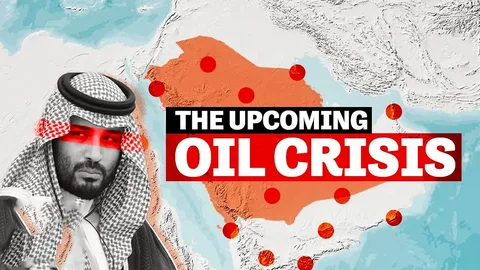

Asia depends on Middle Eastern oil for 60 percent of its crude imports — making it highly vulnerable to the Iran war’s threat of a prolonged Strait of Hormuz closure. Middle Eastern oil production powers the world’s fastest-growing energy region, while Middle East oil history explains how this dependency was built over more than a century. With war raging and tankers already rerouting or halting, the world is asking how Asia became so reliant on this single volatile region — and whether it can ever break free.
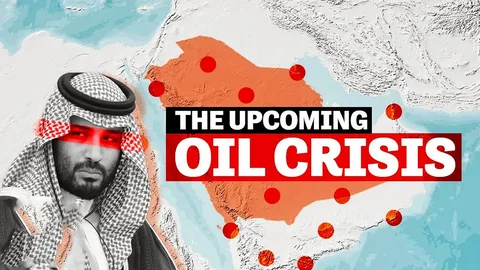
Background: Middle East Oil History That Changed the World
The Middle East oil history story begins in 1908 — and it changed everything.
In March 1908, after years of difficult conditions and failure, geologist George Bernard Reynolds discovered Middle Eastern oil in Persia — modern-day Iran. A year later, UK firm Burmah Oil created a subsidiary called the Anglo-Persian Oil Company, selling shares to the public. Volume production eventually started in 1913 from a refinery built at Abadan — for its first 50 years, the largest oil refinery in the world.
The Middle East oil history continued with the discovery of oil reserves in Iraq in 1927, leading to the construction of the first oil pipeline to the Mediterranean. In the 1930s, American oil companies began operations in the region, mainly in Saudi Arabia, where they were given a monopoly.
In 1944, petroleum geologist Everette DeGolyer reported to the US government that Middle Eastern oil nations were sitting atop at least 25 billion barrels of crude. His team told the State Department that the oil in this region was the greatest single prize in all history.
A defining moment in Middle East oil history came in 1960 when Saudi Arabia, Iraq, and Kuwait created the Organization of Petroleum Exporting Countries — OPEC — determined to confront bigger foreign oil companies dominating the market. The power of Middle Eastern oil on the global stage was now official.
Middle East oil history reached another turning point in 1973 when six Arab countries stopped supplying crude to the US and the Netherlands in response to American support for Israel in the fourth Arab-Israeli War. The spike in Middle Eastern oil prices taught the world exactly what the region could do if it chose to weaponise its reserves.
Details: Middle Eastern Oil Today
Middle Eastern Oil Production — The Numbers
Middle Eastern oil production remains the backbone of global energy supply. Five Middle Eastern countries rank among the top ten oil producers in the world — Saudi Arabia, Iraq, Iran, UAE, and Kuwait — collectively producing 27 percent of the world’s oil.
Middle Eastern oil production by country:
- Saudi Arabia: 10.81 million barrels per day — 12 percent of global supply
- Iraq: 4.16 million bpd
- UAE: 3.78 million bpd
- Iran: 3.01 million bpd
- Kuwait: 2.75 million bpd
The Middle East holds 48 percent of the world’s crude oil reserves, thanks to favourable geological conditions including thick source rocks, reservoir rocks, and large structural traps that have preserved hydrocarbons for millions of years.
Saudi Arabia accounts for the largest share of Middle Eastern oil production transiting the Strait of Hormuz at 37.2 percent of the total. Iraq follows with 22.8 percent, while the UAE contributes 12.9 percent.
Why Does Asia Buy So Much Middle Eastern Oil?
There are four core reasons Asia cannot simply switch away from Middle Eastern oil:
1. Volume and Middle Eastern Oil Price
Asia is the world’s fastest-growing region in terms of oil demand and a net importer, as production in the Asia-Pacific dwindles due to ageing fields and scant new discoveries. Most Asian refineries are equipped to process high-sulphur Middle Eastern oil, which carries a lower Middle Eastern oil price than low-sulphur grades — generating higher margins.
2. Refinery Infrastructure Built Around Middle Eastern Oil
Middle Eastern oil contains large amounts of fuel oil, which can be processed into gasoline and diesel. Asian refineries were literally built around Middle Eastern oil — switching grades requires billions in infrastructure investment, not just a policy decision.
3. Saudi Aramco’s Strategic Grip on Middle Eastern Oil Production
Saudi Arabia’s Asia market share has grown as Saudi Aramco acquired stakes in regional refineries to secure outlets for its Middle Eastern oil production. While Asian refiners have diversified, there is a limit to how much volume they can handle as changing grades affects refined-product yields.
4. Geography and Speed
Middle Eastern oil shipments typically take 30 to 40 days to reach North Asia, with voyages to India taking less than a week. No other major producing region can match this combination of proximity, volume, and Middle Eastern oil price for Asian buyers.
Who in Asia Is Most Dependent on Middle Eastern Oil?
Japan and South Korea are most reliant on Middle Eastern oil, which accounts for about 95 percent and 70 percent of their imports respectively. Singapore increased its dependence on Middle Eastern oil to more than 70 percent from about 50 percent in 2024 after Exxon Mobil completed a refinery expansion requiring more heavy Middle Eastern oil supply.
China, the world’s biggest crude importer, sources about half of its seaborne imports — or 5.4 million bpd — from Middle Eastern oil fields.
Asian countries collectively receive 89.2 percent of the crude oil and condensate that transit the Strait of Hormuz. China alone accounts for 37.7 percent of total Middle Eastern oil flows — more than any other country by a wide margin. India is the second-largest destination at 14.7 percent, followed by South Korea at 12.0 percent and Japan at 10.9 percent.
Middle Eastern Oil Price — What the Iran War Is Doing Right Now
Around 19 million barrels of Middle Eastern oil — 20 percent of the global oil trade — passes through the Strait of Hormuz each day. Traffic along this maritime bottleneck has already ground to a halt, sending the Middle Eastern oil price sharply higher and threatening a global economic crisis.
Brent crude futures surged 18.7 percent in just four sessions as Middle Eastern oil price fears took hold. Asian stock markets felt the pain immediately — South Korea saw a record market crash driven by fears that the Middle Eastern oil price surge could trigger inflation and delay rate cuts.
Asian governments moved quickly to manage fuel stockpiles in response to Middle Eastern oil price volatility. Thailand suspended its crude and petroleum exports. China ordered its largest refineries to halt diesel and petrol exports. Asian energy firms curbed exports as fuel stockpiles came under pressure.
Quotes on Middle Eastern Oil Dependency
Sung Jinseok, a researcher at the National University of Singapore’s Energy Studies Institute, told Fortune that Asian countries are particularly reliant on oil and gas from the Gulf region, adding that the region is the world’s fastest-growing importer of Middle Eastern oil while production remains low due to depleting fields and limited new discoveries.
Analysts at the Atlantic Council warned that Indo-Pacific capitals should draw important lessons from the present Middle Eastern oil crisis — not least the importance of strengthening energy security ahead of a potential Taiwan crisis.
Impact: How the Middle Eastern Oil Crisis Could Reshape Global Energy
East Asian economies would be particularly impacted by a closed Strait of Hormuz. In 2025, around 78 percent of all Middle Eastern oil exports to China, Japan, South Korea, and Taiwan flowed through this single chokepoint.
China, the world’s largest Middle Eastern oil importer, would suffer significant economic costs from a long-term outage — but would fare better than Japan, South Korea, and Taiwan. Beijing’s vulnerability to Middle Eastern oil price shocks will reduce in coming years as vehicle electrification and improving fuel economy have already ended Chinese transport fuel demand growth.
India imports 80 percent of its crude oil needs from Middle Eastern oil fields, meaning a sustained increase in Middle Eastern oil price could significantly hurt its economic growth — widening current account deficits, fiscal deficits, and inflation while putting downward pressure on the Indian rupee.
Conclusion
Asia’s dependency on Middle Eastern oil is not an accident — it is the product of over a century of Middle East oil history, infrastructure investment, geopolitical alignment, and economic logic. With 48 percent of the world’s crude reserves and the most competitive Middle Eastern oil price for Asian buyers, the region will remain at the centre of global energy for as long as hydrocarbons remain essential. The Iran war has exposed just how fragile this Middle Eastern oil dependency truly is — and how urgently Asia needs to accelerate its shift toward energy diversification, renewables, and strategic reserves before the next crisis strikes.