
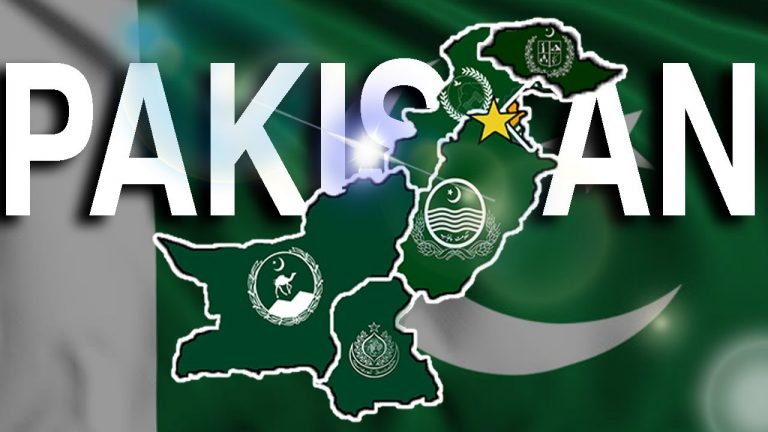
The question of how many provinces Pakistan should have is back in political conversation and this time it is not just academic. Debates around administrative reform, regional development, and centre province relations in Pakistan have picked up in 2025, driven by a mix of governance frustrations, population pressure, and long-standing regional demands.
Citizens searching for all provinces of Pakistan, Pakistan provinces area percentage, and provinces name of Pakistan in Urdu have also been increasing which tells you this is not a conversation confined to parliament. People want to understand the structure of the country they live in.
Background
Pakistan has four constitutional provinces. That has been the formal answer for decades. But the practical conversation has never been that simple.
Population growth, governance gaps, and regional political demands have kept the question of additional provinces alive for years. The debate about 6 provinces of Pakistan or even more has moved in and out of mainstream politics depending on which parties hold power and which regions feel underserved.
The 18th Amendment changed the landscape significantly by shifting real authority from the federal government to the provinces. That created a new set of dynamics: provinces with more power, but also more responsibility, and a federal centre that sometimes struggles to coordinate national planning across competing provincial interests.
Centre province relations in Pakistan have never been simple. Water, money, energy, and political representation are all fought over through this relationship. Constitutional experts and researchers have produced extensive centre province relations in Pakistan PDF documentation and the debates those papers describe are far from resolved.
What Are the 5 Provinces of Pakistan?
When people search for the 5 provinces of Pakistan, they are usually including Gilgit-Baltistan alongside the four constitutionally established provinces. Gilgit-Baltistan is not a full constitutional province its status is legally distinct but its administrative weight and strategic importance have made it a fixture in this conversation.
The five most commonly discussed administrative units are:
- Punjab
- Sindh
- Khyber Pakhtunkhwa
- Balochistan
- Gilgit-Baltistan
South Punjab is the name that keeps appearing when the 6 provinces of Pakistan discussion comes up. Several political parties have pushed for its separation from Punjab proper, arguing that southern Punjab’s development needs are distinct enough to justify a separate administrative structure. That proposal has stalled repeatedly on constitutional and political grounds, but it has not gone away.
Provinces Name of Pakistan in Urdu
For students, researchers, and anyone working with official documents, the Pakistan provinces name in Urdu are:
- پنجاب (Punjab)
- سندھ (Sindh)
- خیبر پختونخوا (Khyber Pakhtunkhwa)
- بلوچستان (Balochistan)
- گلگت بلتستان (Gilgit-Baltistan)
These five regions differ dramatically in population, land area, geography, cultural identity, and economic base. Treating them as equivalent administrative units has always created tension because they are not equivalent.
Pakistan Provinces Area Percentage
Balochistan is the geographic giant. It covers nearly half the country’s land but holds a fraction of its population. Punjab is the opposite comparatively smaller in area but home to the largest population. That imbalance shapes almost every resource and representation debate in Pakistan.
Approximate Pakistan provinces area percentage breakdown:
- Balochistan — around 44%
- Punjab — around 26%
- Sindh — around 18%
- Khyber Pakhtunkhwa — around 13%
Gilgit-Baltistan sits outside these four but covers a significant mountainous territory in the north. Its importance is not just geographic the China-Pakistan Economic Corridor runs through it, and its tourism potential is substantial.
Understanding Pakistan provinces area percentage matters because development budgets, infrastructure projects, and federal resource allocation are all tied to this geography. A province that is 44 percent of the country’s land but struggles to access basic services is not just a governance problem it is a structural one.
Debate Over How Many Provinces of Pakistan Should Exist
The how many provinces of Pakistan question does not have a politically agreed answer right now, which is itself revealing.
Those in favor of new provinces argue that smaller administrative units mean better local governance, faster public service delivery, and fairer political representation for regions that have historically been left behind. South Punjab is the most-cited example, but urban Sindh particularly Karachi’s complicated relationship with the rest of the province also comes up regularly.
Those against point to the constitutional threshold for creating a new province, which requires a significant parliamentary majority. They also raise the risk of ethnic and political fragmentation if the process is handled poorly. Creating a province on paper is one thing. Building functional institutions in a new administrative unit takes years and resources that are already stretched.
The debate will likely intensify before the next election cycle. It is the kind of issue where parties find regional support by taking clear positions, which means the pressure to act in one direction or another is not going away.
Centre Province Relations in Pakistan
This is where the real political weight sits. Centre province relations in Pakistan affect everything from how much money provinces get to whether a dam gets built, who controls water rights, and what happens to energy revenues.
The NFC Award the formula for distributing federal taxes among provinces — is renegotiated periodically and is almost always contentious. Each province argues it is getting less than it deserves. The federal government argues coordination is breaking down. Both sides are usually somewhat right.
The 18th Amendment handed provinces substantial new authority. Supporters of provincial autonomy call it a turning point for Pakistani federalism. Critics — mostly in federal institutions say it created coordination gaps that have made national economic planning harder. The truth is probably both things at once.
Centre province relations in Pakistan PDF reports from universities and policy institutes are worth reading if you want the detail. The short version: the constitutional framework is clearer than it used to be, but the political relationships are not.
Administrative Challenges Facing Provinces
The governance problems inside Pakistan’s provinces are not primarily about how many there are. They are about capacity healthcare systems that cannot keep up with population growth, education gaps that widen in rural areas, urban infrastructure being asked to absorb migration it was not built for.
Balochistan has the most difficult geography and the least developed service infrastructure. Khyber Pakhtunkhwa has dealt with decades of security-related disruption. Sindh’s urban-rural divide is sharp enough to produce completely different political conversations within the same province. Punjab’s size makes central administration unwieldy across such varied territory.
Digital governance reforms and improved local government systems are frequently cited as the path forward. The harder question is whether the political will exists to implement them consistently.
Political Reactions
Provincial restructuring is politically charged in ways that make it difficult to move. Nationalist parties in Sindh and Balochistan have historically opposed further division, viewing it as a threat to provincial identity and resource control. Parties representing southern Punjab see a new province as the only path to fair representation. Federal parties shift positions depending on which coalition they need to maintain.
Public consultation is the piece that rarely happens before positions harden. Constitutional experts and lawmakers across the spectrum agree it should happen. Whether it does before any major decision is made is a different question.
Impact on Pakistan’s Future
The 5 provinces of Pakistan debate is not just administrative detail. It connects to how development funds get distributed, how political representation works, and how different communities see their relationship with the Pakistani state.
Stronger centre province relations in Pakistan built on clearer constitutional roles and better coordination mechanisms would help regardless of whether the number of provinces changes. Infrastructure investment and regional economic planning need a federal structure that functions reliably. Right now, that reliability is inconsistent.
International investors and development partners watch Pakistan’s governance structures because administrative stability affects project viability. That is a practical reason, beyond the constitutional one, to get this right.
Conclusion
The debate over the 5 provinces of Pakistan, possible new provinces, and the future of centre province relations in Pakistan will stay in national conversation for the foreseeable future. The constitutional questions are real. The governance frustrations behind them are real.
Whether Pakistan adds a province, restructures existing ones, or maintains the current framework will depend on political consensus that does not currently exist. What does exist is sustained public interest and regional pressure that politicians will eventually have to address with something more substantive than a campaign promise.
FAQs
What is the national drink of Pakistan?
Sugarcane juice is widely considered Pakistan’s national drink. It is sold everywhere road-side carts, bazaars, wedding halls and during summer it is genuinely difficult to walk through a busy market without seeing it pressed fresh. It is cheap, widely available, and has been part of everyday Pakistani life for generations.
What are the five provinces of Pakistan?
The four constitutional provinces are Punjab, Sindh, Khyber Pakhtunkhwa, and Balochistan. Gilgit-Baltistan is frequently added as the fifth because of its administrative status and growing importance, even though its constitutional designation is technically different from the other four. Most public discussions about the 5 provinces of Pakistan include all five.
What are the six provinces of Pakistan?
Pakistan formally has four constitutional provinces. When people refer to six, they are usually including Gilgit-Baltistan and the proposed South Punjab province. South Punjab has been discussed seriously in policy and political circles for years, but it has not been created. Any new province requires a constitutional amendment and political consensus both of which remain out of reach for now.