Safe City Cameras in Islamabad Now Covered Under New Legal Protection
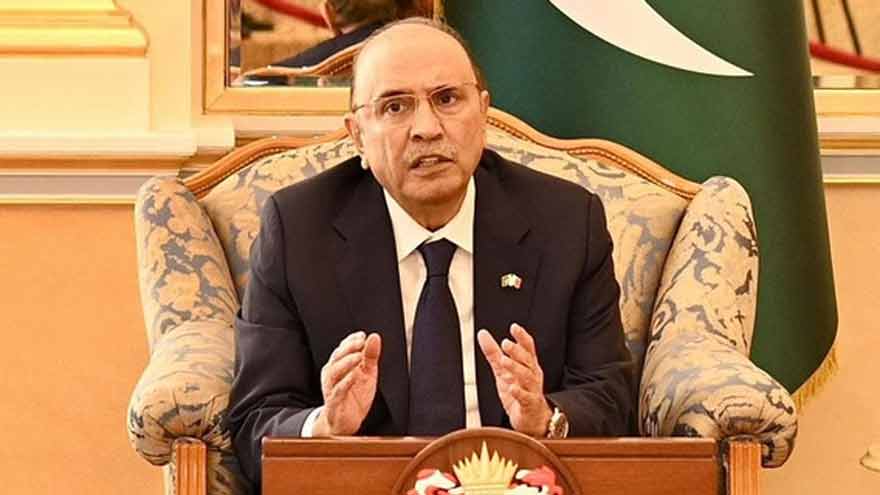
President Asif Ali Zardari has given his approval to a new law aimed at safeguarding the Islamabad Safe City infrastructure from vandalism and physical damage. The move came on the formal advice of Prime Minister Shehbaz Sharif and was confirmed through an official statement from the President’s House on Saturday.
The newly signed law has been named the Islamabad Capital Territory Safe City Camera and Surveillance Infrastructure Protection and Damage Compensation Ordinance. Its core purpose is to shield the city’s surveillance network while creating a clear mechanism for financial recovery whenever equipment is damaged.
Officials say the timing of the ordinance is closely tied to ongoing law and order concerns in the federal capital, along with the continued rollout of an expanded camera network across Islamabad.
Background of the Islamabad Safe City Project
The Islamabad Safe City project has been developed over several years as a citywide surveillance and policing initiative, combining CCTV monitoring, a command and control centre, and rapid-response coordination with Islamabad Police. It also supports specialised units such as the Online Women Police Station and the emergency helpline service.
In recent months, authorities have pushed to accelerate the second phase of the project. Officials have reported that most of the network expansion is now complete, with hundreds of kilometres of optical fibre laid for the upgraded system, while work on the data centre and cybersecurity architecture is also well advanced. This expansion forms the backdrop against which the new protection ordinance has been introduced.
What the Ordinance Says
Under the terms of the ordinance, anyone found responsible for damaging Safe City cameras or associated surveillance infrastructure can face a substantial financial penalty. The rules also extend to individuals who instigate or encourage such damage, not only those who cause it directly.
A fine of up to Rs2 million may be imposed for each camera or piece of infrastructure that is damaged. This is one of the most notable elements of the law, as it sets a clear upper limit while leaving room for case-by-case assessment.
The ordinance further states that if damage takes place during a public gathering such as a rally, sit-in, procession, strike or protest, the organisers of that event may also be held accountable alongside anyone directly involved in the damage.
How Fines Will Be Determined and Appealed
An authorised officer will be responsible for calculating both the fine and the cost of the damage. Before any final decision, the concerned individual must be given a proper opportunity to present their case, ensuring the process is not applied arbitrarily.
Anyone who disagrees with the amount decided can file an appeal. The ordinance permits an appeal to be lodged before the District and Sessions Judge in Islamabad, and this must be done within 30 days of the original determination.
If a fine or compensation amount is not paid within the required time, it will be recovered in the same manner as arrears of land revenue. Funds collected through this process are meant to be reinvested directly into repairing and replacing damaged Safe City equipment.
Reaction and Regional Context
Officials at the President’s House framed the ordinance mainly as a protective and administrative measure rather than a political one. The statement emphasised that the objective is to secure public safety infrastructure that benefits residents across the capital.
The timing has also drawn attention because it follows a period of political tension in Islamabad, including a planned protest by the Pakistan Tehreek-e-Insaf party that was pushed back to October 4. Analysts note that safeguarding surveillance infrastructure has become a growing priority as public demonstrations and gatherings become more frequent in the capital.
Impact on Islamabad’s Safe City Infrastructure
The ordinance is expected to act as a deterrent against vandalism targeting Safe City cameras, which play a central role in crime prevention, traffic monitoring and emergency response across the capital. Authorities argue that undamaged, fully functional cameras are essential for maintaining the effectiveness of the wider surveillance system.
For residents, the practical impact may be felt through improved continuity of surveillance coverage, particularly in busy public areas and along major routes where gatherings or protests sometimes occur.
Conclusion and What Comes Next
The Islamabad Capital Territory Safe City Camera and Surveillance Infrastructure Protection and Damage Compensation Ordinance is now in effect following presidential approval. Its implementation will likely be closely watched by both citizens and civil society groups concerned with balancing security enforcement and individual rights.
With Safe City Phase-II expansion continuing and further technological upgrades planned, the ordinance is expected to remain a key part of how Islamabad protects its public safety infrastructure going forward. Authorities have not indicated any planned amendments, though the law’s real-world application in the coming months will determine whether further legal refinement becomes necessary.
Frequently Asked Questions
Which area in Islamabad is considered the safest?
The Diplomatic Enclave and its surrounding sectors are widely regarded as among the safest parts of Islamabad due to heightened security protocols, restricted access points and continuous monitoring through the Safe City camera network. These areas fall under close watch by both Islamabad Police and dedicated security units assigned to diplomatic missions, which adds an extra layer of protection compared to other parts of the city.
Who is the current DG Safe City in Islamabad?
As of 2026, Muhammad Haroon Joya has been serving as DG Safe City, who also holds the additional charge of DIG Traffic for Islamabad. In this role, he has overseen briefings for police officers on Safe City’s surveillance mechanisms, coordinated with contractors on the ongoing expansion project, and worked closely with other senior officials on citywide security and traffic management strategies.
What is the Red Zone in Islamabad?
The Red Zone is a high-security district in the federal capital that houses key government buildings, including the Presidency, Parliament House, the Supreme Court and several foreign embassies. Due to its sensitive nature, the area is subject to strict security measures, limited public access during certain periods, and dense Safe City camera coverage to prevent unauthorised entry or security breaches.