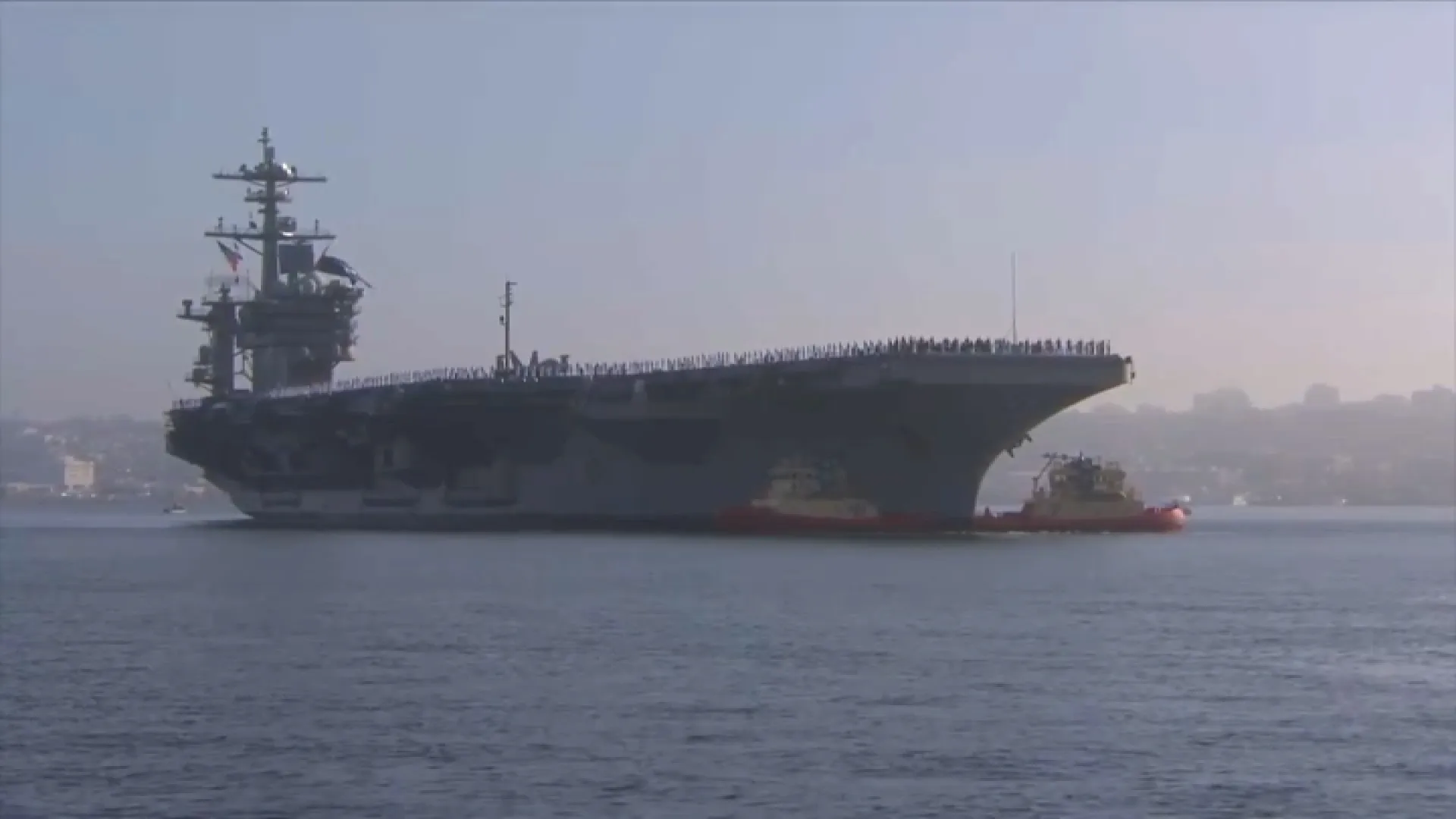
Multiple reports have confirmed that USS Abraham Lincoln sailors jumping overboard has become a growing concern for families and Navy officials as the aircraft carrier remains stuck on an extended deployment in the Middle East. The carrier, home to roughly 5,000 sailors and Marines, has now been at sea for more than eight months, well past its original return date, and relatives say the strain is pushing some crew members to the breaking point.
Background
The USS Abraham Lincoln departed the United States on November 21 and was originally scheduled to return home in May. Instead of heading back, the carrier was redirected from the Pacific toward the Middle East as tensions between the United States and Iran escalated sharply earlier this year. What began as a routine deployment has since stretched into one of the longest continuous carrier deployments in recent memory, with no publicly announced return date. Complaints about onboard conditions first surfaced in April, when family members raised concerns about food quality, exhaustion, and limited communication with loved ones. At the time, the Navy denied any serious problems, and Defense Secretary Pete Hegseth publicly dismissed the reports as unfounded. In the months since, however, the situation appears to have worsened rather than improved.
Details
Family members of Lincoln crew members say the ship has now experienced multiple incidents involving USS Abraham Lincoln sailors jumping overboard or attempting to do so. Military Times, citing relatives who spoke during virtual briefings with Navy officials, reported that several sailors have tried to go over the side of the carrier in recent weeks. In at least one case, a sailor on watch physically stopped a shipmate before they could jump, pulling them back onto the deck. One wife told reporters her husband was placed on medical hold after attempting to jump from the ship, describing him as burnt out after more than a decade of service. She said he now fears the incident could end his career with a dishonorable discharge rather than the support he needs. Crew members have reportedly endured stretches of nearly continuous combat operations, with families saying communication windows have shrunk to almost nothing during the busiest periods. Loved ones say emails and calls home have become shorter and more infrequent, making it harder to gauge how sailors are actually coping.
The Navy has acknowledged the incidents but has not released an exact number of sailors who have attempted self-harm or tried to go overboard during the deployment. Officials say leadership aboard the Lincoln continues to monitor psychological readiness across the crew and that counselors, chaplains, and medical staff remain available around the clock.
Quotes
A Navy spokesperson said the command has not identified a measurable rise in reported suicidal ideation or suicide attempts aboard the ship, despite the concerns raised by families. The spokesperson added that the wellbeing of every sailor on the Lincoln remains a top priority for commanders overseeing the deployment. Shelby Sanders, whose mother serves aboard the carrier, said connecting with her over the past several months has become increasingly difficult, and that when messages do arrive, she can tell her mother is struggling emotionally.
Impact
The situation aboard the USS Abraham Lincoln has broader implications for the US Navy’s ability to sustain long-term deployments in high-tension regions like the Middle East. As American forces continue supporting operations tied to the standoff with Iran, extended carrier deployments are likely to remain a feature of US military posture in the region for the foreseeable future.
For military families, the fallout is deeply personal. Spouses and parents describe growing anxiety over their loved ones’ mental health, compounded by a lack of clear communication from Navy leadership about when the deployment might actually end. Advocacy groups have pointed to the Lincoln’s situation as an example of the toll that repeated deployment extensions can take on service members already stretched thin.
The incidents also raise wider questions about crew welfare policies across the fleet, particularly as the Navy leans more heavily on existing carrier strike groups to project power in multiple regions simultaneously. Critics argue that without meaningful relief timelines, similar welfare crises could emerge on other deployed ships.
Conclusion
Navy officials have indicated that the USS Theodore Roosevelt carrier strike group is expected to eventually relieve the Lincoln, though no firm timeline has been made public. Once the deployment does conclude, the carrier is set to be assigned a new homeport in Bremerton, Washington, with families reportedly given a 58-day window to relocate. Until relief arrives, families of Lincoln sailors say they will continue pressing Navy leadership for more transparency and stronger mental health support at sea. With tensions in the Middle East showing no clear signs of easing, how the Navy manages crew welfare aboard the Lincoln could shape policy for future long-duration deployments across the fleet.USS Theodore Roosevelt carrier strike
FAQs
Why is the USS Abraham Lincoln deployed?
The USS Abraham Lincoln was deployed as part of routine US naval operations but was redirected from the Pacific to the Middle East as tensions between the United States and Iran escalated. The carrier and its strike group have since been supporting American military operations in the region, acting as a key part of Washington’s deterrence and combat posture against Iranian forces during an active period of conflict.
How long has the USS Abraham Lincoln been at sea?
The carrier departed the United States on November 21 and was originally expected to return by May. It has since remained deployed for more than eight months, making it one of the longest continuous carrier deployments in recent years, with no official return date announced by the Navy as of the latest updates from families and officials.
How many sailors are on the USS Lincoln?
The USS Abraham Lincoln carries a crew of approximately 5,000 sailors and Marines when fully staffed for deployment, including the ship’s company and an embarked carrier air wing. This figure includes everyone required to operate the carrier, maintain its aircraft, and support round-the-clock flight and combat operations while at sea for extended periods.