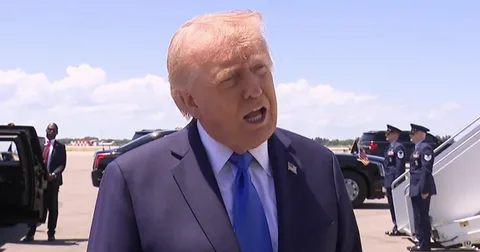
The latest round of US-Iran peace talks collapsed dramatically on April 25, 2026, after President Trump cancelled a planned trip by his envoys Steve Witkoff and Jared Kushner to Islamabad, Pakistan. Hopes of an Iran war ceasefire appeared muted after President Donald Trump scrapped the planned US envoy mission. The US-Iran war news continues to dominate global headlines, with the Strait of Hormuz standoff keeping oil markets on edge and the world watching anxiously.
Background: How the US-Iran War Began
The roots of this crisis stretch back to months of failed diplomacy and maximum pressure. Tensions between Iran and the US over Iran’s nuclear program began to intensify in January 2026 amid Iranian security forces’ crackdown on massive anti-government protests. The US and Iran began indirect negotiations in February in Oman, but produced no agreement.
Operation Epic Fury, which began on February 28, 2026, is the US code name for its joint military operations with Israel against Iran. The opening salvo took out the heart of the Iranian regime, Supreme Leader Ali Khamenei, and triggered a torrent of hundreds of retaliatory missiles and thousands of drones from Iran across the Middle East.The Iran attack on Israel that followed was swift and devastating, reshaping the entire region overnight.
Steve Witkoff and Jared Kushner had been at the center of pre-war diplomacy. The first round of high-level meetings was held in Oman on April 12, 2025, led by US Special Envoy Steve Witkoff and Iranian Foreign Minister Abbas Araghchi. Yet those talks ultimately failed, and war followed.
Details: Pakistan Talks Fall Apart The Latest US-Iran War News
Pakistan had emerged as the unlikely but crucial mediator between Washington and Tehran. A fragile ceasefire was brokered on April 8, 2026. A two-week ceasefire between the United States and Iran halted 40 days of US-Israeli attacks on Iran that had pushed the region to the brink of a wider war. The truce, brokered by Pakistan, followed fierce exchanges of air strikes, missile attacks and threats that saw unprecedented strikes on Gulf nations and disrupted global shipping routes.
However, the US Iran ceasefire end date has remained a moving target. President Trump extended the two-week ceasefire at the request of mediating country Pakistan, giving Tehran time to present a “unified proposal.”Despite that, tensions have refused to ease.
The biggest flashpoint has been the Strait of Hormuz latest news. A standoff remains at the Strait of Hormuz, a vital global waterway, as Iran restricts movement through it and the US enforces a blockade of Iranian ports. Iran wants to persuade Oman to support a mechanism to collect tolls from vessels passing through the strait, through which a fifth of the world’s oil flows in peacetime.
Iran’s position has been firm. Iran delivered its response to the United States via Pakistan, rejecting a temporary ceasefire and listing their own 10-point proposal, which includes a solution to all regional conflicts, lifting of sanctions, reconstruction, and a protocol to re-open the Strait of Hormuz.
Now, the latest twist: Witkoff and Kushner‘s planned trip to Pakistan has been cancelled. Iran had played down expectations of direct talks with the United States over ending the war, even as the White House had initially said Steve Witkoff and Jared Kushner would leave for Islamabad on Saturday.Trump reversed course, throwing the peace process into fresh uncertainty.
Who Are Steve Witkoff and Jared Kushner?
Steve Witkoff is President Trump’s White House Special Envoy and has served as the lead American negotiator in the US-Iran nuclear and war talks. A real estate developer and longtime Trump ally, Witkoff has been at the center of some of the most sensitive diplomatic missions of Trump’s second term. US Special Envoy Steve Witkoff led the American side of the negotiations with Iran, while Iran’s side was led by Foreign Minister Abbas Araghchi.Jared Kushner is Trump’s son-in-law and a former senior White House adviser during his first term, famous for his Middle East work including the Abraham Accords. In the current conflict, Jared Kushner was added to the talks in the second round in Rome, alongside Brad Cooper and Iranian officials. However, Witkoff and Kushner have drawn criticism too. A Gulf diplomat alleged that US intermediaries Steve Witkoff and Jared Kushner were acting in Israeli interests to pressure the United States into a military confrontation.
Iran’s Attack on Israel: What Has Happened
The Iran attack on Israel today and throughout this conflict has been extensive. Iran launched hundreds of drones and ballistic missiles at Israel and at US military bases in neighbouring Arab countries including Bahrain, Jordan, Kuwait, Qatar, Saudi Arabia, and the United Arab Emirates.
By the tenth day of the war, Iranian missile and drone attacks had dropped by more than 90%, a reduction credited to effective suppression efforts by US and Israeli missions over Iran.However, sporadic strikes continue to keep Israel and the region on high alert. The Iran attack on Israel has killed civilians on both sides, with the human cost rising steadily.
Strait of Hormuz Latest News: The Global Economic Chokepoint
The Strait of Hormuz latest news remains deeply alarming for the global economy. Oil prices rose as traders absorbed the news of stalled ceasefire talks. West Texas Intermediate was selling for $96.50 a barrel, up 2% since Friday a price 44% higher than before the start of the Iran war. Brent crude was trading at $107.75 per barrel, up about 3% since Friday and 48% since the war began.
The situation is described as a “dual blockade”, with the US Navy blockading Iran and Iran blockading the Gulf. Around 230 loaded oil tankers are waiting inside the Gulf.The world’s biggest shipping companies have rerouted entirely, sending costs soaring globally.
Kurt Volker Weighs In: NATO’s Role in the US-Iran War
Former US Ambassador to NATO Kurt Volker has been an important voice in analyzing the alliance’s role in the US-Iran war news. Kurt Volker, who served in the administration of George W. Bush and the first Trump administration, explained the conditions under which NATO could be drawn into the conflict, saying the key question is whether Iranian drone strikes on NATO members like Turkey or Cyprus would be viewed as attacks requiring a collective response.
Kurt Volker also warned European nations against publicly criticizing President Trump’s military operations against Iran, saying: “You might think that this is a huge folly and going to have terrible consequences, but you don’t have to say it. By saying it, you alienate Donald Trump.”His comments underline the complex diplomatic pressures that major powers are navigating in the middle of the US-Iran war news cycle.
Quotes: What Officials Are Saying
Iranian Ambassador to Pakistan, Reza Amiri-Moghaddam, said that the talks have reached a “critical, sensitive stage.”
Iranian Foreign Minister Abbas Araghchi said that “blockading Iranian ports is an act of war” and that the US blockade and seizure of an Iranian ship were ceasefire violations.
Trump posted on Truth Social: “Iran is collapsing financially! They want the Strait of Hormuz opened immediately Starving for cash! Losing 500 Million Dollars a day.”
Kurt Volker told NPR that for a NATO response to be triggered, there would need to be “a general perception that Iran is somehow trying to attack Turkey or Cyprus with the intent of taking that over” something no NATO ally currently perceives.
Impact: Global Consequences of the US-Iran War
The US-Iran war news is not just a Middle Eastern story it is a global economic crisis. The 2026 Iran war disrupted global travel and trade, halted flights in and out of the Middle East, and led to shipping reroutes to avoid the Strait of Hormuz and the Red Sea.
On April 13, the US launched a counter-blockade of the Strait, targeting all ships seeking to reach Iranian ports. The reopening of the strait is a major issue in the Pakistani-mediated talks. Iran has threatened military action if the US blockade does not end.
Military planners are taking note as well. Military planners from more than 30 countries met at a Royal Air Force base in the UK to put together a multinational mission to safeguard the Strait of Hormuz amid global concerns over oil and energy prices.
Conclusion: What Comes Next in US-Iran Negotiations
The road to peace remains deeply uncertain. Iran’s Foreign Minister Abbas Araghchi returned to Islamabad before continuing on to Moscow, where he will meet with Russian leaders.He also spoke by phone with counterparts in Qatar and Saudi Arabia, reflecting Tehran’s effort to build a broader diplomatic coalition.
Pakistani officials are trying to bridge significant gaps between the two countries, with Iran insisting on ending the US blockade before any new round of talks.The US Iran ceasefire end date remains undefined, with Trump choosing to extend the truce indefinitely but without lifting the naval blockade a contradiction that Iran says makes peace impossible.
Steve Witkoff, Jared Kushner, and the entire US diplomatic machinery now face a critical test. The Strait of Hormuz latest news will continue to drive oil prices, global trade, and geopolitical calculations. Whether Witkoff and Kushner return to Islamabad, or talks shift to a new format, the world is watching every development in the US-Iran war news with growing anxiety.
FAQs
Has Trump ever visited Pakistan?
Yes. During the current diplomatic crisis, Vice President JD Vance visited Islamabad, Pakistan, with Steve Witkoff and Jared Kushner accompanying him for Iran ceasefire talks. President Trump himself has not personally visited Pakistan, but it has become the central venue for US-Iran mediation in 2026.
Who are Steve Witkoff and Jared Kushner?
Steve Witkoff is the White House Special Envoy leading the American side of negotiations with Iran. Jared Kushner is Trump’s son-in-law who was added to the Iran talks in later rounds alongside other senior officials.Both have played central roles in US diplomacy throughout the US-Iran war news cycle, though their approach has attracted both praise and controversy.
Who is Iran at war with?
On February 28, 2026, the United States and Israel launched airstrikes on Iran targeting military and government sites. In retaliation, Iran launched hundreds of drones and ballistic missiles at Israel and at US military bases in neighbouring Arab countries including Bahrain, Jordan, Kuwait, Qatar, Saudi Arabia, and the United Arab Emirates.Iran is therefore effectively in conflict with the United States, Israel, and their regional allies, while the Strait of Hormuz standoff continues to affect the entire world.