

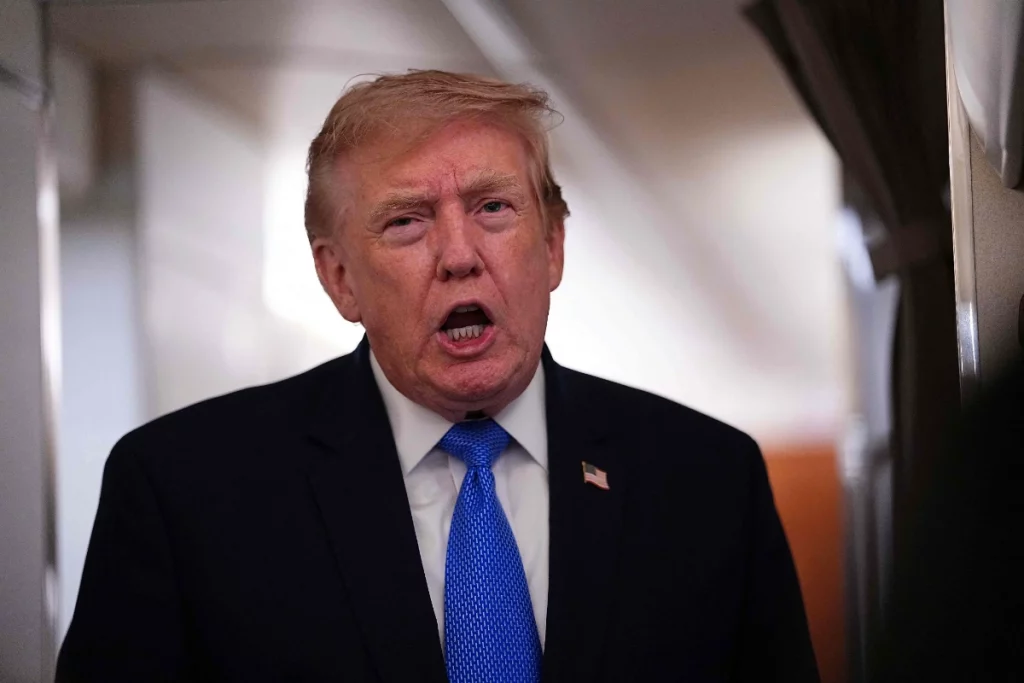

Breaking news on the Iran war took a sudden turn this weekend after President Donald Trump announced he had called off what would have been the biggest US attack on Iran since World War II, opting instead to pursue a new round of negotiations set to begin Monday afternoon.
Background
The United States and Iran have been at war since late February, when Trump announced “major combat operations” with joint US-Israeli strikes hitting military, government, and infrastructure sites across the country. Despite a framework deal reached in mid-June meant to end the fighting, both sides have continued exchanging major attacks in the months since.
Trump and Iran war news has remained dominated by the Strait of Hormuz, the narrow waterway that once carried roughly a fifth of the world’s oil supply before traffic dropped sharply amid the conflict. That framework deal called for a 60-day transition period to iron out remaining details, but doubts about its durability surfaced almost immediately.
Fighting escalated again last month, and fears mounted that the US and Iran negotiations track had collapsed entirely. Trump had threatened to strike Iran “very hard,” reportedly weighing renewed attacks on energy infrastructure, with US embassies across the region placed on alert as tensions built toward what officials described as a looming large-scale operation.
Details
Trump revealed Saturday night that he was calling off the planned strike, saying the “perimeters” of a deal were already in place. Speaking to reporters aboard Air Force One on Sunday, he confirmed that new US and Iran negotiations today would begin Monday afternoon, though he offered no details on the venue or which officials would take part.
According to Trump, he pulled back from the operation after being asked to by Iran itself, along with US partners Saudi Arabia, the United Arab Emirates, and Qatar. He described the canceled strike as one that “would have been the biggest attack since World War II” and said it would have been “disastrous” for Iran had it gone ahead. Iranian state media, however, denied that Tehran had specifically asked Trump to hold off.
A regional official involved in mediation efforts said the new proposal calls for both sides to return to the table and work through issues that have repeatedly stalled progress, including reopening the Strait of Hormuz and halting attacks by Iranian-backed militias on Gulf countries and Jordan. In exchange, the official said, the US would lift its naval blockade on Iran and allow Tehran to resume oil exports under the terms of a tentative ceasefire arrangement.
The backdrop to this weekend’s developments included fresh violence just days earlier. Kuwait reported that Iranian forces launched a wave of drones into its airspace on Saturday, with the Kuwaiti military destroying multiple aircraft after Iran targeted critical infrastructure inside the country. Trump also referenced an earlier incident in which Iran fired five missiles at a US base in Jordan in the middle of an active round of negotiations, an episode he cited as evidence of Tehran’s unreliability.
Markets responded quickly to the announcement. Oil prices fell as Asian trading opened Monday, with West Texas Intermediate crude dropping 4.7 percent to $80.72 a barrel after Trump’s announcement of the pause. Separately, Iran said it was nearing an agreement with Oman on an alternate shipping route through the strait, even as a tanker reported an explosion nearby on Sunday, a reminder of how volatile the waterway remains.
Quotes
Trump described the scale of the operation he called off in blunt terms, telling reporters that the strike “would have been the biggest attack since World War II” before adding that the US remained “all set to go” until allies intervened with the request to hold back.
On the state of trust between Washington and Tehran, Trump struck a more skeptical tone, saying, “I’m losing faith in them, because they do lie and they do misrepresent.” He pointed specifically to Iran firing missiles at a US base in Jordan in the middle of a prior round of talks as an example of what he described as a pattern of broken commitments.
Despite that frustration, Trump maintained an upbeat outlook on where things stood heading into Monday’s talks, describing a deal covering both the Strait of Hormuz and what he called the “denuclearization of Iran” as close at hand, even though Iran had not publicly confirmed how close an agreement actually was.
Impact
The regional and global stakes of this fresh round of Iran war news ceasefire talks remain considerable. A genuine reopening of the Strait of Hormuz would have immediate consequences for global oil markets, which have already reacted to the mere announcement of a pause in hostilities.
Gulf states caught in the middle, particularly Saudi Arabia, the UAE, Qatar, and Kuwait, have faced direct security threats throughout the conflict despite not being primary parties to the US-Iran dispute. Their direct appeals to Trump this weekend reflect just how exposed these countries have become as fighting near the strait has continued.
The broader diplomatic impact also touches Jordan and Iraq, where Iranian-backed militias have repeatedly targeted US and allied positions. Any lasting deal would need to address these proxy attacks alongside the core disputes over Hormuz access and Iran’s nuclear program, two of the most difficult issues left unresolved since the June framework agreement.
Conclusion
With talks set to resume Monday afternoon, attention now turns to whether Washington and Tehran can finally translate a fragile pause into a durable agreement after nearly six months of on-and-off warfare. Trump has expressed confidence that a deal is close, but Iran’s public silence on the specifics, combined with a track record of collapsed negotiations earlier in the conflict, means there’s no guarantee Monday’s talks produce anything lasting.
For now, markets, regional governments, and millions of people across the Gulf are left watching closely to see whether this pause holds or becomes just the latest temporary lull in a war that has defied repeated attempts at resolution.
Frequently Asked Questions
Why is Trump fighting Iran?
The current conflict traces back to disputes over Iran’s nuclear program and its influence across the wider Middle East, tensions that escalated sharply after Trump announced “major combat operations” against Iran in late February, involving joint strikes with Israel on military, government, and infrastructure targets. The administration has said the goal of the campaign is the “denuclearization of Iran” alongside securing safe passage through the Strait of Hormuz, a vital global oil route that has been repeatedly disrupted by fighting. Iran, for its part, has continued asserting its right to pursue what it describes as a peaceful nuclear program, while accusing the US and Israel of unprovoked aggression against its sovereignty.
Has Iran hit the US military?
Yes, Iran and Iranian-backed forces have repeatedly targeted US military positions during the course of the war. Trump specifically referenced an incident in which Iran fired five missiles at a US base in Jordan in the middle of an active negotiation session, and Iranian-backed militias operating in Iraq have carried out additional strikes against US and allied interests in the region. Kuwait also reported that Iranian forces launched a wave of drones into its airspace as recently as this past Saturday, with Kuwaiti forces intercepting multiple aircraft after Iran targeted infrastructure inside the country. The conflict has clearly spilled well beyond direct US-Iran engagements.
How much time did Trump give Iran to negotiate?
Trump has not announced a fixed, single deadline in this latest round of talks, instead describing the process as an ongoing negotiation that began Monday afternoon without a specified end date. Earlier in the conflict, the US and Iran had agreed to a 60-day transition period following their mid-June framework deal to work out remaining details, though that timeline effectively broke down once fighting resumed. Given Iran’s history of missed commitments in this conflict, according to Trump’s own comments, and the lack of any newly announced hard deadline, the timeline for reaching a final agreement in this latest attempt remains genuinely uncertain.