

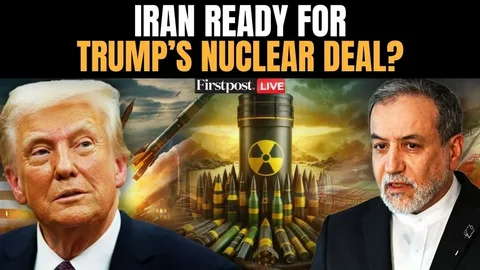

Nearly three months after the US-Iran war began with joint American and Israeli airstrikes, diplomacy remains in a fragile and unresolved state. The latest US-Iran deal talks have hit a critical wall, with Tehran firmly rejecting Washington’s demand to hand over its enriched Iran uranium stockpile. Pakistan continues to mediate between the two sides as global oil markets watch nervously and the Strait of Hormuz remains under Iran’s control.
Background: How the US-Iran War Began
The Iran US war did not emerge overnight. It was the result of years of failed diplomacy, collapsing agreements, and escalating pressure. On February 28, 2026, Israel and the United States began a series of strikes against Iran, saying they aimed to induce regime change in the country and target its nuclear and ballistic missile programme. Iran’s Supreme Leader, Ali Khamenei, was killed in the strikes.
Iran launched a series of counter-strikes against Israel, US military bases in the region, and military and civilian locations in Arab states. Among Iranian counter-actions was closing the Strait of Hormuz, a major global trade route for goods including fuel and gas.
On March 6, President Trump said that only Iran’s “unconditional surrender” would be acceptable and said the US would attack Iranian energy infrastructure and bridges if a deal was not reached, setting successive deadlines in late March and early April. That hardline posture eventually gave way to ceasefire talks, but the Trump Iran war has continued to simmer even as diplomats talk.
Details: Where the US-Iran Deal Stands Right Now
The US-Iran deal negotiations are currently in one of their most delicate phases. Iran’s Foreign Ministry spokesperson Esmaeil Baghaei confirmed that Tehran had received the latest American proposals and was reviewing them. Pakistan, which hosted earlier peace talks between the US and Iran, continues to mediate, with several rounds of communication having taken place based on Iran’s original 14-point framework.
Pakistan’s Army Chief Asim Munir traveled to Tehran as part of ongoing mediation efforts between Washington and the Islamic Republic, carrying a new message from the US side. His visit signals just how central Islamabad has become to the entire diplomatic process.The United States and Iran have continued to exchange proposals for peace since a temporary ceasefire was agreed last month, but hostilities have not come to a complete halt and both sides are believed to be still far apart on a number of key issues.
The Iran Uranium Question: The Biggest Sticking Point
At the centre of every failed US-Iran deal attempt is the question of Iran uranium enrichment and stockpiles and it is proving to be the hardest issue to resolve in the Iran US war diplomacy.
Iran’s stockpile of enriched uranium stands at nearly 1,000 pounds, enriched to 60 percent just shy of the enrichment levels required to make nuclear weapons. Experts estimate that if Iran were to try to use the stockpile to make weapons, it could create some 10 to 12 nuclear bombs.
Washington has urged Tehran to give away its enriched uranium, a demand Tehran has firmly resisted. It is understood that Iran may consider handing it over to a third party rather than directly to the US. The question of Iran’s ability to enrich uranium at all is another major issue the US wants to impose a 20-year moratorium on Iran enriching any uranium.
Iran has been adamant that it will protect its missile and nuclear capabilities, with Iranian Supreme Leader Mojtaba Khamenei defending the technologies as “national capital.” Meanwhile, US Ambassador to the United Nations Mike Waltz said Trump had been clear that Iran would “never have a nuclear weapon and cannot hold the world’s economies hostage.”
The Iran uranium news has also exposed a shift in Trump’s own position. US intelligence assessments estimated that the joint US-Israeli bombardment campaign had failed to set back Iran’s nuclear capabilities. After Iran took control of the Strait of Hormuz and caused a global oil shock, Trump was forced to try to dismantle Iran’s nuclear capabilities at the negotiating table instead.
Trump Iran News: What Washington Is Proposing
The Trump Iran news out of Washington in recent weeks has reflected both pressure and pragmatism. The White House has moved from demanding total surrender to drafting a structured framework.
The offer put on the table by Trump’s envoys his son-in-law Jared Kushner and fellow real estate broker Steve Witkoff is a one-page memorandum of understanding, laying out 14 points to be negotiated over a 30-day period. These include an Iranian moratorium on enriched uranium, after which enrichment would be limited to 3.67 percent with intensive IAEA inspection, and an Iranian commitment to export its highly enriched uranium to another country.
President Trump told reporters in the Oval Office: “They want to make a deal. We’ve had very good talks over the last 24 hours, and it’s very possible that we’ll make a deal.” However, Trump Iran war watchers note that his statements have shifted repeatedly depending on the day.
Trump earlier signaled support for the framework in a post on Truth Social, saying the American war effort and blockade on Iran would end if Tehran accepts the terms: “Assuming Iran agrees to give what has been agreed to, which is, perhaps, a big assumption, the already legendary Epic Fury will be at an end, and the highly effective Blockade will allow the Hormuz Strait to be OPEN TO ALL, including Iran.”
Quotes: What Officials Are Saying
Trump said he was prepared to wait a few more days to “get the right answers” from Tehran, signalling a rare moment of patience in a conflict defined by ultimatums and deadlines.Iran’s Foreign Ministry spokesperson Baghaei said Tehran’s current position is based on its original 14-point framework, calling for “a definitive end to the war on all fronts, including Lebanon,” the release of frozen Iranian financial assets, and an end to what he described as “piracy” against Iranian commercial vessels.
Israeli Prime Minister Netanyahu insisted there is “more work to be done” before the war can end, saying diplomacy would be the first step but not ruling out removing Iran’s uranium stockpile by force.
Iran War News: The Hormuz Crisis and Oil Markets
One of the most immediate global consequences of the Iran US war has been the economic disruption caused by Iran’s control of the Strait of Hormuz. Since early March, Iran has restricted shipping through the narrow waterway linking the Gulf to the open ocean, through which 20 percent of the world’s oil and liquefied natural gas passes.
The US imposed its blockade on Iranian ports in early April. Iran considers the blockade a violation of the two countries’ ceasefire agreement and has been enforcing a de facto blockade of its own on all ships transiting through the Strait of Hormuz, demanding they do so only in coordination with its military and often charging steep fees for passage.
Oil prices traded higher as market participants closely monitored the outcome of US-Iran talks. International Brent crude futures rose to $106.92 per barrel, while US West Texas Intermediate futures were last seen trading up at $100.59 per barrel. The global economy is watching every development in the Iran war news cycle in real time.
Impact: Regional and Global Consequences
The Iran war news Al Jazeera and other outlets have documented has extended far beyond the battlefield. The US-Iran war has reshaped energy markets, strained US alliances in the Arab world, and accelerated new diplomatic alignments across the Middle East and South Asia.
Iran’s counter-strikes targeted not just Israel and US military bases but also military and civilian locations in Arab states, drawing the broader region into the conflict. Countries including Pakistan, Oman, and Turkey have all played diplomatic roles in trying to prevent the conflict from escalating further.
Pakistani Interior Minister Mohsin Naqvi arrived in Tehran to meet with his Iranian counterpart as Pakistan continued its active mediation role. Islamabad has effectively become the primary back-channel between Washington and Tehran, a development that has significantly raised Pakistan’s international diplomatic profile.
The Trump Iran war has also deepened fault lines within Washington itself. Israel’s insistence on a maximum-pressure approach, combined with Trump’s erratic public statements, has made a coherent US negotiating position difficult to project and even harder to maintain.
Conclusion: What Comes Next in the US-Iran Deal Talks
The US-Iran deal remains possible but it is far from certain. The Iran uranium news deadline problem has not been solved; both sides are still talking past each other on the fundamental question of enrichment rights. Meanwhile, the Hormuz blockade continues to squeeze global energy markets, and the human cost of the Iran US war continues to rise.
The coming days are critical. Pakistan’s Army Chief is in Tehran with a new American message. Iran’s government is reviewing the latest proposal. Trump has said he is willing to wait. Whether this fragile window for diplomacy holds or whether breaking news on Iran war takes a darker turn will define not just the Middle East but global stability for years to come.
FAQs
What did Iran respond to Trump?
Iran’s response to Trump’s latest peace proposals has been cautious and conditional. Tehran confirmed it received the US framework a one-page memorandum outlining 14 negotiating points and said it was reviewing the terms. Iran’s core position remains its own 14-point counter-proposal, which calls for a complete end to the US-Iran war on all fronts, the lifting of US sanctions, the release of frozen Iranian financial assets, and the end of what Tehran calls illegal blockades of its commercial shipping. Iran has firmly rejected the US demand to hand over its entire enriched Iran uranium stockpile directly to Washington, though it has indicated willingness to transfer it to a neutral third country.
Who buys most of Iran’s oil?
China is by far the largest buyer of Iranian oil, purchasing the vast majority of Iran’s crude exports despite international sanctions. China has consistently maintained energy trade ties with Tehran through informal and often opaque arrangements that bypass Western financial systems. India has also historically imported Iranian oil, though it significantly reduced purchases after the re-imposition of US sanctions following Trump’s withdrawal from the 2015 nuclear deal. The current Iran US war and Hormuz blockade have further complicated global oil trade, driving prices sharply higher and pushing buyers to seek alternative suppliers from Saudi Arabia, the UAE, and the United States itself.
Is Iran a friend of the US?
No Iran and the United States have not had formal diplomatic relations since the 1979 Islamic Revolution and the subsequent hostage crisis, when Iranian students stormed the US Embassy in Tehran. The two countries have been adversaries for over four decades, with tensions expressed through proxy conflicts, sanctions, nuclear disputes, and now in 2026, an active Iran US war triggered by joint US-Israeli airstrikes. While they are not in a state of declared total war at every moment, they have never been allies or friends in the modern era. The current US-Iran deal negotiations are the closest the two sides have come to direct sustained diplomacy in years, driven not by goodwill but by mutual economic and strategic pain.