The US military fired on an Iranian oil tanker on Wednesday as President Donald Trump sought to pressure Tehran into reaching a deal to end the war, while Iran said it was reviewing the latest American proposals. The dramatic incident unfolded even as an official ceasefire remained technically in place between the two nations. Trump Iran war news has dominated global headlines, with the world watching closely to see whether diplomacy or further conflict will define the next chapter.
Background
The conflict began on February 28 when the United States and Israel launched strikes against Iran. Since then, the Middle East has been engulfed in what has become one of the most consequential military confrontations of the modern era. A shaky ceasefire between the US and Tehran has largely held since it began on April 8, and Pakistan hosted in-person talks last month between the two countries but those talks failed to reach an agreement.
The Iran war news update today reflects a conflict that has drawn in multiple regional and global powers, from Israel to China, raising fears of wider escalation. Understanding who is winning in the US-Iran war requires looking beyond the battlefield and into the economic and diplomatic pressures both sides are facing.
Details: The Tanker Incident
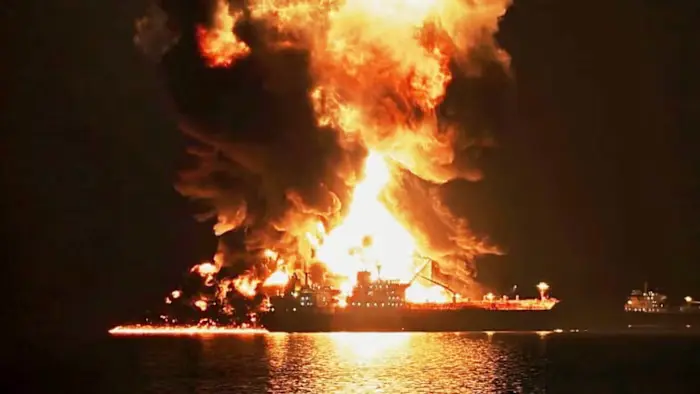
A US fighter jet shot out the rudder of the tanker in the Gulf of Oman as it attempted to breach the American blockade of Iran’s ports, according to a US Central Command social media post. The tanker was an Iranian-flagged oil vessel, and the strike sent a clear signal that Washington is not backing down from its enforcement of the naval blockade.
The attack occurred as Iran and the US are officially in a ceasefire. This contradiction military action during an active ceasefire has raised questions among analysts about how stable the current pause in hostilities truly is. The US military also said it sank six Iranian small boats that were threatening civilian ships.
Only two American-flagged merchant ships are known to have passed through the US-guarded route after it opened on Monday. This shows just how tense and fragile navigation through the region remains, even as both sides publicly gesture toward a negotiated end to the conflict.
Trump’s Ultimatum: Deal or More Bombing
Trump Iran war news took a sharp tone on Wednesday as the president issued a direct ultimatum. Trump posted on social media that the two-month war could soon end and that oil and natural gas shipments disrupted by the conflict could restart but he said that depends on Iran accepting a reported agreement that the president did not detail.
The threat behind the offer was unmistakable. Trump said on social media: “If they don’t agree, the bombing starts, and it will be, sadly, at a much higher level and intensity than it was before.” This was a defining moment in Trump and Iran war news, as it encapsulated Trump’s dual strategy of pressure and negotiation.
Hours after threatening to bomb Iran into submission, Trump told reporters at the Oval Office: “We’ve had very good talks over the last 24 hours and it’s very possible that we’ll make a deal.” He also added a critical red line, saying, “This is very simple: Iran cannot have a nuclear weapon.”
Iran’s Response: Still Reviewing
Tehran’s position on the proposed deal remains cautious. A spokesman for the Iranian Foreign Ministry, Esmaeil Baghaei, told state TV that Tehran had “strongly rejected” US proposals reported by Axios, but that it was still examining the latest proposed agreement.
This dual messaging from Iran rejection of some terms while continuing to review others suggests that Tehran is walking a careful diplomatic line. The Iranian government is under enormous internal and external pressure, making any public acceptance of US terms politically sensitive. Iran war news update today indicates that while no deal has been signed, the door has not been fully shut either.
The Proposed Deal: What’s on the Table
The White House believes it is near an agreement with Iran on a one-page memorandum to end the war, according to reporting by Axios. Provisions reportedly include a moratorium on Iranian uranium enrichment, lifting of US sanctions, distribution of frozen Iranian funds, and opening the Strait of Hormuz for ships.
If this deal goes through, it would mark a historic moment potentially ending what many are calling the Trump Iran war terminated scenario that the White House has been pushing toward. However, both sides have yet to officially confirm the terms, and significant hurdles remain.
Israel Strikes Beirut Iran Attack Angle
Adding another layer of complexity to the Iran war news update today, Israel struck Beirut’s southern suburbs for the first time since a ceasefire between Israel and the Iranian-backed Hezbollah militant group was announced on April 17.
Israeli Prime Minister Benjamin Netanyahu’s office said the strike, which came without warning, targeted a commander in Hezbollah’s Radwan Force. Hezbollah did not immediately comment. This development ties directly into the Iran attack on Israel today narrative, as Hezbollah remains a key proxy force backed by Tehran in the broader regional conflict.
More than 2,500 people have died in Lebanon since fighting began on March 2, two days after Israel and the US launched the war on Iran. These staggering numbers underline the human cost of a conflict that has dragged on for over two months.
Trump Iran, China, and Global Pressure
One of the most significant diplomatic developments in Trump Iran China relations came on Wednesday. China’s foreign minister called for a comprehensive ceasefire after meeting in Beijing with Iran’s top envoy. Wang Yi said his country was “deeply distressed” by the conflict.
China’s close economic and political ties to Tehran give it a unique position of influence, and the Trump administration is pressing China to use that relationship to urge Iran to open the Strait of Hormuz. This is a rare moment where US-China diplomacy and Iran war news converge, with Washington hoping Beijing can do what military pressure alone has not yet achieved.
Iran’s effective closure of the strait has sent fuel prices skyrocketing, rattled the global economy, and put enormous economic pressure on countries including major powers such as China. This gives Beijing a genuine economic incentive to push Tehran toward a resolution.
Impact: Global Economy and Energy Markets
The Iran war news is not just a Middle East story it is a global economic crisis in slow motion. The Strait of Hormuz is one of the world’s most critical oil transit chokepoints, and its effective closure has disrupted energy markets worldwide. Fuel prices in multiple countries have surged, inflation risks have risen, and supply chains dependent on Gulf energy exports are under severe strain.
The US-Iran war, who is winning question is partly being answered in economic terms. Iran is bleeding under sanctions and the blockade. But the global economy, including US allies, is also absorbing serious pain. This shared cost is what is driving both sides, however reluctantly, toward the negotiating table.
Conclusion: What Comes Next?
The coming days will be critical for Trump Iran war terminated hopes. A one-page deal framework is reportedly within reach, but Iran’s domestic politics and the ongoing Israeli military actions complicate any clean resolution. Trump has made clear that the choice is between a deal and dramatically intensified bombing a stark binary that leaves little room for ambiguity.
The Iran war news update today paints a picture of a conflict at a genuine crossroads. Diplomats, analysts, and world leaders are watching closely. Whether the US fires on Iranian oil tanker incident accelerates a deal or pushes Tehran to harden its stance may determine the fate of the region in the weeks ahead.
FAQs
Q: Who buys Iranian oil?
Iran’s primary oil customers have traditionally been China, India, and Syria. Despite US sanctions, China has continued purchasing Iranian crude at discounted rates through unofficial channels, making Beijing Iran’s most significant oil buyer by volume. In the current conflict scenario, Iran’s oil exports have been severely disrupted by the US naval blockade of its ports.
Q: Who is Iran’s main ally?
China and Russia are considered Iran’s most important strategic allies. China provides economic lifelines through trade and oil purchases, while Russia has historically provided diplomatic cover at the UN Security Council. On a regional level, Hezbollah in Lebanon and various Iraqi militia groups are Iran’s key proxy allies, both of which have been actively involved in the current conflict.
Q: Why did Trump bomb Iran in 2026?
The US and Israel launched coordinated strikes on Iran on February 28, 2026, citing Iran’s advancing nuclear program and its support for regional militant groups including Hezbollah and Hamas as primary justifications. Trump framed the operation as necessary to prevent Iran from acquiring a nuclear weapon and to degrade its military capabilities. The strikes triggered a broader regional war involving Lebanon, Israel, and now drawing in diplomatic interventions from China, Pakistan, and the United Nations.