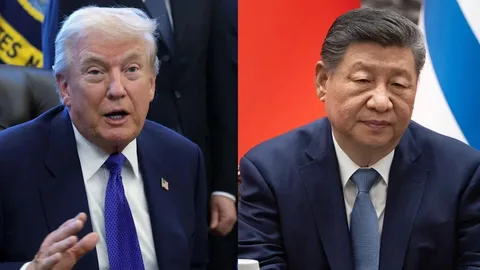
The US China agricultural trade deal is back and bigger than many expected. The White House announced Sunday that China has committed to purchasing at least $17 billion in American agricultural goods annually through 2028, following Trump’s two-day summit in Beijing with President Xi Jinping.
The deal marks the most significant step forward in US-China farm trade relations since the two countries’ bitter trade war collapsed purchases to historic lows in 2025.
The $17 Billion Commitment What It Covers
China will buy at least $17 billion per year of US agricultural products in 2026, 2027, and 2028 with 2026 purchases prorated for the remainder of the year.
The White House confirmed the deal is separate from China’s earlier commitment to buy 87 million metric tonnes of American soybeans, agreed at the Trump-Xi summit in South Korea in October 2025. That means the total agricultural purchase obligation is significantly larger than the headline $17 billion figure suggests.
Beef and Poultry Market Access Restored
China has restored market access for US beef by renewing expired listings for more than 400 American production facilities a major win for the US cattle industry, which had been effectively locked out of the Chinese market.
Beijing has also agreed to resume imports of poultry from US states certified by the Department of Agriculture as free of avian influenza. Both moves had been suspended during the height of the trade war and represent a direct reversal of retaliatory measures China had imposed against American farmers.
How Far Trade Fell The Context Behind the Deal
The scale of recovery needed is stark. US agricultural exports to China peaked at $38 billion in 2022 before collapsing to just $8 billion in 2025 a fall of nearly 80% driven by the tariff war.
Soybean purchases historically the backbone of the US China agricultural trade deal relationship fell from $18 billion in 2022 to $3 billion in 2025 after China stopped buying American soybeans entirely when Trump imposed steep tariffs. The $17 billion annual commitment is a floor, not a ceiling and restores a significant portion of what was lost.
Two New Bodies to Manage Trade
Trump and Xi agreed to establish two new institutional frameworks the US-China Board of Trade and the US-China Board of Investment to manage and monitor economic ties between the two countries going forward.
The Chinese US trade deal architecture now includes structured oversight mechanisms designed to prevent the kind of breakdown that derailed the Phase One deal struck in 2020. Whether these bodies will operate with genuine authority or function as ceremonial talking shops remains to be seen.
China’s Readout A Different Story
Washington’s announcement was detailed and specific. Beijing’s was notably vague. China’s Commerce Ministry confirmed both countries would “promote agricultural trade” and “mutually cut levies on certain products” but provided no figures, no timelines, and no mention of rare earths.
The divergence in readouts is significant. It suggests the US China agricultural trade deal numbers are a White House presentation of what was agreed and that Chinese negotiators may still be working through the details. China has yet to formally confirm the $17 billion figure, leaving room for ambiguity in the coming days.
Iran and Taiwan The Issues Left Out
Trump and Xi agreed on one geopolitically significant point that Iran cannot have a nuclear weapon and that the Strait of Hormuz must reopen. Both leaders called for an end to the conflict affecting global energy markets.
However, Trump largely skirted Taiwan during the Beijing summit suspending a planned $14 billion arms sale before the trip and declining to push Xi on the issue directly. Critics of the Trump China visit 2026 argue that agricultural and economic gains were purchased at the cost of Taiwan’s security guarantees.
What American Farmers Are Saying
American soybean and cattle farmers have welcomed the US China agricultural trade deal with cautious optimism tempered by memories of the Phase One deal signed in 2020, which China never fully delivered on.
The USDA’s own projections at the time showed China falling far short of its Phase One commitments. Analysts at UBS had warned in 2020 that the targets were “highly challenging” without reducing imports from elsewhere. The same scepticism surrounds the 2026 deal particularly since China’s readout did not confirm the specific numbers the White House published.
Frequently Asked Questions
Does China Own 277,000 Acres of US Farmland?
China-linked entities own approximately 277,000 acres of US agricultural land according to USDA data representing a small fraction of America’s total farmland but a figure that has drawn significant congressional scrutiny. Several US states have passed legislation restricting Chinese ownership of farmland near military installations. The US China agricultural trade deal is a purchasing agreement it does not affect ownership rules and does not change existing state-level restrictions on Chinese land acquisition in the United States.
Did China Put 75% Tariffs on the US?
China imposed tariffs of 125% on US goods at the height of the 2025 trade war in retaliation for Trump’s 145% tariffs on Chinese products. A partial truce reached in Geneva in May 2025 reduced both sides’ tariffs to 30%. The Chinese US trade deal announced after the Beijing summit included further tariff adjustments, though China’s readout did not confirm specifics and both sides’ negotiating teams are still working through the details of the broader tariff framework.
Can China Survive Without US Trade?
China has demonstrated significant capacity to redirect trade flows replacing American soybeans with Brazilian and Argentine supplies during the 2025 trade war. However, the collapse of US China agricultural trade to $8 billion in 2025 from $38 billion in 2022 imposed real costs on both economies. China’s food security strategy requires reliable access to large volumes of grain, oilseeds, and protein and no single alternative supplier can fully replace US volume at competitive prices. The Beijing summit deal reflects both sides’ recognition that mutual dependence is a structural feature of the global food system, not a political choice either country can simply opt out of.