
The UN Security Council resolution condemning Iran’s missile and drone attacks on Gulf nations has been formally adopted following one of the most contentious votes in the body’s recent history. The UN Security Council resolution today passed with nine votes in favour, two abstentions, and no vetoes — after last-minute diplomatic negotiations prevented Russia and China from blocking the measure. The UN Security Council members who supported the resolution called Iran’s attacks on civilian infrastructure across seven Gulf states a flagrant violation of international law. The adoption marks the first UN Security Council resolution directly addressing the US-Israel-Iran war and sets the stage for potential further international action.
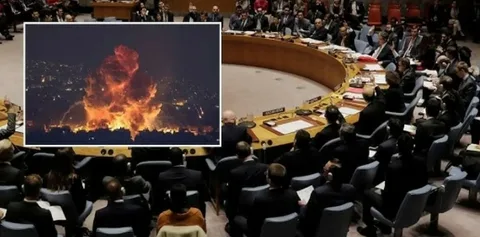
Background: UN Security Council Resolution — How the Body Works and Why This Vote Mattered
The UN Security Council resolution is the most powerful formal instrument available to the international community for responding to threats to international peace and security. Understanding why this particular UN Security Council resolution matters requires understanding how the body works and why passing any resolution on the Iran conflict was considered almost impossible just days ago.
The UN Security Council is the only United Nations body whose resolutions are legally binding on all UN member states under Article 25 of the UN Charter. While UN General Assembly resolutions carry significant moral and political weight, only a UN Security Council resolution carries the force of international law — making its adoption in response to the Iran war a development of genuine legal and geopolitical significance.
The UN Security Council members consist of fifteen nations — five permanent members with veto power and ten elected non-permanent members who serve two-year rotating terms. Any UN Security Council resolution can be blocked by a single veto from any of the five permanent members — a provision that has historically made the body deadlocked on the most contentious geopolitical issues, particularly those involving the interests of the major powers.
The Iran war created an immediate UN Security Council resolution challenge because the conflict directly involves the strategic interests of all five permanent members. The United States is a direct military participant. Russia and China have expressed support for Iran and opposition to the strikes. The United Kingdom and France face pressure from their European partners and Muslim-majority ally relationships to respond robustly through international institutions.
Details: The UN Security Council Resolution Today — What It Says and How It Passed
UN Security Council Resolution Today — The Vote
The UN Security Council resolution today was adopted after a week of intense diplomatic negotiations involving all fifteen UN Security Council members and extensive back-channel consultations between Washington, Moscow, Beijing, London, and Paris.
The final text of the UN Security Council resolution today represents a carefully negotiated compromise between competing demands. Western members led by the United States pushed for a UN Security Council resolution that condemned Iran’s missile and drone attacks on Gulf civilian infrastructure, demanded an immediate cessation of Iranian attacks on non-military targets, and called for the reopening of the Strait of Hormuz to commercial shipping.
Russia and China — both of which had previously threatened to veto any UN Security Council resolution that criticised Iran without equally condemning the US-Israeli military strikes — ultimately accepted a text that included language acknowledging the broader context of the conflict and calling on all parties to exercise restraint, in exchange for their abstention rather than a veto.
The UN Security Council resolution today passed with nine votes in favour, two abstentions from Russia and China, and no negative votes. The four abstaining and opposing votes that had been feared by resolution sponsors did not materialise — a diplomatic outcome that Western governments described as a significant achievement given the initial Russian and Chinese positions.
UN Security Council Resolution 2803 Text — Key Provisions
The UN Security Council resolution 2803 text — the formal designation assigned to this resolution in the UN Security Council’s sequential numbering system — contains several key provisions that reflect the diplomatic compromises required to achieve adoption.
The UN Security Council resolution 2803 text condemns in the strongest terms the attacks by Iranian forces on civilian infrastructure, commercial shipping, and the territory of Gulf Cooperation Council member states. The UN Security Council resolution 2803 text demands the immediate cessation of Iranian missile and drone attacks on civilian targets and calls on Iran to respect the sovereign territory of neighbouring states.
The UN Security Council resolution 2803 text also calls on all parties to the conflict to exercise maximum restraint and to create conditions conducive to a diplomatic resolution — language that Russia and China insisted upon as a condition of their abstention rather than veto. This formulation stops short of condemning the US-Israeli military strikes on Iran but acknowledges the broader context of the conflict in a way that gives Moscow and Beijing political cover for their abstention.
The UN Security Council resolution 2803 text further calls for the immediate reopening of the Strait of Hormuz to commercial shipping and demands that all parties respect the principle of freedom of navigation under international law. This provision reflects the acute concern of the ten elected UN Security Council members — many of whom represent developing nations highly dependent on affordable energy — about the economic consequences of the Strait of Hormuz closure.
The UN Security Council resolution 2803 text does not include enforcement mechanisms or sanctions — a reflection of the limits of what was achievable given Russian and Chinese abstentions rather than active support for stronger measures.
UN Security Council Members — How Each Voted
The fifteen UN Security Council members and their positions on the UN Security Council resolution today reflect the complex geopolitical alignments of the current crisis.
The United States voted in favour of the UN Security Council resolution, having co-sponsored the text alongside the United Kingdom and France. The United Kingdom and France both voted in favour, with their ambassadors delivering statements emphasising the importance of protecting civilian infrastructure and freedom of navigation. Japan and South Korea — both non-permanent UN Security Council members and both severely affected by the Strait of Hormuz closure — voted in favour with statements emphasising the energy security dimensions of the crisis.
Ecuador, Sierra Leone, Slovenia, Guyana, and Malta — the remaining elected UN Security Council members supporting the resolution — voted in favour after securing language in the UN Security Council resolution 2803 text addressing the humanitarian consequences of the conflict for developing nations dependent on Gulf energy exports.
Russia abstained, with its ambassador delivering a lengthy statement arguing that the UN Security Council resolution selectively condemned Iranian actions while ignoring what Moscow described as the illegal US-Israeli aggression that triggered the conflict. China also abstained, with Beijing’s ambassador stating that China opposed the strikes on Iran and called for an immediate ceasefire by all parties — but ultimately chose abstention over veto to preserve diplomatic relationships with Gulf states critical to China’s energy security.
Algeria — the sole Arab state currently serving as an elected UN Security Council member — abstained, citing solidarity with Iran and opposition to what its ambassador described as a one-sided resolution that failed to address the root causes of the conflict.
Quotes on UN Security Council Resolution
The US Ambassador to the United Nations stated after the UN Security Council resolution today passed that the adoption sent an unambiguous message to Tehran that the international community would not accept attacks on civilian infrastructure and commercial shipping, adding that the UN Security Council resolution 2803 text represented a minimum baseline of accountability that Iran must respect.
The UK Ambassador described the UN Security Council resolution today as a historic moment — the first time the Security Council had spoken with a unified voice on the Iran conflict — and called on Iran to comply immediately with the demands of the UN Security Council resolution 2803 text.
Russia’s Ambassador told the UN Security Council members assembled in the chamber that Moscow had chosen abstention rather than veto solely out of respect for the Gulf states that had suffered attacks — but that Russia fundamentally rejected the framing of the UN Security Council resolution today as balanced or legitimate, calling on the Security Council to address the US-Israeli military strikes in an equally robust UN Security Council resolution.
China’s Ambassador stated that Beijing opposed all attacks on civilian infrastructure and called on all UN Security Council members to support a comprehensive ceasefire rather than a selective condemnation, adding that China’s abstention on the UN Security Council resolution today should not be interpreted as endorsement of Iranian military actions against Gulf civilian targets.
Iran’s Ambassador — speaking as an observer since Iran is not currently an elected UN Security Council member — rejected the UN Security Council resolution 2803 text in its entirety, describing it as a politically motivated document drafted by the aggressor nations and their allies, and stating that Iran would not be bound by a resolution that ignored the illegal war being waged against Iranian sovereignty.
The UN Secretary-General welcomed the adoption of the UN Security Council resolution today as a necessary first step, urging all parties to use the resolution as a foundation for urgent diplomatic engagement to end the conflict and reopen the Strait of Hormuz.
Impact: What the UN Security Council Resolution Means for the Iran War
Legal Impact of UN Security Council Resolution 2803 Text
The UN Security Council resolution 2803 text, while lacking enforcement mechanisms, carries significant legal weight as a formally binding instrument under international law. Iran’s continued attacks on Gulf civilian infrastructure following adoption of the UN Security Council resolution today would place it in explicit violation of a binding UN Security Council resolution — creating legal grounds for further international action including sanctions, arms embargoes, and referral to the International Criminal Court.
The UN Security Council resolution 2803 text also strengthens the legal foundation for the defensive actions being taken by Gulf states against Iranian missiles and drones — framing those defensive measures as consistent with both UN Charter Article 51 self-defence provisions and the demands of the international community as expressed through the UN Security Council resolution today.
Diplomatic Impact on UN Security Council Members
The adoption of the UN Security Council resolution today without a Russian or Chinese veto represents a significant diplomatic achievement for the United States and its Western allies — demonstrating that even in the most contentious geopolitical environment, carefully crafted compromise text can achieve the minimum consensus required for Security Council action.
The Russian and Chinese abstentions rather than vetoes reflect a calculated diplomatic judgement by both Moscow and Beijing that protecting their relationships with Gulf states — which are critical suppliers of energy and markets for Chinese exports and Russian diplomatic engagement — outweighs the short-term benefit of blocking a resolution that ultimately lacks enforcement teeth.
Global Impact of UN Security Council Resolution
For the broader international community, the UN Security Council resolution today provides a formal legal and political framework within which diplomatic efforts to end the Iran war can be structured. Mediation efforts by Qatar, Oman, Turkey, and UN special envoys can now be framed as implementing the demands of the UN Security Council resolution 2803 text — giving those efforts added legitimacy and urgency.
The UN Security Council resolution today also provides political cover for Muslim-majority nations that have been caught between their solidarity with Iran as a Muslim country under attack and their alarm at Iranian missile strikes on fellow Muslim-majority Gulf states. The resolution’s balanced language — condemning Iranian attacks on civilian infrastructure while calling on all parties to exercise restraint — gives governments across the Muslim world a framework for condemning specific Iranian actions without endorsing the broader US-Israeli military campaign.
Frequently Asked Questions About UN Security Council Resolution
What Are the Resolutions of the UN Security Council?
UN Security Council resolutions are formal decisions adopted by the fifteen-member Security Council that are legally binding on all 193 UN member states under Article 25 of the UN Charter. They are numbered sequentially from Resolution 1, adopted in 1946, through to the present day — with UN Security Council resolution 2803 being among the most recent. Resolutions can address a wide range of matters including threats to international peace and security, sanctions against specific countries or individuals, authorisation of peacekeeping operations, and demands for ceasefire or compliance with international law. A UN Security Council resolution requires nine affirmative votes from the fifteen UN Security Council members and no veto from any of the five permanent members to be adopted.
Which 10 Countries Voted Against the UN Resolution?
No country voted against the UN Security Council resolution today — the measure passed with nine votes in favour and two abstentions from Russia and China, with Algeria also abstaining. In previous UN Security Council resolutions related to the Israel-Palestine conflict and the broader Middle East, voting patterns have varied significantly. The ten elected non-permanent UN Security Council members for the current term include Japan, South Korea, Ecuador, Sierra Leone, Slovenia, Guyana, Malta, Algeria, and two additional rotating members. In the vote on the UN Security Council resolution 2803 text, the majority of elected members voted in favour, with Algeria the only elected member to abstain alongside the permanent members Russia and China.
Which 5 Countries Have Veto Power?
The five permanent UN Security Council members with veto power are the United States, the United Kingdom, France, Russia, and China. These five nations — known as the P5 — were granted permanent membership and veto power in the original UN Charter in 1945 as the principal Allied victors of World War Two. Any one of the five permanent UN Security Council members can block any UN Security Council resolution by casting a negative vote — regardless of how many other members support the measure. This veto power has been used hundreds of times since 1945 to block resolutions on issues ranging from the Korean War to the Vietnam War to the Israeli-Palestinian conflict. In the current Iran war crisis, the most significant veto threat came from Russia and China — both of which ultimately chose abstention rather than veto on the UN Security Council resolution 2803 text, allowing the resolution to pass.
Conclusion
The UN Security Council resolution condemning Iran’s attacks on Gulf nations represents the first formal expression of international legal consensus on the most dangerous regional conflict in a generation. The UN Security Council resolution 2803 text is imperfect — lacking enforcement mechanisms and reflecting the diplomatic compromises required to prevent a Russian or Chinese veto. But its adoption by the UN Security Council members today is nonetheless significant — establishing a legal baseline, providing diplomatic cover for mediation efforts, and sending a message to Tehran that its attacks on civilian infrastructure have been condemned by the international community. Whether the UN Security Council resolution today translates into meaningful pressure for a ceasefire depends entirely on whether the parties to the conflict choose diplomacy over continued escalation — a choice that no UN Security Council resolution, however strongly worded, can make for them.